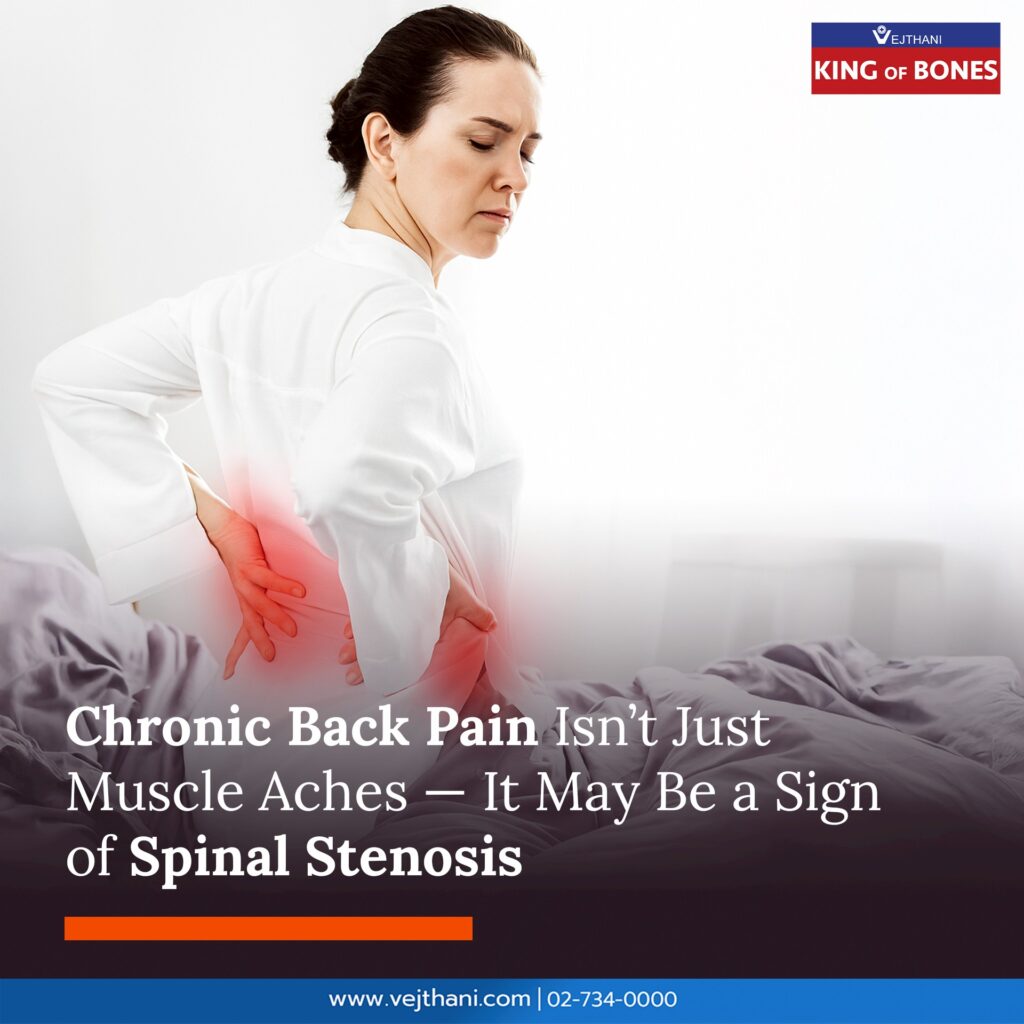
Chronic Back Pain Isn’t Just Muscle Aches — It May Be a Sign of Spinal Stenosis
Health Articles
Spinal stenosis is a condition in which the space within the spinal canal — responsible for protecting the spinal cord and nerves — becomes narrowed due to degenerative changes in structures such as the intervertebral discs, ligaments, and joints. This narrowing compresses the nerves, causing pain, numbness, or weakness in various parts of the body, particularly the lower back and legs.
Spinal stenosis is common among older adults and is a major cause of chronic back pain. Without early evaluation and treatment by a spine specialist, it may lead to permanent weakness or loss of mobility.
Causes of Spinal Stenosis
The primary cause is age-related degeneration of the spine, often accompanied by several contributing factors:
Degenerative Disc Disease
Disc shrinkage or bulging puts pressure on the nerve canal.
Facet Joint Hypertrophy
Degeneration leads to bone overgrowth that narrows the canal.
Ligamentum Flavum Thickening
Thickened ligaments reduce the space within the spinal canal.
Spondylolisthesis
Forward slippage of a vertebra narrows the canal and compresses nerves.
Other causes include trauma, previous surgery, or congenital spine abnormalities.
Symptoms of Spinal Stenosis
Symptoms depend on the location and severity of nerve compression. Common symptoms include:
Lower back pain or pain radiating down the legs
Hip or leg pain when walking for extended periods
Worsening pain when leaning backward; relief when bending forward
Numbness, weakness, or heaviness in the legs
Difficulty walking long distances or needing frequent rests
In severe cases: loss of bladder or bowel control — a medical emergency
How is Spinal Stenosis Diagnosed?
Doctors evaluate the condition through history-taking, physical examination, and imaging such as:
X-ray: Shows bone alignment and joint abnormalities
MRI: Provides detailed views of the nerve canal, discs, and nerves
CT Scan: Used when MRI isn’t possible; shows bone structures clearly
Treatment Options
Treatment depends on the severity of the condition and symptoms. Options include:
Non-Surgical Treatment
Suitable for patients with mild to moderate symptoms:
Physical therapy to strengthen back and abdominal muscles
Pain medications or muscle relaxants
Local anti-inflammatory injections
Lifestyle modifications such as avoiding heavy lifting or prolonged back extension
Surgical Treatment
Considered when symptoms are severe or do not improve:
Decompression Surgery: Relieves pressure on the nerves
Spinal Fusion: Stabilizes the spine in cases of vertebral slippage
At Vejthani International Hospital, decompression surgery is performed using microscope or endoscope-assisted techniques, resulting in smaller incisions, less pain, and faster recovery.
Prevention & Self-Care
Regular exercises to strengthen the back and core muscles
Maintain a healthy body weight
Avoid heavy lifting or prolonged sitting in the same posture
Seek early evaluation if chronic back pain or radiating leg pain occurs
Frequently Asked Questions
1. How is spinal stenosis different from a herniated disc?
Both may cause similar symptoms, such as back pain and leg pain. However, a herniated disc occurs when disc material presses directly on a nerve, whereas spinal stenosis results from narrowing of the spinal canal caused by degeneration, often developing gradually and commonly seen in older adults.
2. Does every patient with spinal stenosis need surgery?
No. Most patients improve with non-surgical treatments such as physical therapy, injections, and lifestyle adjustments. Surgery is recommended only for those with progressive numbness, weakness, limited walking ability, or loss of bladder/bowel control.
3. How long is the recovery after spinal stenosis surgery?
With modern minimally invasive techniques, most patients can walk within 1–2 days after surgery and return to everyday life within a few weeks. Recovery time depends on individual health and rehabilitation progress.
4. What types of exercise are safe?
Choose low-impact exercises that strengthen the back, core, and legs, such as swimming, water walking, gentle yoga, or senior-friendly Pilates. These help reduce spinal pressure and prevent recurrence.
We use cookies to manage your personal information in order to provide you with the best personalized user experience on our website. If you continue using the website, we assume that you accept all cookies on the website. Find out more.