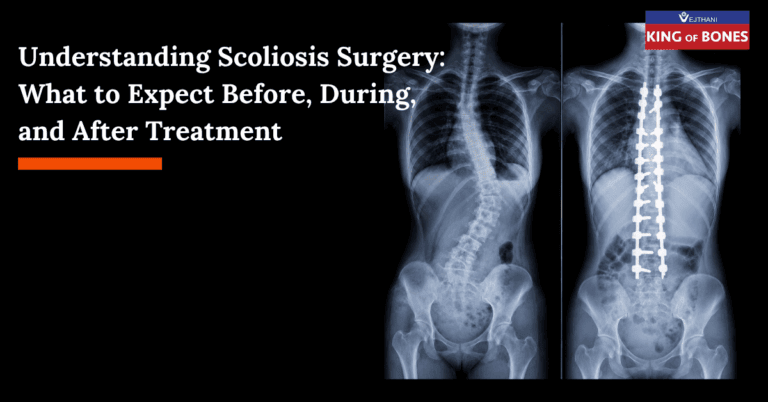
Understanding Scoliosis Surgery: What to Expect Before, During, and After Treatment
Scoliosis can be a frustrating condition that causes a great deal of pain and discomfort. Doctors work to present as many quality solutions for scoliosis

Select Topic
Spinal stenosis occurs when spaces within the spine narrow, leaving less room for the spinal cord or nerves. It often develops gradually as the discs lose height, joints enlarge, and supporting ligaments thicken with age.
In the lower back, lumbar spinal stenosis can cause aching, numbness, or heaviness in the legs when standing or walking. Sitting down or leaning forward often eases the discomfort. Some people first notice that they need more frequent breaks during a walk, even when they have little back pain.
Narrowing in the neck, known as cervical spinal stenosis, may affect the arms and hands. If it presses on the spinal cord, it can also cause difficulty with hand movements, balance, or walking.
Symptoms vary, and narrowing on a scan does not always require treatment. Doctors consider how the condition affects daily life and whether nerve function has changed before recommending care.
Lumbar spinal stenosis often causes leg symptoms when you stand or walk. The discomfort may affect one or both legs and usually eases when you sit down or lean forward. You may notice that you cannot walk as far as before without stopping to rest.
Common symptoms include:
Back pain may occur, but it is not always the main symptom. The walking-related leg discomfort is known as neurogenic claudication.
Some people find it easier to walk while leaning on a shopping cart. This is known as the shopping cart sign. Bending forward temporarily creates more space around the nerves in the lower back, which may ease symptoms.
Cervical spinal stenosis can cause pain, numbness, tingling, or weakness in the arms and hands. When the narrowing presses on the spinal cord, it can also affect hand movements, balance, and walking.
Common symptoms include:
These symptoms can develop even without significant neck pain. When spinal cord compression causes these problems, doctors call it cervical myelopathy. Changes in hand function or walking need prompt medical assessment.
Most cases develop from age-related changes in the spine. The discs between the spinal bones gradually lose water and height, placing more pressure on nearby joints. Changes in the discs, joints, and ligaments can then reduce the space around the nerves.
Common causes include:
These changes often occur together. Some people are also born with a smaller spinal canal, so they may develop symptoms earlier, even with less extensive age-related changes.
Treatment depends on the symptoms, the location of the narrowing, and whether it affects nerve function. Many people with mild or moderate lumbar symptoms can begin with nonsurgical care. Increasing weakness or pressure on the spinal cord may require early surgical assessment.
Nonsurgical care aims to ease symptoms and improve daily function. It does not remove the structural narrowing, but it may make standing, walking, and other activities more comfortable.
Surgery may be appropriate when pain or leg symptoms continue to limit walking and daily life despite nonsurgical treatment. Progressive weakness or spinal cord compression can make surgical assessment more urgent.
Decompression surgery removes tissue that presses on the nerves. Depending on the cause, this may involve removing part of a bone, a thickened ligament, or disc tissue. Microscopic or endoscopic techniques allow surgeons to perform some procedures through smaller incisions, with less disruption to surrounding muscles.
Spinal fusion joins two or more spinal bones to provide stability. Not every patient needs it. Some people can have decompression alone, while others may need fusion because of instability, deformity, or the amount of tissue that needs removal.
For cervical stenosis that affects the spinal cord, treatment also aims to prevent further loss of hand function, balance, or walking ability. Surgery may improve symptoms, but it cannot always reverse damage that has already occurred.
Leg pain or numbness that repeatedly occurs during standing or walking needs medical assessment, especially when it starts to limit everyday activities. Weakness, difficulty lifting a foot, trouble with hand movements, or worsening balance should also receive prompt attention.
Seek medical attention immediately if any of the following symptoms develop:
These symptoms can indicate severe compression of the nerves or spinal cord and require urgent assessment.
The Spine Center at Vejthani International Hospital in Thailand specializes in diagnosing and treating spinal conditions, including spinal stenosis. Assessment considers symptoms, nerve function, and imaging findings to guide treatment, from nonsurgical care to decompression or spinal fusion when needed.
Physical therapy and medication can help relieve symptoms, but they do not remove bone spurs or reverse the changes that narrow the spinal canal. Even so, many people can walk more comfortably and manage daily activities without surgery.
Standing upright can reduce space for the nerves in the lower back. Sitting or bending forward creates more space, which often eases the discomfort. This is why some people find it easier to walk while leaning on a shopping cart, known as the shopping cart sign. Relief may be quick, but it is not always immediate.
Backward bends and exercises that strongly arch the lower back often worsen symptoms. Long periods of standing, heavy lifting, or high-impact exercise may also need adjustment if they cause leg pain or numbness. The right activity plan varies from person to person; a physical therapist can help identify movements that feel comfortable and maintain strength.
Trouble passing urine, loss of bladder or bowel control, or numbness around the genitals, anus, or inner thighs can indicate severe compression of the nerves in the lower spine. These symptoms need immediate assessment at an emergency department. Rapidly worsening weakness or sudden inability to stand or walk also requires emergency care.
Surgery may help when symptoms still limit walking or daily activities despite nonsurgical treatment. Worsening weakness or spinal cord pressure may require earlier treatment. Decompression removes tissue pressing on the nerves. Fusion joins spinal bones for added stability, but it is not part of every operation. Some patients need decompression alone; others need fusion as well, depending on spinal stability and the planned surgery.
Spine Center, Vejthani International Hospital
Call: (+66)2-734-0000 Ext. 5500
English Hotline: (+66)85-223-8888