Vejthani – Specialized Spine Hospital in Bangkok
Back problems seem to affect nearly everyone at some point in their lives. But when your back issues become chronic and interfere with your everyday life
Select Topic
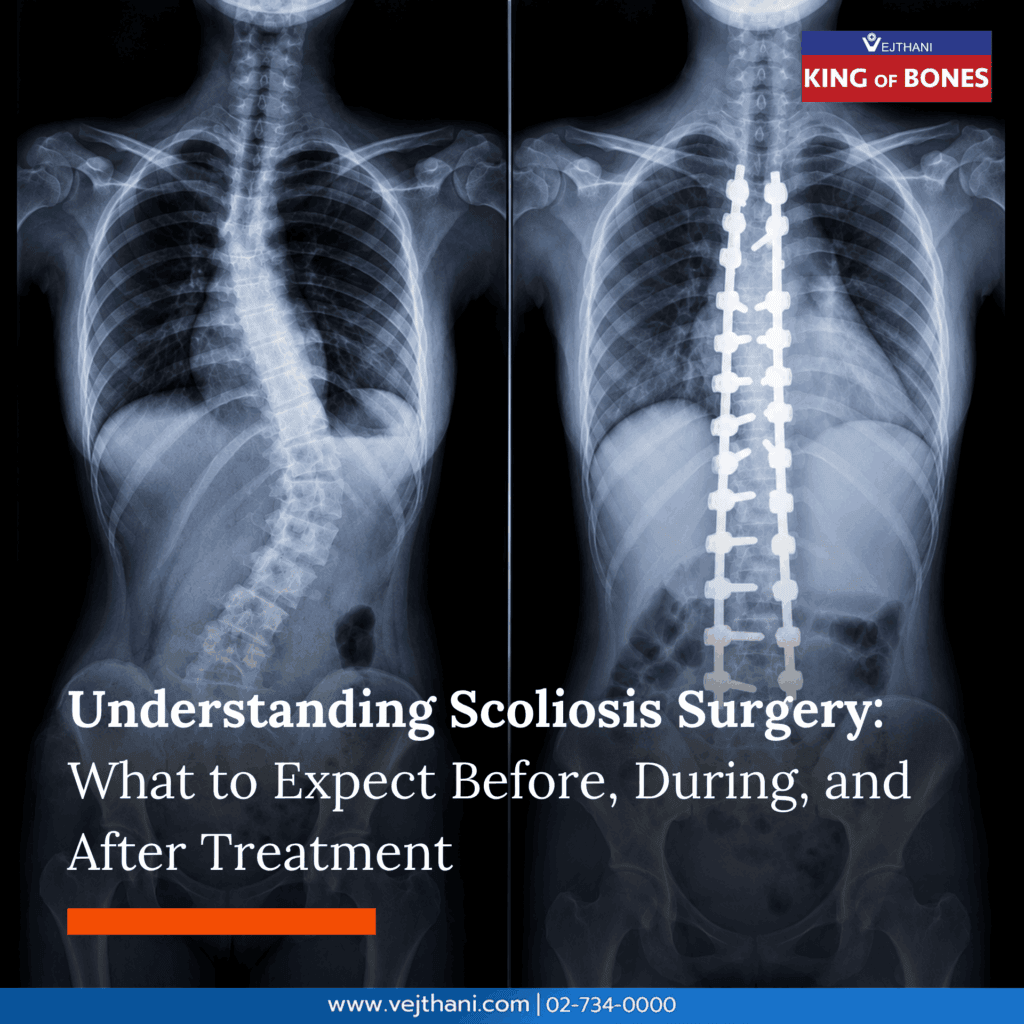
When the spinal curve becomes severe or when symptoms continue despite non-surgical treatment, scoliosis surgery is recommended. For appropriate candidates, surgery can improve spinal alignment, help prevent further progression of the curve, and reduce symptoms that affect daily life.
Although recovery requires time and rehabilitation, many patients experience improved posture, mobility, and quality of life following surgery. The recovery period depends on how severe the condition is and the complexity of the procedure.
Scoliosis is a condition in which the spinal cord curves abnormally to the side rather than running straight down the back. The spine may curve into an “S” or “C” shape. One shoulder may appear higher than the other, the waist may look uneven, and the hips may tilt, causing the body to appear slightly unbalanced.
If scoliosis is left untreated, a mild curve can gradually worsen. This may lead to ongoing back pain, muscle fatigue, and, in more serious cases, nerve-related symptoms such as numbness or weakness in the legs. For some people, severe scoliosis can affect not only physical appearance but also movement and daily function.
Doctors usually consider scoliosis surgery when the curve becomes severe, continues to progress, or begins affecting daily life and overall health. While many patients can be treated with observation, bracing, or physical therapy, surgery may become necessary in certain cases.
In the end, the decision to undergo scoliosis surgery depends on medical need, symptom severity, and the rate of progression of the spinal curve, not simply on appearance.
The Cobb angle is an important measurement, but doctors do not base the decision to operate on the angle alone. Doctors also consider symptoms, spinal balance, remaining growth, curve progression, overall health, and how the condition affects everyday function.
Before recommending surgery, doctors perform a comprehensive evaluation that may include:
Doctors may also evaluate the curve’s flexibility and determine which spinal levels may need treatment. These findings help the surgical team develop an individualized plan based on the patient’s spinal anatomy, symptoms, and treatment goals.
This approach helps ensure that surgery is recommended only when the expected benefits outweigh the potential risks.
The exact procedure depends on the type of scoliosis, curve severity, spinal balance, age, symptoms, and the spinal levels involved.
In many scoliosis correction procedures, screws are placed into selected vertebrae and connected with rods. The surgeon then carefully adjusts the spine to improve alignment and balance while protecting the spinal cord and surrounding nerves.
Spinal fusion is commonly performed as part of scoliosis correction. The surgeon places bone graft material along the treated area so the selected vertebrae can gradually heal together, providing long-term stability to the corrected spine.
The objective is not necessarily to make the spine completely straight. The surgical plan aims to achieve a safe and appropriate degree of correction while maintaining spinal balance and neurological function.
Scoliosis surgery can involve complex spinal anatomy, particularly when vertebrae are rotated, or the deformity involves multiple levels. Imaging, navigation, and neurological monitoring can therefore play important roles during surgery.
Benefits of Advanced Technologies Include:
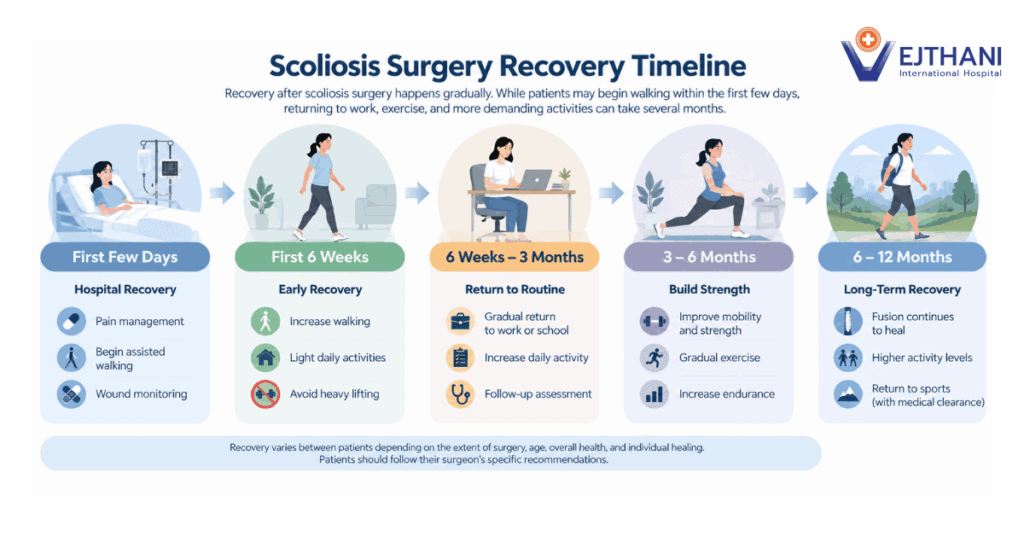
Recovery after scoliosis surgery depends on the severity of the spinal deformity and the type of procedure performed. Most patients return to daily activities under medical supervision, although full recovery from scoliosis surgery may take several months to a year, especially in more complex cases.
During the early stages of recovery, temporary pain, stiffness, and limited mobility are common. Rehabilitation programs and physical therapy can improve strength, flexibility, and overall movement as the spine continues to heal.
Not every case of scoliosis requires surgery. However, if a severe spinal curve continues to worsen without treatment, it may lead to long-term complications that affect spinal function and overall quality of life.
In children and adolescents, untreated scoliosis may continue progressing during growth and potentially lead to more severe spinal problems in adulthood.
Treating scoliosis, especially when surgery is considered, requires specialized expertise in spinal deformity treatment. The Spine Center at Vejthani International Hospital provides comprehensive care for scoliosis and other complex spinal deformities through experienced specialists, advanced spine surgery technology, and personalized rehabilitation programs.
Each patient’s treatment plan is designed for their specific needs, with a focus on spinal stability, mobility, long-term function, and safer recovery outcomes.
If signs such as uneven shoulders, ongoing back pain, changes in posture, or symptoms that begin affecting daily life, early medical evaluation can help prevent further curve progression and support better long-term spinal health, mobility, and quality of life.cific factors, and a commitment to long-term outcomes rather than short-term correction alone.
No. Most scoliosis cases can be managed without surgery, and treatment decisions depend on curve severity, symptoms, and progression.
Surgery may be considered when curves approach 40–50 degrees, particularly if progression or symptoms are present.
Initial recovery takes several weeks, while full recovery may take several months to one year.
Yes. Adults may be candidates when pain, nerve symptoms, or functional limitations persist despite non-surgical treatment.
For more information, contact
Spine Center, Vejthani International Hospital
Call 02-7340000 or Ext. 5500
English Hotline: (+66)8-522 38888