
Liver Cirrhosis: From Early Signs to Advanced Liver Disease
Liver is a vital organ of the body. It is mainly responsible for making protein, helping fight infections, cleaning the blood, helping digest food and storing energy.
Select Topic
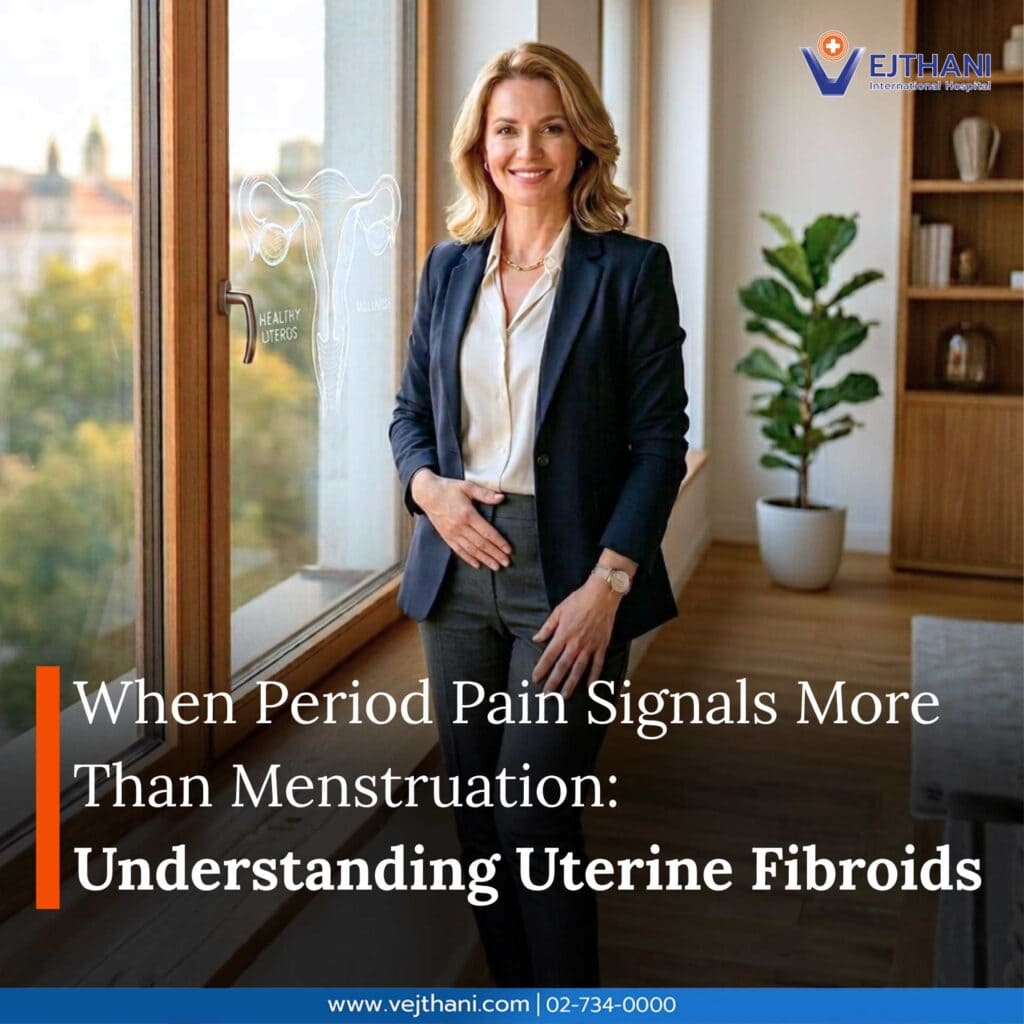
Uterine fibroids are common benign tumors that grow from the muscle layer of the uterus. They are one of the most common gynecological conditions affecting women. While some women experience no symptoms, others may develop heavy menstrual bleeding, pelvic pain, or fertility-related concerns.
Diagnosis typically involves a medical history review, physical examination, and ultrasound imaging. Treatment recommendations are based on the size, number, and location of the fibroids, how severe the symptoms are, and the patient’s future fertility goals, ranging from observation and medication to minimally invasive surgery, including laparoscopic and robotic-assisted surgery.
Uterine fibroids, commonly known as myomas or leiomyomas, are common non-cancerous tumors that develop from the muscle layer of the uterus. Depending on their location, they may grow inside the uterine wall, within the uterine cavity, or on the outside of the uterus.
Fibroids generally grow slowly and vary greatly in size. Some women may have small fibroids without any symptoms, while others may develop larger fibroids that affect their quality of life.
Several factors are associated with the development and growth of uterine fibroids, including:
Fibroids can be classified by where they grow in the uterus.
Subserosal fibroids arise from the outer surface of the uterus and extend beyond the uterine wall into the pelvis. They often cause few symptoms; however, larger fibroids may exert pressure on adjacent organs, including the bladder and bowel.
Growing within the muscular wall of the uterus, this type is the most frequently diagnosed of uterine fibroids. They may contribute to symptoms including:
These fibroids grow beneath the lining of the uterus and protrude into the uterine cavity. Even relatively small submucosal fibroids can lead to abnormal uterine bleeding and fertility-related issues.
The symptoms of uterine fibroids can depend on their size, number, and location. Common symptoms may include:
It is important to note that many women with uterine fibroids experience no symptoms and may only discover the condition during a routine gynecological examination or ultrasound scan.
Diagnosis may include:
Accurate diagnosis is required for determining the most appropriate treatment plan for each individual patient.
According to Dr. Chutatip Poonsatta, a gynecologist specializing in the Women’s Health Center at Vejthani International Hospital, a precise diagnosis is key to selecting the safest and most effective treatment approach based on each patient’s condition and needs.
Treatment recommendations depend on several factors, including symptoms, fibroid size, location, and the patient’s reproductive goals.
1. Observation and Regular Monitoring
For women with small fibroids, minimal symptoms, and no complications, regular follow-up examinations and ultrasound monitoring may be recommended.
2. Medication
Currently, there is no medication that can permanently eliminate uterine fibroids. However, medications may help manage symptoms by relieving pain and reducing heavy menstrual bleeding.
3. Surgical Treatment
Surgical treatment includes removal of the fibroids (myomectomy) or removal of the uterus (hysterectomy).
Laparoscopic Surgery
Performed through several small incisions, typically measuring 0.5–1 cm. The procedure is performed using a camera and specialized instruments inserted through small incisions.
Benefits may include: smaller scars, less postoperative pain, and faster recovery.
NOTES (Natural Orifice Transluminal Endoscopic Surgery)
NOTES is a scarless surgical technique performed through a natural opening of the body, such as the vagina, without requiring abdominal incisions. Patients may experience less postoperative pain and no visible abdominal scars.This approach is commonly considered for selected patients undergoing hysterectomy.
Da Vinci Robotic Surgery is an advanced form of minimally invasive surgery that combines laparoscopic techniques with robotic technology.
The surgeon operates the system from a console with a high-definition 3D view, allowing for precise and refined movements during surgery.
During the procedure, 4–5 small incisions are made to insert a camera and surgical instruments. The robotic system enables highly controlled instrument movement, allowing surgeons to operate effectively in confined or hard-to-reach areas, as well as in regions with extensive scar tissue, while minimizing impact on surrounding organs and tissues.
This technique is suitable for cases requiring a high degree of precision, such as tumors located deep within the body or near critical anatomical structures, where meticulous tissue dissection is essential. It may also help reduce trauma to adjacent tissues.
In addition, robotic-assisted surgery can be beneficial for patients with obesity, as it typically requires less insufflation gas than conventional laparoscopic surgery, which may help reduce postoperative abdominal bloating and discomfort.
For patients, robotic-assisted surgery is considered a minimally invasive procedure that offers several potential benefits, including less postoperative pain, faster recovery, and a quicker return to everyday lives.
However, the suitability of robotic-assisted surgery using the Da Vinci Surgical System should be determined by the doctor based on the patient’s condition and overall health status.
Uterine fibroids are typically non-cancerous (benign) tumors. The risk of a fibroid becoming cancerous is very low, occurring in less than 1% of cases.
Immediate surgery is not necessary. The condition can be monitored, and the size of the fibroid can be followed up on periodically.
In some cases, especially when the fibroid is located within the uterine cavity, it may contribute to infertility or miscarriage.
No. The decision to perform surgery depends on the severity of symptoms, the size and growth rate of the fibroids, and the presence of complications
Da Vinci Robotic Surgery may be an option for patients who require minimally invasive surgical treatment. Suitability depends on the patient’s condition and should be determined through proper evaluation by a gynecologist.
For more information, please contact
Women’s Health Center, Vejthani international Hospital
Call: (+66)2-734-0000 Ext. 3200, 3204
English Hotline: (+66)85-223-8888

Obstetrics and Gynaecology
Obstetrics Gynecology - Gynecologic Laparoscopy