Stroke Risk: How Carotid and Transcranial Doppler Ultrasound Detect It Early
Health Articles
Stroke
Select Topic
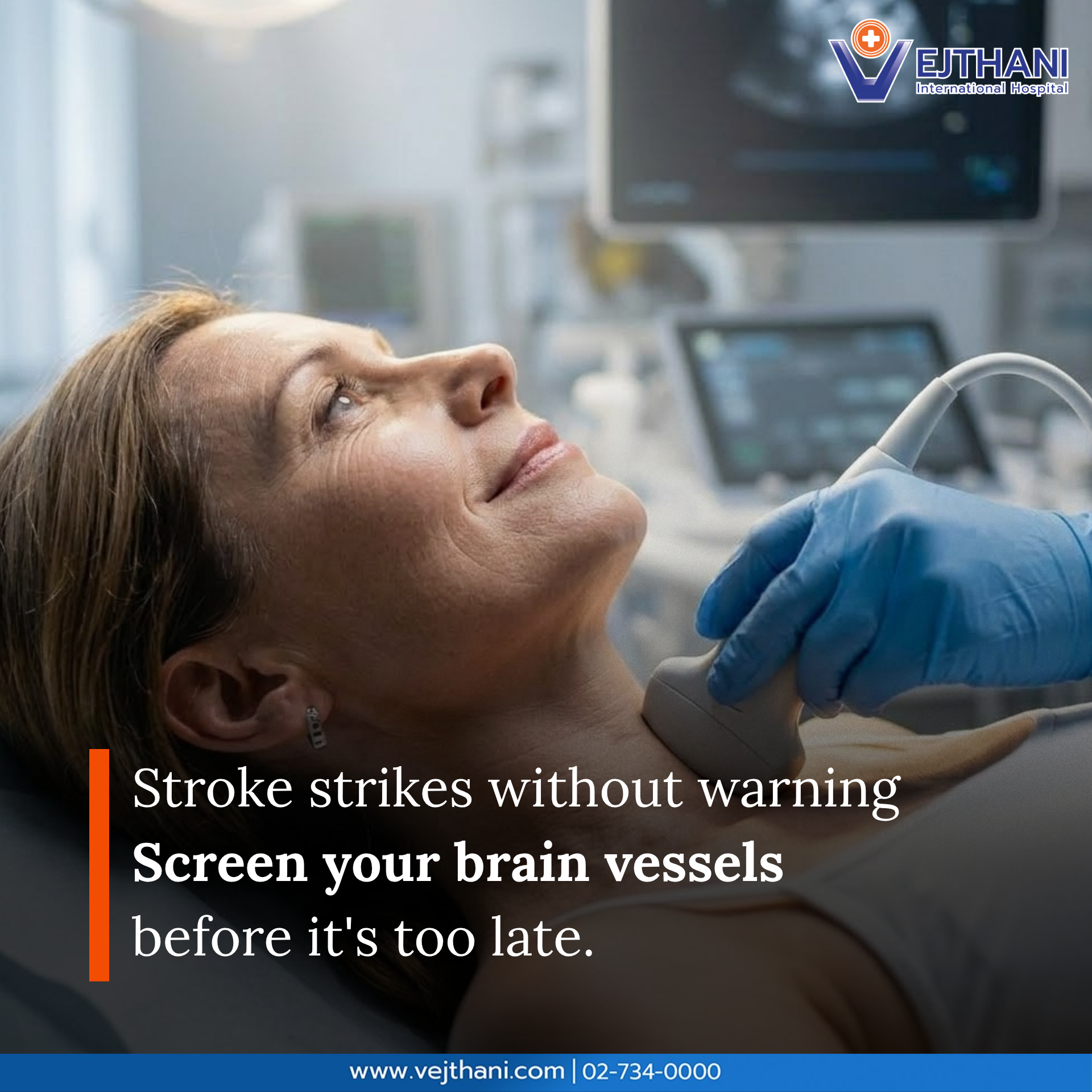
Stroke can occur even in people who have no obvious warning signs. Carotid Doppler Ultrasonography and Transcranial Doppler Ultrasonography (TCD) are non-invasive screening tests that help evaluate blood flow in the major arteries of the neck and brain. These examinations allow doctors to detect abnormalities that may increase the risk of stroke and develop an appropriate prevention and treatment plan at an early stage.
Stroke: A Silent Threat That May Show No Symptoms
Stroke is a serious condition that can develop silently without noticeable symptoms. Many people with plaque buildup inside their arteries feel completely healthy and continue their everyday lives as usual. However, hidden risks may already be present.
Over time, plaque can enlarge and narrow the arteries, reducing blood flow to the brain. In some cases, small pieces of plaque may break away and travel through the bloodstream, causing a blockage in the brain’s blood vessels. This can lead to a stroke, resulting in weakness, paralysis, or other potentially life-altering complications.
Early detection and timely intervention are among the most effective ways to reduce the risk of stroke and protect long-term brain health.
What Are Carotid Doppler Ultrasonography and Transcranial Doppler (TCD)?
These ultrasound-based examinations assess blood circulation in the arteries that supply the brain. A comprehensive cerebrovascular evaluation typically includes two complementary tests:
Together, they provide a detailed assessment of blood flow from the neck to the brain.
What Does Carotid Doppler Ultrasonography Evaluate?
Carotid Doppler Ultrasonography examines the carotid arteries, the major blood vessels located in the neck that deliver oxygen-rich blood from the heart to the brain. This examination helps determine:
Whether plaque or calcium deposits are present within the artery walls
Whether the carotid arteries have become narrowed (carotid artery stenosis)
Whether blood flow to the brain is adequate
Whether there is abnormal thickening of the arterial wall
If plaque buildup or arterial narrowing is detected, doctors can assess the patient’s stroke risk and recommend appropriate preventive measures.
What Is Transcranial Doppler (TCD)?
Transcranial Doppler Ultrasonography (TCD) evaluates blood flow within the major arteries inside the brain. These vessels are continuations of the arteries originating in the neck and play a crucial role in supplying blood to the brain tissue. TCD evaluates :
When combined with Carotid Doppler Ultrasonography, it provides doctors with a more comprehensive view of blood flow, from the carotid arteries in the neck to the major arteries within the brain.
Benefits of Cerebrovascular Ultrasound Screening
High screening accuracy: When Carotid Doppler Ultrasonography and Transcranial Doppler (TCD) are performed together, they provide a screening accuracy of up to 90–98%.
No contrast dye or contrast agent required
Quick procedure: Takes only 15–20 minutes, with results available immediately.
Comprehensive assessment of both extracranial and intracranial arteries
Provides a detailed assessment of the brain’s blood vessels to guide personalized care and preventive planning.
Who Should Consider Stroke Screening?
Adults aged 40 years and older
Individuals who smoke or consume alcohol regularly
At Neuroscience Center, Vejthani International Hospital, Carotid and Transcranial Doppler Ultrasoundare performed by our team of specialists to ensure accurate risk assessment and personalized recommendations for ongoing care and stroke prevention.
Treatment Options For Plaque Buildup in the Brain Arteries
If plaque is found within the brain arteries, treatment recommendations will depend on the severity of the condition.
Medical Management:For mild to moderate narrowing, medications are often the first line of treatment. Medications will help control plaque progression and reduce the risk of blood vessel blockage.
Carotid Artery Stenting: In cases of significant arterial narrowing that restricts blood flow to the brain, a stent may be inserted to widen the artery and restore circulation.
Carotid Endarterectomy: For severe carotid artery stenosis, surgical removal of plaque may be recommended to reduce the risk of future stroke.
Early Detection Can Help Prevent Stroke
Cerebrovascular ultrasound screening, such as Carotid and Transcranial Doppler Ultrasound are effective ways to identify vascular abnormalities before symptoms occur, especially in individuals with known risk factors. Detecting abnormalities at an early stage enables timely intervention and personalized care, helping reduce the likelihood of serious complications in the future.
Frequently Asked Questions (FAQs)
How should I prepare for Carotid and Transcranial Doppler Ultrasound?
In most cases, no special preparation is required. Patients can have their meals and take medications as usual unless otherwise instructed by their doctors. For specific recommendations, please consult the hospital before your appointment.
Are the screening tests painful?
No. The procedure is painless and non-invasive. An ultrasound probe is gently placed on the skin, similar to a standard ultrasound examination. The test usually takes approximately 15–20 minutes, and results are available immediately.
Is Carotid Doppler Ultrasonography alone sufficient?
Carotid Doppler Ultrasonography evaluates the carotid arteries in the neck, while Transcranial Doppler Ultrasound examines blood vessels inside the brain. Performing both tests together provides a more comprehensive assessment of cerebrovascular health and offers higher screening accuracy, approximately 90–98%.
If plaque is detected, will surgery always be necessary?
Not necessarily. In many cases, medication is the first line of treatment. Surgical intervention or angioplasty with stent placement may be considered when arterial narrowing is severe enough to significantly reduce blood flow to the brain.
How often should I undergo the screening?
The recommended screening interval depends on your test results and individual risk factors. Your doctor will advise the most appropriate follow-up schedule based on your overall health.
For more information, please contact Neuroscience Center, Vejthani International Hospital Call: (+66)2-734-0000 Ext. 5400 English Hotline: (+66)85-223-8888
We use cookies to manage your personal information in order to provide you with the best personalized user experience on our website. If you continue using the website, we assume that you accept all cookies on the website. Find out more.