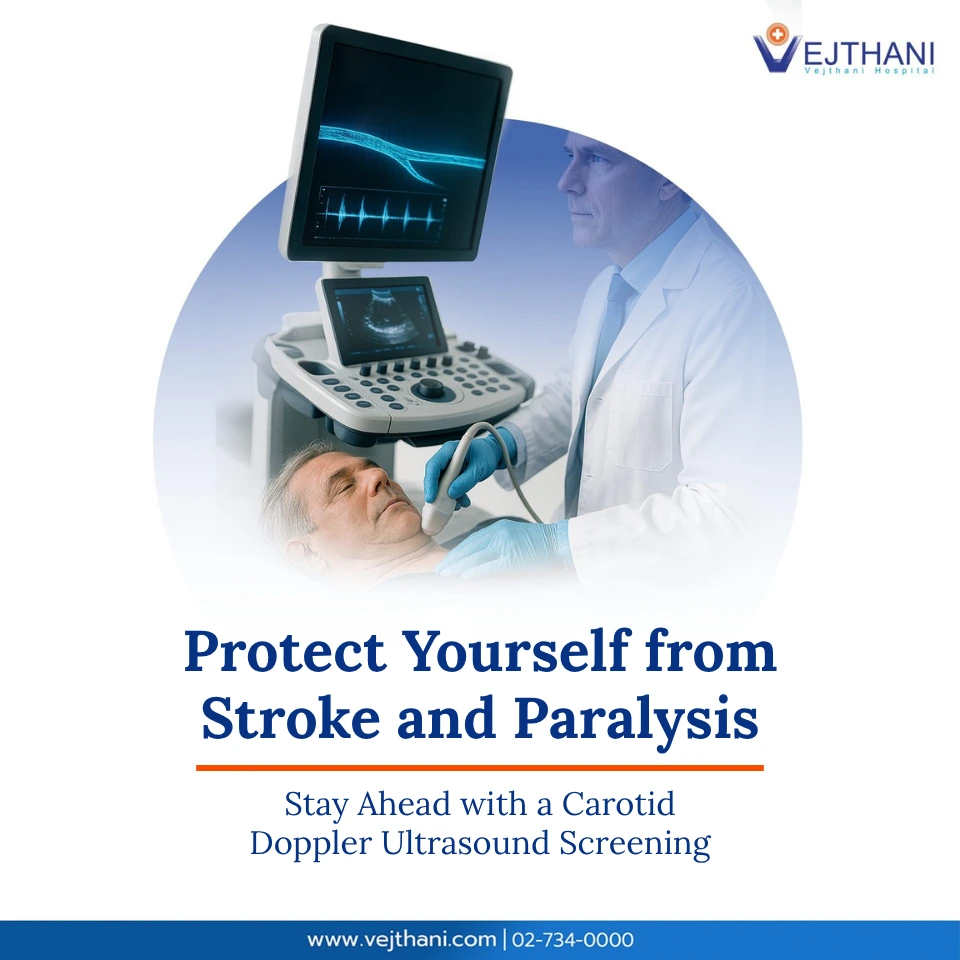


Protect Yourself from Stroke and Paralysis, Stay Ahead with a Carotid Doppler Ultrasound Screening
Health Articles
Select Topic
Stroke continues to be a major health concern, ranking second among the leading causes of death across the globe in people over 60. It can result from genetics, chronic health conditions, or lifestyle factors. Fortunately, the risk of stroke can be greatly reduced through proactive lifestyle choices.
Here are 5 Effective Ways to Lower the Risk:
Control your blood pressure – High blood pressure is the number one risk factor. Monitor it regularly and adjust your lifestyle by reducing salt intake, exercising, and managing stress.
Quit smoking and limit alcohol – Nicotine and alcohol can harden and narrow the arteries, increasing the risk of blood clots and stroke.
Maintain a healthy weight and exercise regularly – Engage in physical activity for at least 30 minutes a day, such as brisk walking, swimming, or cycling, to promote healthy blood circulation.
Manage blood sugar and cholesterol levels – Get regular health check-ups, reduce intake of sweets and saturated fats, and eat more fiber-rich fruits and vegetables.
Watch for warning signs of stroke – Such as facial drooping, weakness in the arms or legs, and slurred speech. Seek immediate medical attention within the first 4.5 hours for the best chance of effective treatment.
Screen for Stroke Risk with Carotid Doppler Ultrasound
Carotid Doppler Ultrasound is a safe and painless diagnostic test that assesses the thickness and narrowing of the carotid arteries in the neck — the main arteries that supply blood to the brain.
Recommended for individuals at risk of stroke
Evaluates blood flow to the brain
Detects abnormalities early, even before symptoms appear
Don’t wait until it’s too late. Know your risk… and take action early.
We use cookies to manage your personal information in order to provide you with the best personalized user experience on our website. If you continue using the website, we assume that you accept all cookies on the website. Find out more.