If you have been experiencing a sharp, persistent pain below the right hip bone, everyday movements like walking, sitting, or climbing stairs can feel like a mountain to climb. When joint damage from arthritis or a severe injury makes life uncomfortable, a hip replacement is often the suitable path toward reclaiming your mobility.
Today, medical technology has evolved far beyond traditional methods. Surgeons can use digital tools to perform computer-assisted hip replacement surgery, offering a level of precision that allows your new joint to be customized and aligned down to the exact degree and millimeter.
What Is Computer-Assisted Hip Replacement Surgery?
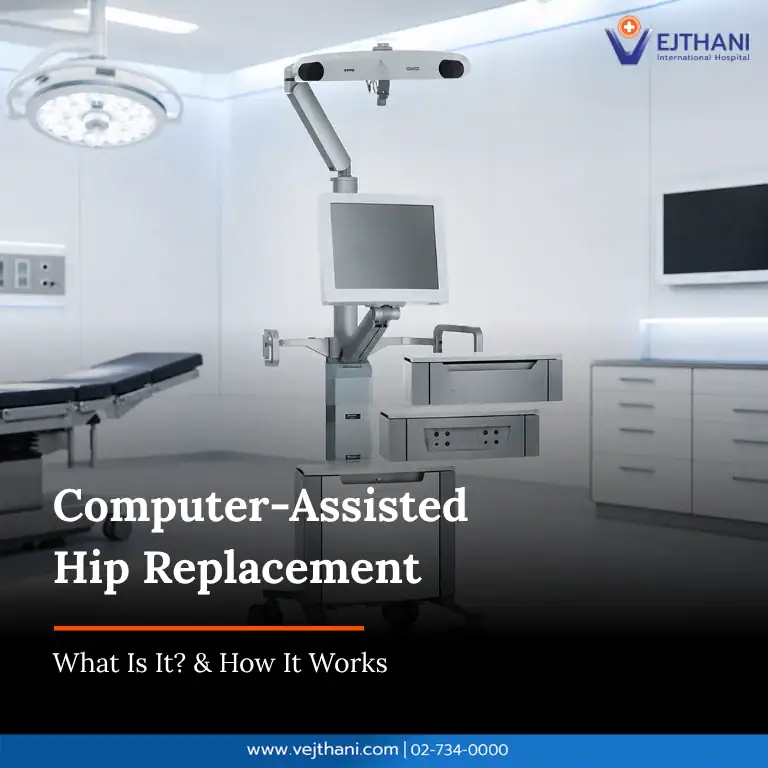
Computer-assisted hip replacement surgery (sometimes called CAS) is an innovative, image-guided, and minimally invasive procedure. It uses specialized computer software and tracking tools to help surgeons replace a damaged or diseased hip joint with an artificial implant.
Think of it like the GPS navigation system in your car. Instead of relying solely on the human eye, the surgeon uses real-time digital tracking to guide every single calculation, customize the fit down to the exact millimeter, and perfectly align your new joint.
How It Works
The magic behind computer-assisted hip replacement surgery lies in three main components that work seamlessly together in the operating room:
The Tracking Sensors: Small, temporary tracking sensors or light receptors are attached to the bone. They act as beacons that map out your exact anatomy.
The Specialized Camera: A high-tech navigation camera visualizes the hip joint and captures the movement and positioning of these sensors.
The Navigation Software: The camera sends this data to a computer loaded with specialized surgical software. This creates a highly accurate, virtual 3D model of your unique hip joint right on the screen.
Advantages of Computer-Assisted Hip Replacement Surgery
While traditional surgeries have high success rates, incorporating digital technology brings incredible benefits to the table. The key advantages include:
Unmatched Precision: The system helps the surgeon make exceptionally precise bone cuts and determine the exact size and placement of the implant.
Optimal Implant Alignment: Just like balancing the tires on a car, a perfectly aligned joint distributes weight evenly. This can improve the overall stability and functional outcome of your new hip.
Long-Lasting Results: When an implant is positioned perfectly, it experiences less uneven wear and tear, which may improve the long-term durability of the device.
Equal Leg Lengths: The real-time feedback significantly reduces the risk of leg-length discrepancies, ensuring both legs remain perfectly balanced after surgery.
Minimally Invasive: Because the computer guides the instruments so accurately, it supports smaller incisions, resulting in minimal postoperative pain and a lower risk of complications.
The Procedure: Before, During, and After
Here are the procedures of Computer-Assisted Hip Replacement Surgery:
Before Surgery
Your care team will run complete diagnostic checks. Depending on the specific system used, you might get a pre-operative CT scan or MRI. These images are uploaded into the software to build an initial blueprint of your joint before you even step into the operating room.
During Surgery
The procedure typically takes between one to one and a half hours. After administering anesthesia, the surgeon places the tracking sensors into the hip area. As the surgeon moves the joint, the computer gathers data points to generate the live 3D model. Guided by these real-time calculations, the doctor makes exact cuts, prepares the bone, and securely positions the artificial implant.
After Surgery
Once the instruments are removed and the incisions are neatly closed, you will move to a recovery room. Most patients stay in the hospital for a few days, where physical therapists will gently encourage you to sit up, stand, and take your first steps using a walker or cane.
Recovery and Reclaiming Your Life
The precision achieved during computer-assisted hip replacement surgery facilitates a structured and efficient recovery timeline. Most patients can ambulate independently without the assistance of a cane or walker within 4 to 6 weeks. While complete deep-tissue healing and full functional restoration may require several months, patients generally report a substantial reduction in joint pain early in the rehabilitative process.
Trust Your Joints to Vejthani International Hospital
Advanced medical technology requires expert clinical execution to achieve optimal results. At Vejthani International Hospital, our team of board-certified orthopedic specialists combines extensive surgical experience with the computer-assisted hip replacement surgery technology.
Whether you are suffering from severe osteoarthritis, chronic joint degeneration, or need urgent care for a hip fracture, Vejthani International Hospital team provides personalized care from your first consultation through to your physical rehabilitation. To consult with an orthopedic specialist regarding your joint health, contact Vejthani International Hospital to schedule a clinical appointment.
Frequently Asked Questions
1. Does the computer actually perform the computer-assisted hip replacement surgery?
No. The computer does not perform the surgery or make independent decisions. The entire procedure is entirely under the manual control of your orthopedic surgeon. The computer simply acts as a digital guide—similar to a GPS—providing real-time data and measurements to help the surgeon achieve maximum precision.
2. Is computer-assisted hip replacement surgery safe?
Yes, it is highly safe. Complications specific to the computer tracking tools (such as irritation where the temporary sensors are attached) are incredibly rare, occurring in less than 1% of cases. Because it allows for a minimally invasive approach, it often reduces overall surgical trauma.
3. How long do the implants last after this procedure?
While a joint implant’s lifespan depends on your age and activity level, proper alignment is key to longevity. Because computer-assisted hip replacement surgery ensures optimal alignment and positioning, it helps prevent uneven wear and tear, which can significantly extend the durability and lifespan of the implant.
We use cookies to manage your personal information in order to provide you with the best personalized user experience on our website. If you continue using the website, we assume that you accept all cookies on the website. Find out more.