DBS Surgery: What Is Deep Brain Stimulation Surgery and Who Is It For?
Health Articles
Select Topic
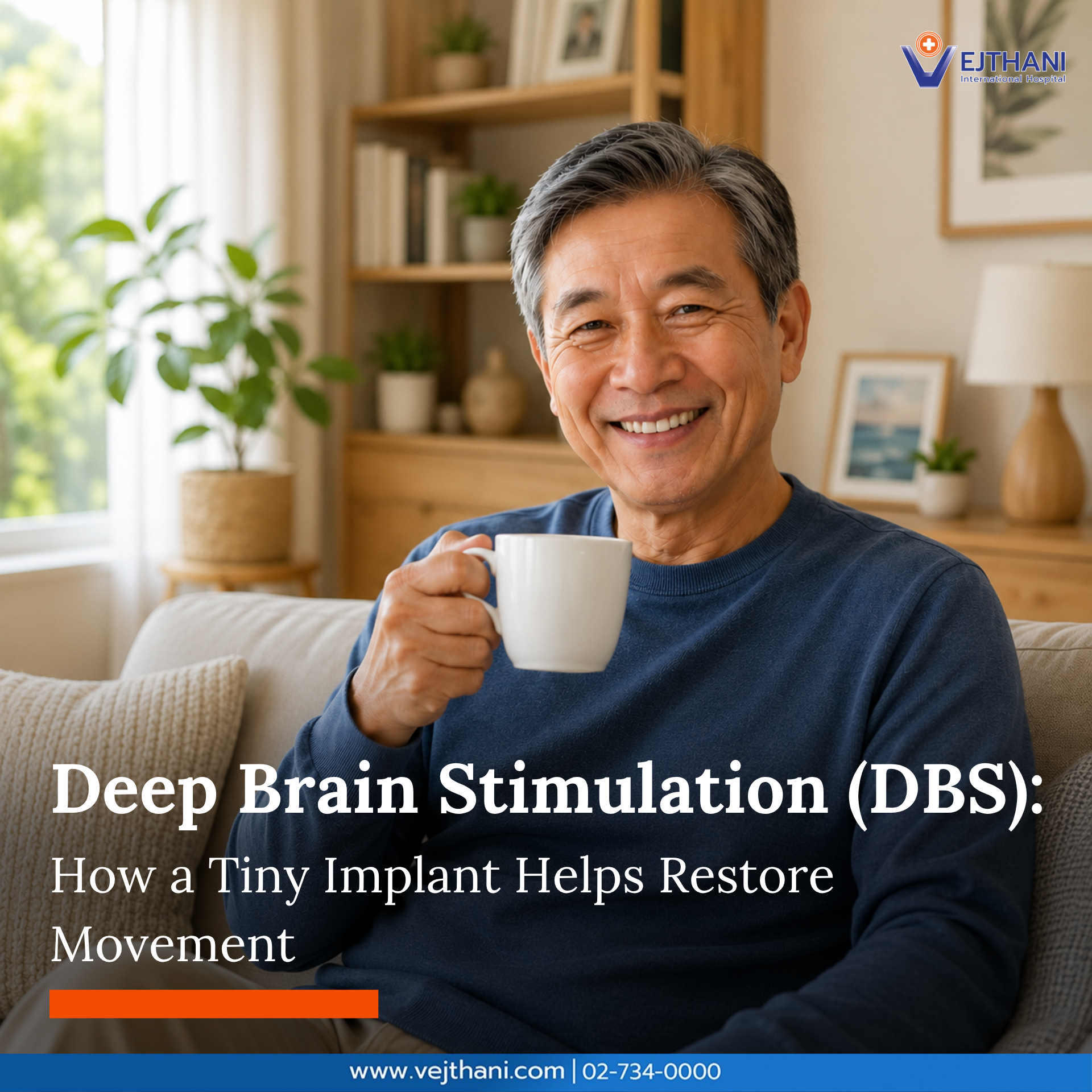
What is DBS Surgery (Deep Brain Stimulation) When tremors, muscle stiffness, and movement difficulties begin to interfere with daily life, DBS surgery may offer a new treatment option. This advanced procedure can help relieve symptoms associated with Parkinson’s disease, Essential Tremor and other neurological conditions by targeting specific areas of the brain.
What is DBS Surgery?
DBS(Deep Brain Stimulation) is an advanced surgical procedure that involves implanting a small electrical stimulation device in specific areas of the brain to help regulate abnormal neural activity. It can help relieve symptoms such as tremors, muscle stiffness, slowed movement, and involuntary movements. Deep brain stimulation surgery is most commonly used to treat people with Parkinson’s disease, Essential Tremor, and certain neurological conditions when medications alone are no longer able to provide adequate symptom control.
How Does DBS Surgery Work?
DBS surgery works like a “pacemaker for the brain.” It uses controlled electrical stimulation to help regulate abnormal brain activity associated with movement disorders.
Targeted electrode placement: Thin electrodes are implanted into specific brain areas involved in movement control, such as the subthalamic nucleus (STN), globus pallidus internus (GPi), or thalamus, depending on the condition being treated.
Continuous symptom control: The electrodes are connected to a small pulse generator implanted under the skin near the collar bone or the chest. Once activated, the device delivers continuous electrical impulses to help restore balance within neural circuits and relieve symptoms such as tremors, stiffness, slowed movement, and involuntary movements.
Adjustable treatment: The stimulation settings can be fine-tuned after surgery to suit each patient’s needs and adjusted over time as symptoms change.
A reversible approach: Unlike procedures that permanently destroy brain tissue, DBS does not damage targeted areas of the brain, making it a flexible, reversible treatment option for certain neurological conditions.
DBS Surgery Procedure: Step-by-Step
DBS surgery is typically performed in separate stages to ensure accuracy and safety.
Step 1: Brain surgery (Electrode placement)
Using advanced imaging techniques such as MRI or CT scans, the neurosurgeon identifies the precise areas of the brain involved in movement control. Thin electrodes are then implanted into the targeted brain regions. In many cases, patients remain awake under local anesthesia so the surgical team can monitor brain function and confirm accurate electrode placement throughout the procedure.
Step 2: Pulse generator implantation
During a separate procedure, a small pulse generator (the battery that powers the DBS system) is implanted under the skin near the collar bone or chest under general anesthesia. The electrodes in the brain are connected to the device through extension wires placed beneath the skin.
Step 3: Device programming and follow-up
A few weeks after surgery, a specialist activates and programs the DBS device to optimize symptom control. The stimulation settings can then be fine-tuned over time to adapt to each patient’s evolving needs.
Who Can Benefit from DBS Surgery?
In general, DBS surgery may benefit patients whose symptoms can no longer be adequately controlled with medication alone. Doctors commonly recommend Deep Brain Stimulation surgery for people with Parkinson’s disease, Essential Tremor and Dystonia that significantly affect movement, daily activities, and quality of life.
Parkinson’s Disease
DBS Surgery for Parkinson’s Disease reduces symptoms such as tremors, muscle stiffness, slowed movement, and motor fluctuations when medications no longer provide adequate symptom control.
It can help improve symptom management, enhance daily functioning, and improve quality of life for appropriately selected patients.
Essential Tremor
DBS surgery for Essential Tremor reduces uncontrollable shaking that affects the hands, head, voice, or other parts of the body when medications are no longer effective or cause unwanted side effects.
It can significantly improve tremor control, making everyday activities such as eating, writing, and dressing easier to perform.
Dystonia
Deep Brain Stimulation surgery may help reduce abnormal muscle contractions, repetitive movements, and postural abnormalities in patients with Dystonia, particularly when medications do not provide sufficient symptom control.
Studies have shown that deep brain stimulation (DBS) targeting the Globus Pallidus Internus (GPi) can significantly improve symptoms in people with both generalized and cervical dystonia.
DBS Surgery Success Rate and Benefits
For many patients, Deep Brain Stimulation surgery can significantly improve symptom control and quality of life, particularly when medications no longer provide adequate relief. At the same time outcomes vary depending on the condition being treated and individual factors. Deep Brain Stimulation surgery has demonstrated long-term benefits in appropriately selected patients.
Some of the key benefits of Deep Brain Stimulation surgery include :
Reduced tremors, stiffness, and involuntary movements
Improved mobility and daily functioning
Better control of motor symptoms and symptom fluctuations
The DBS surgery success rate depends on several factors, including the patient’s condition, symptom severity, and overall health. Patients with Parkinson’s disease and Essential Tremor often experience the most significant improvements, particularly when treatment is performed at an experienced center, and patients are carefully selected.
What are the Risks and Side Effects of DBS Surgery?
Deep Brain Stimulation surgery is generally considered a safe and well-established procedure. However, as with any surgery, it carries risks and potential side effects. Most side effects are temporary and can often be managed by adjusting to the DBS device settings.
DBS Surgery Risks
Although serious complications are uncommon, potential risks of Deep Brain Stimulation surgery may include :
Some patients may experience temporary side effects after surgery or during the adjustment of stimulation settings, including :
Headache or discomfort at the implant site
Temporary swelling or pain
Balance or coordination problems
Speech difficulties
Tingling or numbness
Vision changes
Mood or behavioral changes
Doctors can often minimize or resolve these side effects by adjusting the DBS stimulation settings and providing ongoing follow-up care.
After DBS Surgery: Recovery and Follow-Up
Recovery after Deep Brain Stimulation surgery varies from person to person. Post-operative care includes wound monitoring, device activation, and ongoing programming sessions to optimize symptom control.
A specialist typically activates the DBS device 2 to 4 weeks after surgery. Patients may require several follow-up visits during the first year to fine-tune stimulation settings and evaluate their response to treatment. Doctors may also adjust medications as symptoms improve.
Long-term follow-up with both neurologist and neurosurgeon plays an important role in achieving maximum outcome.
DBS Surgery in Thailand: What Patients Should Know
Patients considering DBS surgery in Thailand are recommended to choose a hospital with extensive experience in treating movement disorders and performing complex neurosurgical procedures. Successful treatment depends not only on the surgery itself but also on comprehensive preoperative evaluation, accurate electrode placement, personalized device programming, postoperative management, and long-term follow-up care.
With advanced medical technology and multidisciplinary expertise, Thailand offers international patients access to high-quality Deep Brain Stimulation surgery and comprehensive neurological care.
If you or a loved one is experiencing worsening symptoms despite medical treatment, the Neuroscience Center at Vejthani International Hospital offers comprehensive evaluation and personalized treatment planning by a multidisciplinary team of neurologists, neurosurgeons, and other specialists.
Contact Vejthani Hospital today to learn more about DBS surgery and explore the most appropriate treatment options for your condition.
FAQ about DBS Surgery
Is DBS surgery a cure for Parkinson’s disease?
Deep Brain Stimulation surgery does not cure Parkinson’s disease or other neurological conditions. However, it can help reduce symptoms, improve daily functioning, and enhance quality of life in appropriately selected patients.
What is the DBS surgery success rate?
The DBS surgery success rate varies depending on the condition being treated, symptom severity, and individual patient factors. Many patients with Parkinson’s disease and Essential Tremor experience significant improvements in symptom control and daily functioning following treatment.
What happens after DBS surgery?
After DBS surgery, patients attend follow-up appointments for wound monitoring, device activation, and programming. A specialist usually activates the DBS device 2 to 4 weeks after surgery and adjusts the settings over time to optimize symptom control.
Can DBS surgery reduce the need for medication?
In some cases, Deep Brain Stimulation surgery may help reduce the amount of medication required to manage symptoms. However, many patients continue to take medications after surgery, and treatment plans are individualized based on each patient’s needs.
Is DBS surgery safe?
Deep Brain Stimulation surgery is generally considered a safe and well-established procedure when performed by experienced specialists. As with any surgery, there are potential risks and side effects, but most can be effectively managed through careful monitoring and follow-up care.
For more information, please contact
Neuroscience Center, Vejthani International Hospital
We use cookies to manage your personal information in order to provide you with the best personalized user experience on our website. If you continue using the website, we assume that you accept all cookies on the website. Find out more.