Breast Cancer Awareness Month Starts With Knowing Your Own Risk
Health Articles
Select Topic
October marks Breast Cancer Awareness Month, an important reminder to pay attention to your breast health, even if you have no noticeable symptoms or family history of the disease. Age, medical history, and previous breast test results give doctors the information they need to recommend when to start breast cancer screening.
October Brings Breast Cancer Awareness Into Focus
Breast health questions often go unanswered until something feels wrong. October’s breast cancer awareness campaigns encourage people to seek medical advice early, get checked, and receive timely treatment when needed.
Your Personal Risk Involves More Than Family History
Having no family history of breast cancer does not mean you are free from the risk of developing breast cancer. Your age, breast density, and any previous breast conditions can help your doctor decide which screening tests you may need.
Age and Medical History
The chance of developing breast cancer rises with age. A past diagnosis or abnormal cells found during a breast biopsy also deserve attention. Early biopsy reports help doctors understand those findings. Chest radiation during childhood or young adulthood may require early breast cancer screening.
Family History and Inherited Gene Changes
A family history of breast cancer, ovarian cancer, or other cancer on both the maternal and paternal sides is important when assessing your risk. Doctors look at which relatives had cancer and the age at diagnosis.
Breast or ovarian cancer in several relatives, especially at a young age, raises the possibility of an inherited gene change. A genetic counselor reviews the family history and explains whether testing for changes in genes such as BRCA1 and BRCA2 would help with decisions about screening and treatment.
Hormonal and Reproductive History
Starting periods before age 12 or reaching menopause after 55 means the body has more years of exposure to estrogen. This longer exposure increases breast cancer risk. Risk is also higher among women who have their first baby after age 30. Menopause treatment that combines estrogen and progesterone is another factor doctors consider.
Lifestyle and Body Weight
Alcohol consumption increases breast cancer risk, and the risk rises with the amount consumed. Lack of regular physical activity and excess body weight after menopause also increase the risk.
Breast Changes That Need a Doctor’s Assessment
A new lump, nipple discharge, nipple ulcer, or a change in breast shape needs a medical check. Symptoms to look out for include:
A new lump in the breast or underarm.
Thickening or swelling in any area of the breast.
A change in breast size or shape.
Skin dimpling or puckering.
A nipple that has recently started turning inward.
Nipple discharge unrelated to breastfeeding, especially bloody discharge.
Persistent redness, flaking, ulcer or a rash around the nipple.
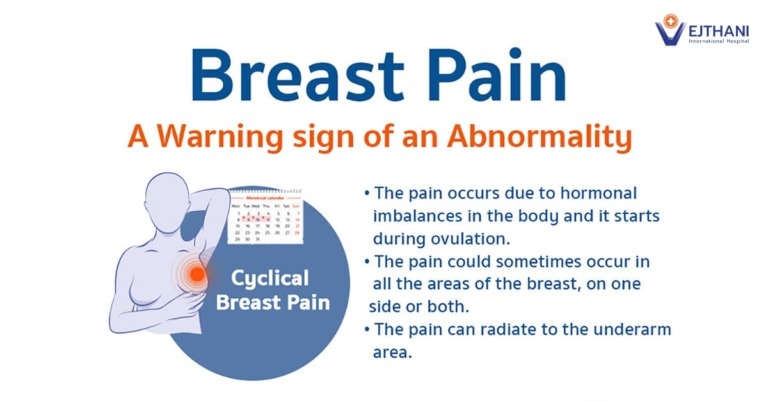
New pain that stays in one area or does not go away.
These changes do not necessarily mean breast cancer. Noncancerous conditions also cause breast symptoms, and a doctor’s evaluation helps identify the cause. A new breast change requires medical attention rather than waiting for the next routine checkup, even after a recent normal screening result.
Breast Screening Matters Before Symptoms Appear
Annual mammograms look for breast cancer in women who have no symptoms. It is recommended to start at age 40 for women at average risk, though intervals between appointments vary.
A strong family history, a harmful BRCA1 or BRCA2 gene change, or chest radiation at a young age often means starting sooner. Mammography is the primary screening test for women starting at age 40. Breast ultrasound provides a closer look at particular breast findings, while MRI often supplements mammograms for young age women at high risk.
Mammography
A mammogram uses low-dose X-rays to examine breast tissue. It helps doctors find small tumors and tiny calcium deposits that sometimes signal early breast cancer, before a lump becomes noticeable.
Doctors compare current imaging tests with previous mammograms to check for changes over time. Bringing earlier images and reports gives the radiologist a useful reference.
Breast Ultrasound
Breast ultrasound uses sound waves to create images of breast tissue. It helps doctors examine a specific area, such as a lump or a mammogram finding, and distinguish a fluid-filled cyst from a solid mass.
Doctors also recommend ultrasound alongside mammography in certain cases, depending on breast density and other findings.
Breast MRI
Breast MRI uses a magnetic field and radio waves to create detailed images of breast tissue. For people at high risk, doctors often include MRI alongside mammography in the screening plan.
MRI also helps doctors investigate findings that need further assessment. The recommendation depends on the person’s risk, age, history of augmentation, previous results, and the reason for the examination.
Preparing for a Breast Health Appointment
Bring previous imaging and test results to the appointment. Family details worth noting include the type of cancer and age at diagnosis.
Previous tests: Mammograms, ultrasound or MRI reports, and any biopsy results.
Cancer in the family: The relative’s relationship, cancer type, and age at diagnosis.
Medications and hormone treatments: Names of current medicines, including menopausal hormone therapy.
New breast changes: What has changed, when it started, and whether it has continued or worsened.
Everyday Steps to Reduce Breast Cancer Risk
Exercise regularly: Brisk walking, cycling, and swimming help lower breast cancer risk.
Maintain a healthy weight: Excess weight increases breast cancer risk after menopause. Regular exercise and balanced meals help keep weight within a healthy range.
Limit alcohol: Breast cancer risk rises with the amount consumed. Drinking less, or avoiding alcohol, reduces this risk.
Review menopausal hormone therapy: Discuss the benefits, risks, and duration of treatment with a doctor before making any changes.
These steps help lower risk, but they do not replace breast screening or guarantee prevention.
Breast Care Beyond October
Breast Cancer Awareness Month draws attention to breast health, but screening and follow-up continue throughout the year. A clear plan helps keep annual checkups on schedule and ensures that new symptoms receive timely attention.
A consultation at the Breast Center at Vejthani International Hospital helps clarify personal risk and screening required. A breast specialist reviews medical history and previous findings to recommend the next steps. Specialist reviews medical history and previous findings to recommend the next steps.
FAQ
What Is Breast Cancer Awareness Month?
Breast Cancer Awareness Month is a global health campaign observed every October to raise awareness, encourage early detection, and support people affected by the disease and breast cancer research.
Why Is October Breast Cancer Awareness Month?
October’s association with breast cancer awareness dates back to a US campaign launched in 1985 to promote mammography and early detection. The campaign grew into a month-long event, and organizations worldwide now take part each October.
How Can You Participate in Breast Cancer Awareness Month?
Learn about breast cancer risk factors and warning signs, stay informed about recommended screening, and encourage your loved ones to prioritize their breast health. You can also share reliable health information, support awareness campaigns, and consult your doctor about when to begin breast cancer screening based on your individual risk factors.
Do I Need Screening If Nobody in My Family Has Had Breast Cancer?
A lack of family history does not remove the need for screening. Age, breast density, and medical history also affect risk. Doctors consider these factors to recommend when screening should begin and how often to repeat it.
We use cookies to manage your personal information in order to provide you with the best personalized user experience on our website. If you continue using the website, we assume that you accept all cookies on the website. Find out more.