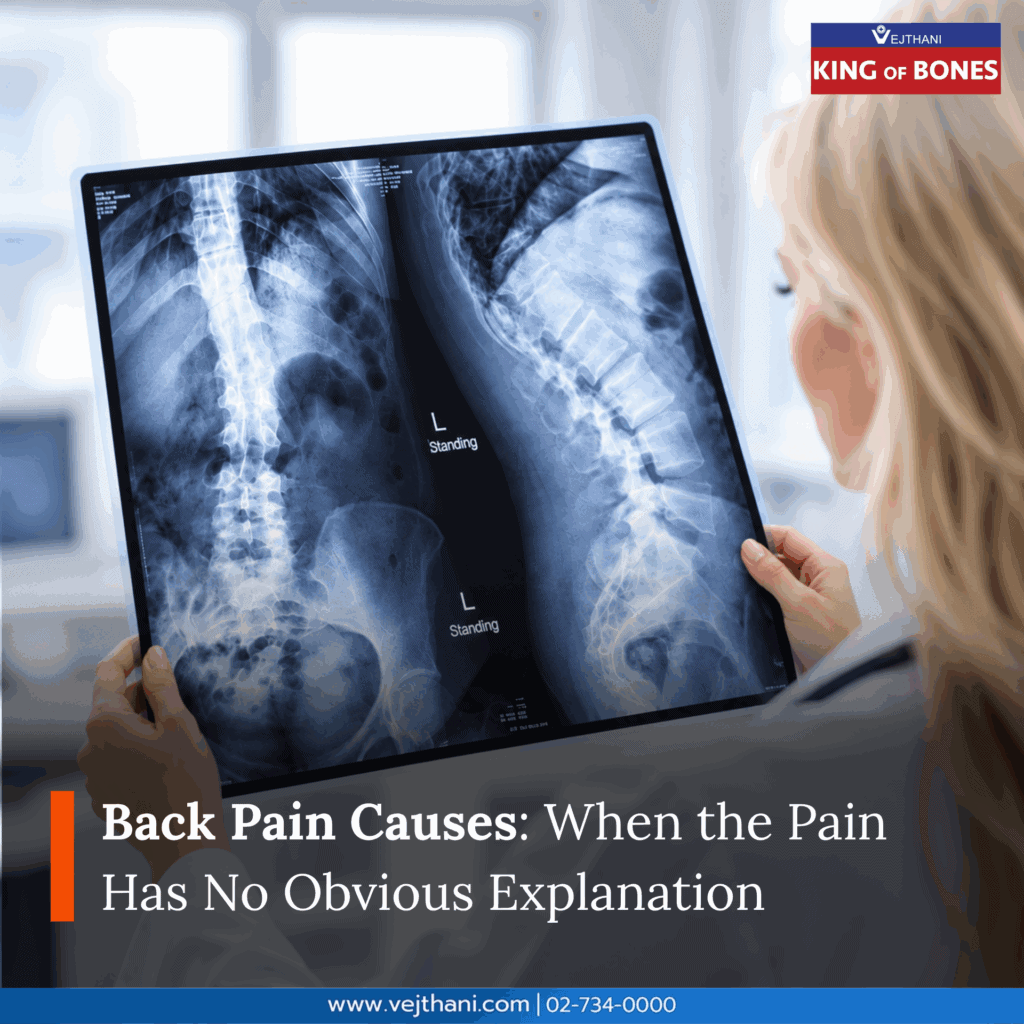
Back Pain Causes: When the Pain Has No Obvious Explanation
Health Articles
Select Topic
Back pain may start with a sharp twinge when you lift something, a persistent ache during the workday, or stiffness that makes getting out of bed uncomfortable. When it disrupts your routine, you may wonder whether the problem comes from a muscle, a disc, or another part of your spine.
Common back pain causes are muscle and ligament injuries, changes in the spinal joints or discs, and conditions that irritate the surrounding nerves. Several factors can contribute at the same time, and an assessment does not always reveal a single source of pain.
The location of your discomfort gives your doctor a starting point. Pain between the shoulder blades, around the waist, or near the buttocks may require doctors to consider different possible causes during the assessment. Your doctor also considers when the pain began, how movement affects it, and whether you have symptoms such as tingling or weakness. Combined with a physical examination, this information helps doctors determine which additional tests are needed for diagnosis and plan the right treatment.
Back Pain Caused by Location
Different types of back pain can affect the upper, middle, or lower back, or the area around the sacrum, a large, triangular bone at the base of the spine between the two hip bones. It connects the lumbar spine (lower back) to the pelvis. The location of the pain helps doctors assess its possible causes, along with other symptoms and how the pain changes with movement.
Upper back and shoulder blade pain: Pain around the shoulder blades may involve muscles after repetitive activity or prolonged sitting. Neck conditions can also cause referred pain in this area.
Middle back pain: Pain may involve muscles, spinal joints, or discs. New pain after a fall or minor injury may suggest a vertebral fracture, particularly in someone with osteoporosis.
Lower back pain: Causes include muscle injuries, disc problems, arthritis, spinal stenosis, and spondylolisthesis. Pain extending into the leg with tingling, numbness, or weakness may suggest nerve involvement.
Pain around the sacrum and buttocks: Pain around the sacrum and buttocks: Sacroiliac joint problems can cause pain near the base of the spine or buttocks. Lumbar spine conditions may cause similar symptoms, so physical examination helps assess the source of the pain. Pain in this region may also include coccydynia (tailbone pain), which specifically refers to pain at the coccyx or tailbone and is often aggravated by sitting or direct pressure.
Common Causes of Back Pain
Back pain can involve the muscles, ligaments, joints, discs, or nerves. Several problems may occur together, so symptoms alone cannot always identify the cause.
Muscle Strain and Ligament Sprain Lifting, twisting, or sudden movement can injure the tissues supporting your back. A strain affects a muscle or tendon; a sprain affects a ligament. Both may cause soreness, stiffness, and muscle spasms.
Age-Related Disc Changes Spinal discs can lose water and become thinner with age. These changes may contribute to back pain, but they can also occur without symptoms.
Herniated Disc A herniated disc occurs when the softer inner material pushes through the disc’s outer layer. If it irritates a nearby nerve in the lower back, it may cause pain radiating into the leg, sometimes with numbness or weakness.
Arthritis of the Spinal Joints Osteoarthritis can cause pain and stiffness in the spinal joints. Related changes may also narrow the spaces around nerves, contributing to additional symptoms.
Spinal Stenosis Spinal stenosis means narrowing of spaces within the spine. Pressure on lower back nerves may cause leg pain, tingling, or weakness. Symptoms sometimes worsen with standing or walking and improve with sitting or leaning forward.
Spondylolisthesis Spondylolisthesis occurs when one vertebra slips out of alignment with the one below. It may cause lower back pain or affect the surrounding nerves, although some people have no symptoms.
Inflammatory Conditions Conditions such as axial spondyloarthritis can inflame the spine and sacroiliac joints, which connect it to the pelvis. Pain and stiffness may worsen during rest, improve with movement, and disturb sleep. This pattern warrants assessment but does not confirm a diagnosis.
Vertebral Fractures and Less Common Causes Spinal fractures may follow an accident or occur during everyday activities when osteoporosis weakens the bones. Symptoms can include new back pain, loss of height, or a stooped posture.
Spinal infection and tumors are less common causes. Back pain accompanied by fever, unexplained weight loss, or a history of cancer needs medical evaluation.
Symptoms That Help Identify the Cause of Back Pain
Pain with sitting, bending, or walking: Certain movements or positions may increase or relieve pain. Doctors assess these patterns alongside an examination to determine the source of pain.
Pain radiating into the leg: Sharp, burning, or electric pain extending into the buttock or leg may suggest nerve irritation. However, muscles and joints can also cause radiating pain, so this symptom alone does not confirm nerve compression.
Numbness, tingling, or weakness: Altered sensation or reduced strength in the leg or foot may indicate impaired nerve function. A neurological examination helps assess these changes. New or progressive weakness requires urgent medical evaluation.
Morning stiffness or night pain: Persistent morning stiffness that eases with movement, particularly alongside pain during rest or at night, may require further evaluation to determine whether an inflammatory condition is present. These signs alone are not enough to confirm a diagnosis.
Persistent or recurring pain: The duration, frequency, and impact of symptoms help guide further evaluation. Pain that repeatedly affects sleep, mobility, or daily activities requires medical assessment.
How Doctors Diagnose the Cause of Back Pain
Doctors assess symptoms and examine the back to help identify the cause of pain. Some patients need further tests, depending on the findings.
Medical history: The assessment includes when the pain started, what makes it worse or better, and how it affects daily activities. Previous injuries, medical conditions, and symptoms in the legs also provide useful information.
Physical examination: Doctors check movement, muscle strength, sensation, and reflexes to assess the back and look for signs of nerve involvement.
X-rays and MRI: X-rays show bones and spinal alignment. MRI provides images of discs, nerves, and surrounding tissues. Not everyone needs a scan; doctors recommend one when the results could help with diagnosis or treatment.
Other tests: Blood tests may help check for inflammation or infection. Nerve and muscle tests may help assess persistent numbness or weakness.
Disc bulges and age-related changes do not always cause pain. Doctors compare scan results with symptoms and physical examination to assess whether they are related.
Treatment Options for Back Pain
Non-Surgical Treatment
Many patients begin with non-surgical care.
Activity and self-care: Staying active within comfortable limits helps maintain movement. Adjusting activities that increase pain may help, while prolonged bed rest is generally discouraged.
Medication: Pain medicines may provide short-term relief. Doctors consider medical history and possible side effects before recommending treatment.
Physical therapy: Exercises help improve strength, flexibility, and movement. The program should suit the patient’s symptoms and ability.
Spinal injections: Certain injections may reduce pain associated with nerve irritation.
Surgical Treatment
Doctors may consider surgery when a confirmed spinal condition continues to cause significant symptoms despite non-surgical treatment. Severe or worsening nerve problems may require earlier intervention. The right surgical approach depends on the cause of your spine condition. Spine Center at Vejthani International Hospital offers a full range of procedures, including:
Discectomy: Removes disc material pressing on a nerve
Decompression or laminectomy: Removes tissue or part of a spinal bone to provide more space for compressed nerves
Endoscopic spine surgery: Uses a small camera and instruments for selected disc removal or decompression procedures
Microscopic spine surgery: Uses a microscope to improve visibility during disc removal or decompression
Minimally invasive spine surgery: Uses smaller incisions and limits disruption to surrounding muscles during selected decompression or fusion procedures
Spinal fusion: Joins vertebrae to stabilize part of the spine, using techniques such as TLIF, PLIF, XLIF, OLIF, or ALIF.
Vertebroplasty and kyphoplasty: Use bone cement to stabilize vertebral compression fractures.
Revision spine surgery: Treats selected problems following previous spinal surgery.
Endoscopic, microscopic, and minimally invasive techniques describe how surgeons access and perform a procedure. They may overlap with operations such as discectomy, decompression, or fusion.
Recovery and Reducing Recurring Back Pain
Recovery varies with the cause of pain and the treatment received. Some conditions improve within weeks, while persistent symptoms or recovery after surgery may take longer. Pain can also return after a period of improvement.
Gradual return to activity: Walking and everyday movement can help maintain function. Increase daily activity gradually, with adjustments based on symptoms and any treatment restrictions.
Regular exercise: Strengthening, flexibility, and aerobic exercise can support recovery and may reduce the risk of recurrence. The program should match the patient’s condition and fitness level.
Changes in position: Taking breaks during prolonged sitting or standing may help manage discomfort. There is no single posture that suits everyone.
Lifting and daily tasks: Avoiding sudden increases in physical effort may help when returning to work or exercise.
Follow-up care: Ongoing or recurring symptoms may require a review of the treatment plan. After surgery, follow-up and rehabilitation depend on the treatment received and its result. and individual progress.
When to See a Doctor for Back Pain
Seek medical attention when pain persists, worsens, or repeatedly affects sleep, walking, or daily activities. Pain accompanied by fever, unexplained weight loss, or a history of cancer also needs prompt evaluation.
Seek emergency care for:
Difficulty urinating or suddenly losing control of your bladder or bowels.
Numbness around your genitals, between your legs, or around your bottom.
Weakness in the leg that is severe or getting worse quickly.
Back pain after a serious fall or accident.
Spine Treatment at Vejthani International Hospital in Thailand
The doctors at the Spine Center in Vejthani International Hospital in Bangkok, Thailand, have experience treating both common and complex spinal conditions, including herniated discs, spinal stenosis, fractures, and spinal deformities. The team considers symptoms, examination findings, and test results when recommending treatment, with options ranging from physical therapy and image-guided injections to spine surgery.
When surgery is indicated, surgical options include endoscopic, microscopic, and minimally invasive techniques, supported by advanced technologies such as O-arm 3D imaging, surgical navigation, and intraoperative nerve monitoring to enhance precision and patient safety throughout the procedure. Spine specialists work with rehabilitation doctors, physical therapists, and occupational therapists to enhance recovery and follow-up care.
Frequently Asked Questions About Back Pain Causes
What are the primary back pain causes and how do they affect the spine?
Back pain can result from muscle or ligament injuries, disc problems, and changes in spinal joints. These may cause pain and stiffness. When nearby nerves become irritated, symptoms can extend into the leg and include numbness or weakness.
What are the most common causes of back pain and muscle injuries?
Lifting, twisting, repetitive activity, or sudden movement can strain muscles or sprain ligaments. These injuries often cause soreness, stiffness, and muscle spasms. Disc and joint problems can cause similar symptoms, so assessment may help identify the source.
What are the different types of back pain and how do locations vary?
Back pain may affect the upper, middle, or lower back, or the area around the sacrum and buttocks. It can feel aching, sharp, or burning and may spread into the leg. Location helps guide assessment but does not confirm the cause.
How do doctors diagnose the underlying causes of back pain?
Doctors review symptoms and medical history, then check movement, muscle strength, sensation, and reflexes. Imaging or other tests may help clarify the cause. Not every patient requires imaging, and diagnostic test results should be evaluated alongside findings from a physical examination.
What are the effective treatment options for chronic and severe back pain?
Treatment may include lifestyle modifications, physical therapy, medication, or injections. Surgery may be indicated when a confirmed spinal condition causes ongoing symptoms despite non-surgical treatment. The choice depends on the cause, nerve involvement, and impact on daily activities.
For more information, contact
Spine Center, Vejthani Internaltional Hospital Call 02-7340000 or Ext. 5500 English Hotline: (+66)8-522 38888
We use cookies to manage your personal information in order to provide you with the best personalized user experience on our website. If you continue using the website, we assume that you accept all cookies on the website. Find out more.