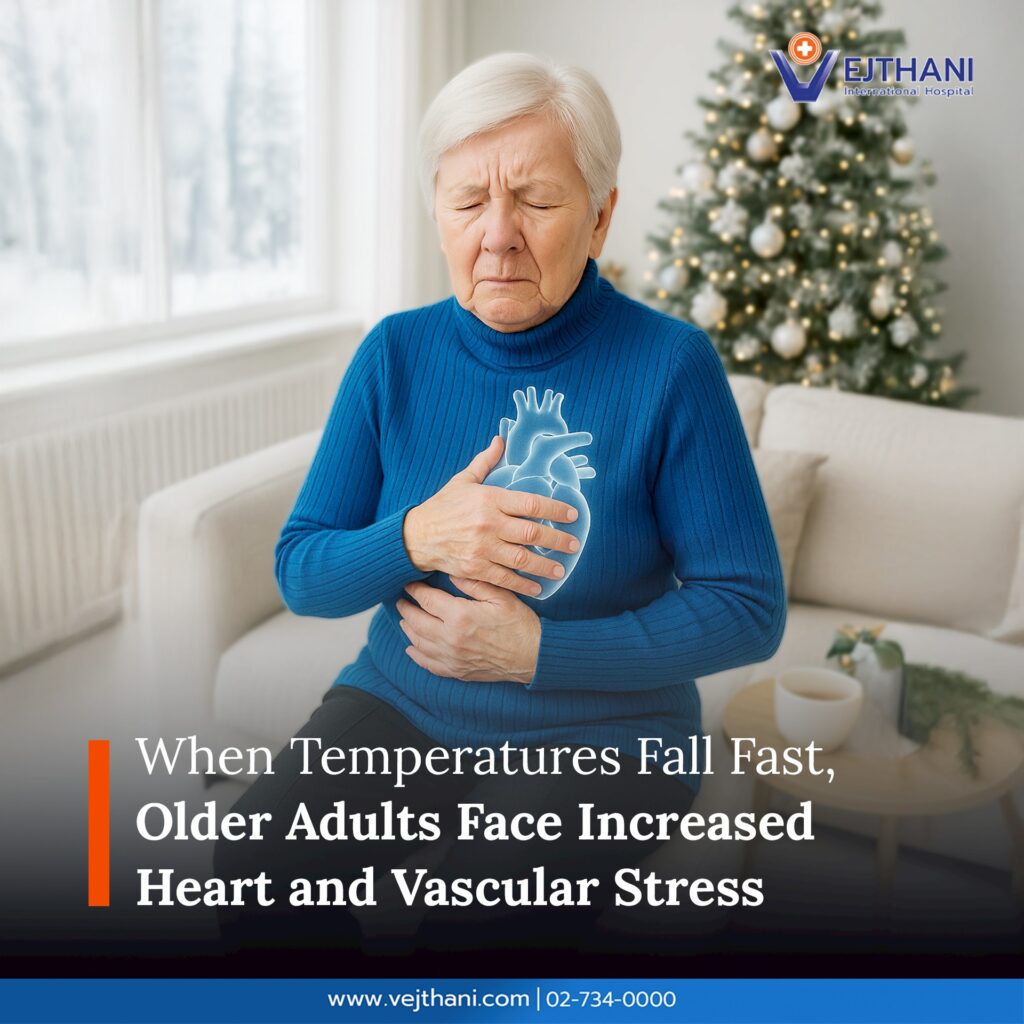
As winter sets in, many people enjoy the cool, comfortable weather without realizing that a drop in temperature can significantly affect the heart and blood vessels. Numerous studies have confirmed that the incidence of acute myocardial infarction (heart attack) tends to rise during periods of extreme cold.
How Does Cold Weather Increase the Risk of Heart and Vascular Disease?
When the body is exposed to low temperatures, the autonomic nervous system triggers vasoconstriction (narrowing of blood vessels) to conserve body heat. This leads to:
An increase in blood pressure
The heart having to pump harder
Thicker blood, which raises the risk of blood clots
When the heart works harder than usual, the risk of abnormal heart rhythms or acute ischemic heart events increases.
High-Risk Groups Who Should Be Especially Cautious
Those with high blood pressure, diabetes, or high cholesterol
Smokers or those who drink excessive alcohol
People who exercise infrequently or do not get enough rest
How to Take Care of Your Heart During Winter
To keep your heart safe and strong in cold weather, follow these recommendations:
Keep your body warm: Wear adequate clothing, especially around the chest, hands, and feet.
Avoid sudden exertion after waking up in cold weather; warm up before exercising or engaging in outdoor activities.
Control risk factors: Keep blood pressure, blood sugar, and cholesterol within normal ranges.
Quit smoking and limit alcohol: These habits place extra strain on the heart and blood vessels.
Exercise appropriately: Choose light activities such as brisk walking, yoga, or stretching in a warm environment.
Watch for warning signs: Such as chest tightness, unusual fatigue, shortness of breath, or irregular heartbeats. If these occur, seek medical attention immediately.
Cold weather may make the body feel refreshed, but for the heart, it is a time that requires extra caution. Keeping warm, managing risk factors, and having regular heart check-ups can effectively reduce the risk of heart and vascular diseases.
Frequently Asked Questions About Heart Disease in Winter
1. Why does cold weather increase the risk of heart and vascular disease?
When temperatures drop, blood vessels constrict to reduce heat loss. This raises blood pressure and forces the heart to pump harder, increasing the risk of ischemic heart events or arrhythmias, especially in people with underlying conditions such as hypertension, diabetes, or high cholesterol.
2. Why are older adults at higher risk during cold weather?
Because their bodies adapt to cold more slowly than younger people. The blood vessels and heart muscle may function less efficiently. In low temperatures, blood pressure tends to rise and the heart works harder, increasing the risk of heart failure or ischemic heart disease.
3. What symptoms require immediate medical attention?
If you experience any of the following, seek medical care urgently, as they may signal an acute heart attack:
Chest tightness or pain radiating to the arm, neck, or jaw
Unusual or unexplained fatigue
Shortness of breath
Dizziness, fainting, or abnormally rapid or irregular heartbeat
We use cookies to manage your personal information in order to provide you with the best personalized user experience on our website. If you continue using the website, we assume that you accept all cookies on the website. Find out more.