From Critical Genes Discovery to a New Era of Precise Lung Cancer Treatment
Health Articles
Select Topic
NSCLC Lung Cancer and the Hidden Mutations
Non-Small Cell Lung Cancer (NSCLC) is the most common type of lung cancer. Treatment plans for lung cancer are usually determined by the stage of the cancer and the presence of genetic mutations. However, some rare but clinically significant mutations play a crucial role in choosing the treatment method. One of these is the RET rearrangement, also known as RET fusion.
Although RET fusion is found in only about 1–2% of patients with NSCLC, identifying this mutation is extremely important. It enables patients to access targeted therapies designed specifically for RET mutations. Compared with conventional chemotherapy, these therapies have been shown to be more effective, offering greater reduction in tumor size and longer disease control.
What is RET Fusion?
RET fusion occurs when the RET gene combines with other abnormal genes, such as KIF5B-RET. This genetic alteration produces abnormal proteins that drive uncontrolled cell growth, ultimately leading to lung cancer.
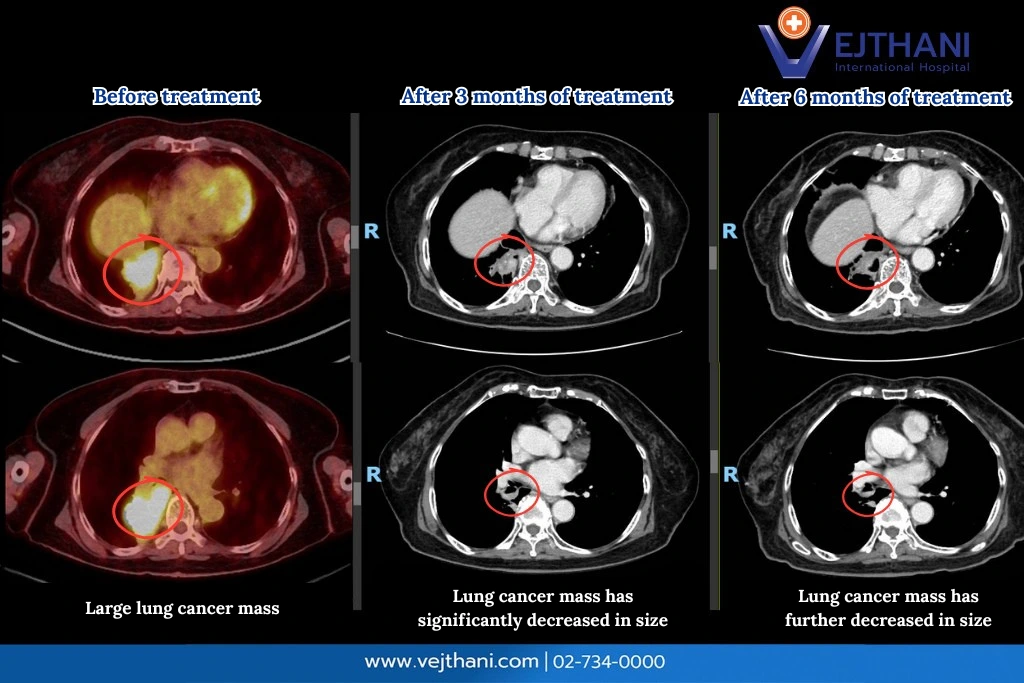
This patient was diagnosed with advanced-stage NSCLC. A tissue biopsy confirmed the presence of a KIF5B-RET fusion mutation. Based on this finding, Dr. Aissarapong initiated treatment with Selpercatinib, an oral RET inhibitor, as the patient’s first-line therapy—without the use of chemotherapy.
Follow-up imaging demonstrated clear benefits from this treatment:
Before treatment: The lung tumor was large.
After 3 months of treatment: The tumor had significantly decreased in size.
After 6 months of treatment: The tumor had shrunk even further, showing a strong and sustained response.
The Role of Next-Generation Sequencing (NGS)
This case highlights the importance of comprehensive genetic testing using Next-Generation Sequencing (NGS). Without NGS, rare mutations such as RET fusion—which occur in only about 1–2% of NSCLC patients—may go undetected. Missing such findings could deny patients the opportunity to receive highly effective targeted therapies tailored to their specific mutation.
We use cookies to manage your personal information in order to provide you with the best personalized user experience on our website. If you continue using the website, we assume that you accept all cookies on the website. Find out more.