Make an Appointment
 Talk to Doctor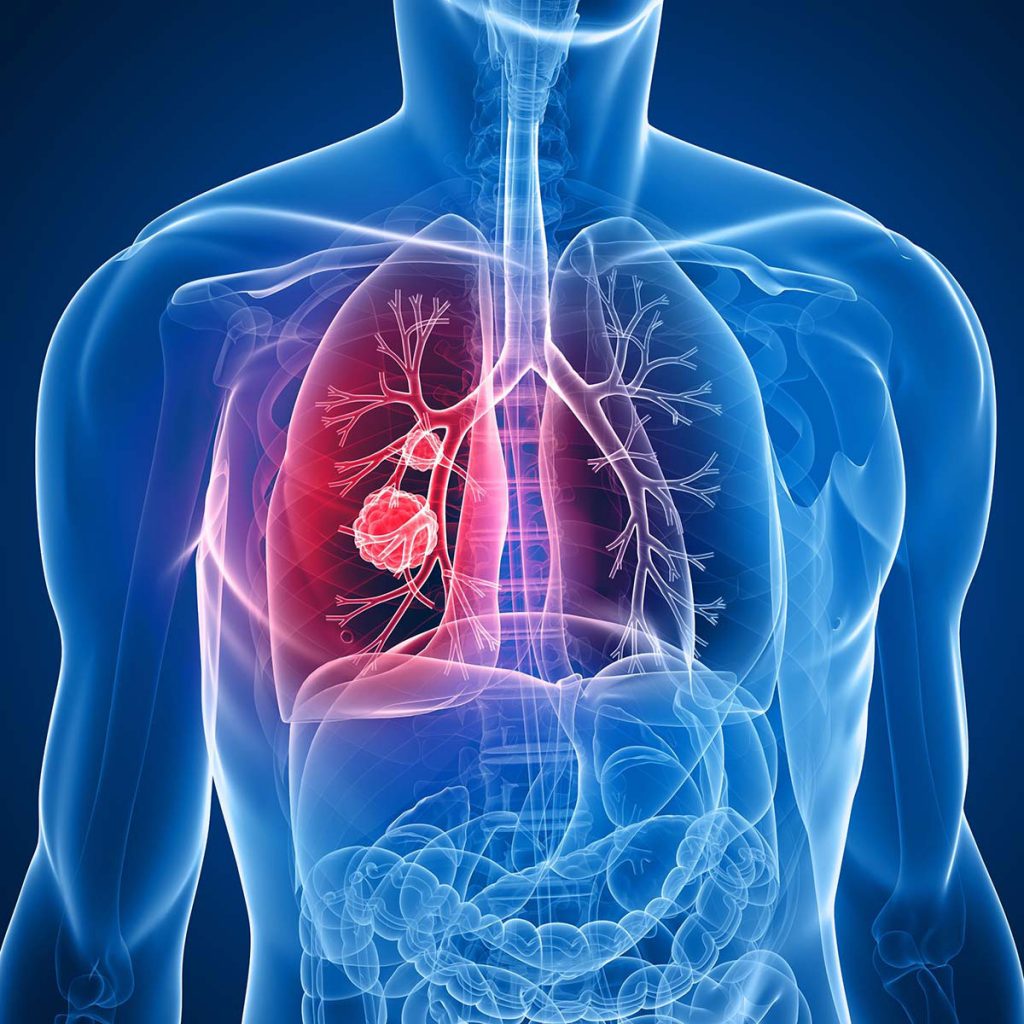
Overview
The lungs are made of a spongy material and responsible on how the body breathes to inhale oxygen and exhale carbon dioxide. The type of cancer that originates from the lungs is called lung cancer which is the common cause of cancer deaths in the world. Furthermore, the main risk factor of lung cancer is smoking.
Symptoms
Lung cancer typically develops over many years. Early stages of lung cancer are usually asymptomatic until the disease has progressed to the advanced stage, and it may manifest the following signs and symptoms:
- Persistent cough
- Coughing up blood
- Shortness of breath
- Voice hoarseness
- Chest pain
- Wheezing
- Recurrent respiratory tract infection
- Exhaustion or fatigue
- Unexplained weight loss
- Headache
- Bone pain
If the symptoms persist, consult your doctor.
If you have difficulties in quitting smoking, ask your doctor on how to proceed by undergoing counseling, medication and products that can help replace nicotine.
Causes
Exposure to carcinogen can induce DNA mutation in the lung which causes uncontrolled duplication, resulting in forming a mass known as lung cancer.
The most significant risk factor of lung cancer is cigarette smoking for both the main smoker and the secondhand smoker. However, the cause of lung cancer in people who never smoked is still unknown.
Cigarette smoke contains many chemicals that are known to cause cancer (carcinogens) that destroys the cell linings of the lungs. The body can initially fix the lung damage by itself but as the lung is repeatedly exposed to smoke, it damages the normal cells leading to cancer.
The other risk factors are family history of lung cancer, occupational exposure and air pullution.
Types of lung cancer
When cancerous cells are examined under a microscope, there are two major types of lung cancers based on their appearance.
- Small cell lung cancer. Most commonly found in heavy smokers but they are rarely found compared to non-small cell lung cancer.
- Non-small cell lung cancer. Any types of lung cancer other than small cell lung cancer. The main subtypes of non-small cell lung cancer include squamous cell carcinoma, adenocarcinoma and large cell carcinoma.
Risk factors
These are the risk factors that may lead to lung cancer:
- Smoking. The risk of lung cancer increased with the number of cigarettes smoked per day and the numbers of years of smoking. Smoking is a preventable cause of cancer. Quitting smoking is beneficial at any age.
- Exposure to secondhand smoke. Secondhand smoking also have significant risk of developing lung cancer base on the level of exposure.
- History of radiation therapy. Radiation therapy focused on the chest and for previous cancer treatment increase the chance if having lung cancer.
- Exposure to radon gas. Radon can be inhaled in the air. It is a result of disintegration of a chemical called uranium in rock, soil and water which may be found in construction.
- Exposure to asbestos and other carcinogens. Asbestos and other cancer-causing materials such as arsenic, nickel and chromium can be acquired in a workplace.
- Family history of lung cancer. Having a family member such as your parents, siblings or children with lung cancer.
Diagnosis
Screening test for early stage of lung cancer
Lung cancer screening with low-dose computed tomography (LDCT) is recommended in adults that are older, heavy smokers or have quit smoking within the past 15 years. Consult your doctor for proper screening test recommendation.
Diagnosis test for lung cancer
The following tests may be done to diagnose lung cancer:
- Imaging tests.
- Chest x-ray is usually the fundamental test to look for abnormal masses in the lung, however early stages lung cancer may not be identified on chest x-ray.
- Computed tomography (CT) scan is a diagnostic procedure that uses imaging to create a detailed structure inside the body. CT is usually more accurate in showing abnormal masses in the chest than x-ray. It can show the size, shape and location.
- Sputum cytology. Productive cough can expectorate sputum which can be sent to laboratory inspection under a microscope to search for any abnormal or cancerous cell.
- Biopsy. A sample of the abnormal lung tissue may be taken through various procedures such as:
- Bronchoscopy is an investigation which uses flexible thin tube that is connected to a tiny camera which will be inserted through the mouth or nose into the lung to evaluate the lung for any signs of cancer. If any unusual signs detected, sample tissue will be taken for examination under a microscope to check for the cancerous cells.
- Mediastinoscopy is a procedure that insert a tube into the chest to examine the space between the lung (mediastinum) and remove the lymph nodes for examination under a microscope to check for cancer.
- Needle biopsy. Doctors will perform the biopsy with a guidance of X-ray or CT scan. The tissue collected will be sent to the laboratory and be examined under a microscope to check for cancerous cell.
The test done in the laboratory will determine the certain cell characteristics as well as disease prognosis and treatment option.
Test for staging the lung cancer
After being diagnosed with lung cancer, further test will be advised to detect the stage of the disease. The type of treatment options that will depend on the stage of the cancer. Therefore, staging is important in order to determining the most accurate treatment for the patient.
Computed Tomography (CT) Scan, Magnetic Resonance Imaging (MRI), Positron Emission Tomography (PET) and bone scans may be recommended by the doctor to determine if the cancer has spread.
Lung cancer is staged using Roman numerals from 0 to IV. The lowest stage means that the cancer is localized within the lungs, while stage IV means that the cancer has spread to other parts of the body.
Treatment
The treatment option depends on the type of cancer cells, stages and the patient’s general health.
Surgery
The surgeon will remove the part of the lung with cancer including some healthy tissues around it. Surgical techniques include:
- Wedge resection. The surgery removes the lung cancer and some healthy tissue around it.
- Segmental resection. The surgery to remove the part of lung.
- Lobectomy. The surgery to remove the whole lobe of one lung.
- Pneumonectomy. The surgery to remove the whole lung.
The lymph nodes may also be removed during the surgery to check for signs of cancer and help to determine a lung cancer’s stage.
If the lung cancer is localized within the lungs, surgery is an option. However, if the lung cancer is large, chemotherapy or radiation therapy may be recommended prior to surgery to reduce the size of tumor to be surgically removed or it may also be done after the surgery to destroy the remaining cancer cells.
Radiation therapy
Uses a powerful energy beam through X-rays or protons to eradicate cancer cells. The patient is made to lie on the table and the radiation machine will navigate around the body and focus radiation at certain areas. If lung cancer has reached the advanced stage, radiation may be used to relieve the symptoms.
Chemotherapy
The use of specific drug to kill cancer cells. This medicine is usually administered orally or intravenously. Chemotherapy is commonly use after surgery but can be done before surgery to reduce size of the tumor and enables it to be surgically removed.
Stereotactic body radiotherapy (Radiosurgery)
The treatment uses very strong radiation from several angles focused directly to the cancer area. It can be done as a single or multiple treatment. Furthermore, it can be done if surgery is not an option while the lung cancer is small or if the cancer has spread to other areas of the body (the brain included).
Targeted drug therapy
Provides treatment directly to certain cancer cell abnormalities and leaving them to die. There are a couple of targeted therapy medications used for lung cancer treatment but they are mostly applied if the cancer is in its advanced stage or has recurred.
Immunotherapy
Uses the body’s own immune system to kill cancer cells. Cancer cells produce proteins that disguise themselves to protect them from the body’s disease-fighting immune response. Immunotherapy counteracts this process.