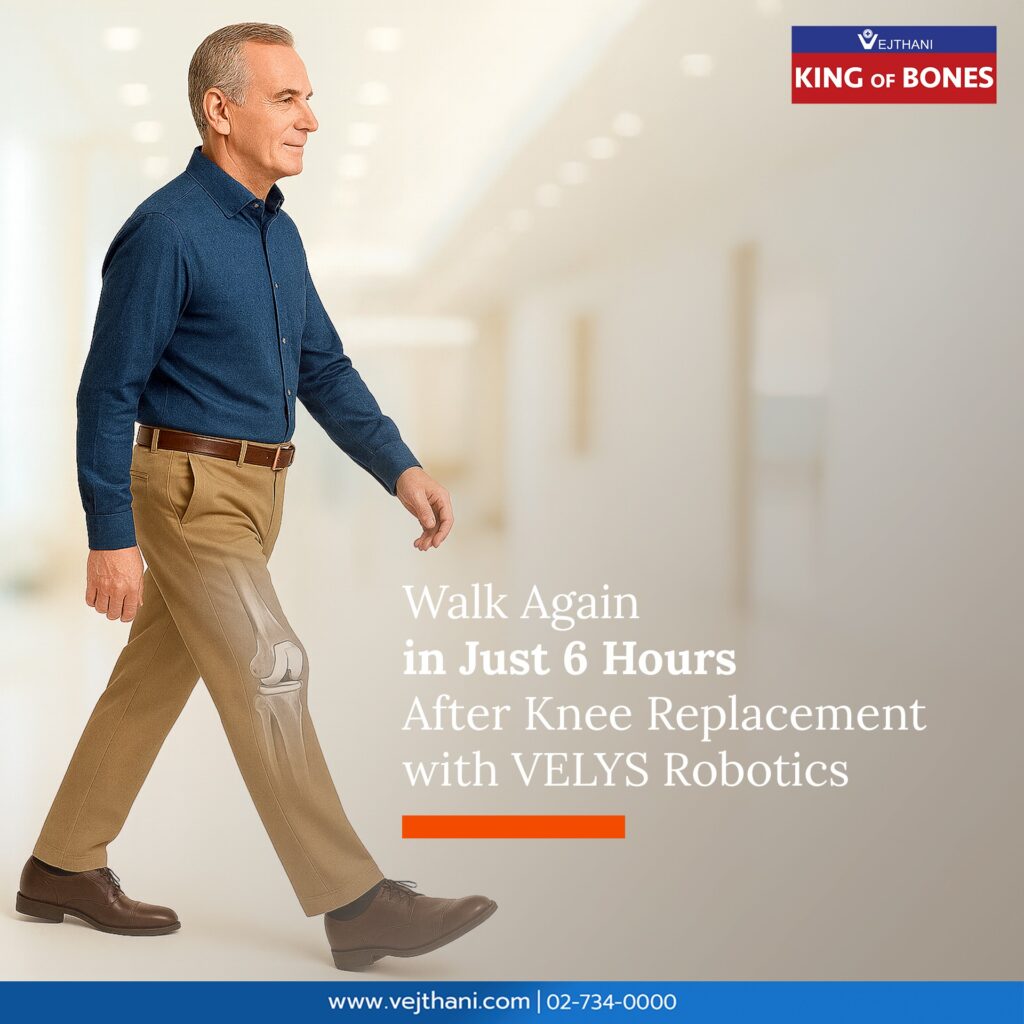
Walk Again in Just 6 Hours After Knee Replacement with VELYS Robotics
Health Articles
Knee pain, stiffness, and discomfort during walking can indicate early knee osteoarthritis. Without timely treatment, the condition can progress, causing further cartilage wear, chronic inflammation, walking difficulties, and, eventually, the need for walking aids in daily life.
What is Knee Osteoarthritis?
Knee osteoarthritis occurs when the cartilage covering the joint surface deteriorates, causing the bones within the knee joint to rub against each other. This leads to pain, stiffness, tightness, and reduced mobility. It is common among older adults or individuals who have long subjected their knees to heavy use, such as frequent lifting, running, or climbing stairs.
The condition is increasingly seen in working-age and middle-aged individuals due to lifestyle habits such as prolonged kneeling, sitting on the floor, and excess body weight that place additional stress on the knee joint.
Symptoms of Knee Osteoarthritis
Knee pain, especially when standing, walking, or climbing stairs
Morning stiffness or stiffness after prolonged sitting
Cracking, popping, or grinding sounds in the knee
Swelling or fluid accumulation in the joint
Knee deformity, such as bowlegs or knock-knees
If left untreated, symptoms may worsen over time, affecting mobility, daily activities, and overall quality of life.
Age: Natural decline in the body’s ability to repair cartilage increases the risk.
Gender: Women, particularly those over 50 or post-menopause, have a higher risk than men.
Excess body weight: Adds pressure on the knees, accelerating inflammation and joint degeneration.
Genetics: A family history may increase susceptibility, although not directly inherited.
Improper knee usage: Heavy or repetitive knee movements, frequent stair climbing, prolonged kneeling, squatting, or sitting cross-legged.
Previous knee injuries: Accidents or sports injuries such as meniscus or ligament tears, can increase the risk of early joint degeneration.
Weak supporting structures: Lack of exercise can weaken the muscles and ligaments around the knee, reducing joint stability.
Underlying medical conditions: Rheumatoid arthritis, gout, SLE, and certain blood disorders may also contribute to knee degeneration.
Diagnosis
Your doctor will begin with a detailed medical history, physical examination, and assessment of knee mobility. Imaging studies such as X-ray or MRI may be used to evaluate cartilage damage and surrounding tissues, allowing your specialist to design the most suitable treatment plan.
Treatment Options
Treatment depends on the severity of the condition and may include:
Non-surgical Options
Weight control
Physiotherapy and strengthening exercises
Knee injections (medication or joint lubricants)
Anti-inflammatory medications
If symptoms are severe and conservative treatments are no longer effective, your doctor may recommend Total Knee Replacement (TKR).
Next-Generation Knee Replacement with the VELYS™ Robotic System
Modern knee replacement is not just about “replacing the joint”, it is about restoring your quality of life.
3D knee imaging for personalized surgical planning
Real-time assessment of leg alignment and joint stability
Reduced impact on surrounding tissues
Faster recovery, less pain, and extended implant durability
Improved movement that feels as natural as possible
Why Personalized Alignment Matters
The VELYS™ system is not a “one-size-fits-all” approach. It uses the patient’s real movement data, walking patterns, knee bending angles, and bone alignment to ensure:
The implant fits seamlessly with the patient’s anatomy
The surgeon achieves optimal precision
Movement feels natural, with faster recovery and confidence in every step
Because VELYS™ does not simply “assist surgery”, it helps you walk againwith your natural movement.
Who is VELYS™ Suitable For?
Ideal candidates include people who:
Have moderate to severe knee osteoarthritis
Have not improved with standard treatments
Want faster recovery and less postoperative pain
Seek a precise and safe surgical option
VELYS™ Robotic-Assisted Solutions
An advancement in knee replacement surgery, enhancing precision, safety, and recovery to restore quality of life.
FAQ: Knee Osteoarthritis
How is knee osteoarthritis treated?
Start with weight management, exercise, and physiotherapy. For advanced cases, robotic-assisted knee replacement with VELYS™ may be recommended for higher precision and faster recovery.
How long is the recovery after VELYS™ robotic knee replacement?
Most patients can walk within 6 hours after surgery and return to everyday life faster.
How is VELYS™ different from conventional knee replacement?
VELYS™ provides real-time 3D imaging, precise implant placement, reduced tissue trauma, less pain, faster recovery, and movement that feels more natural.
We use cookies to manage your personal information in order to provide you with the best personalized user experience on our website. If you continue using the website, we assume that you accept all cookies on the website. Find out more.