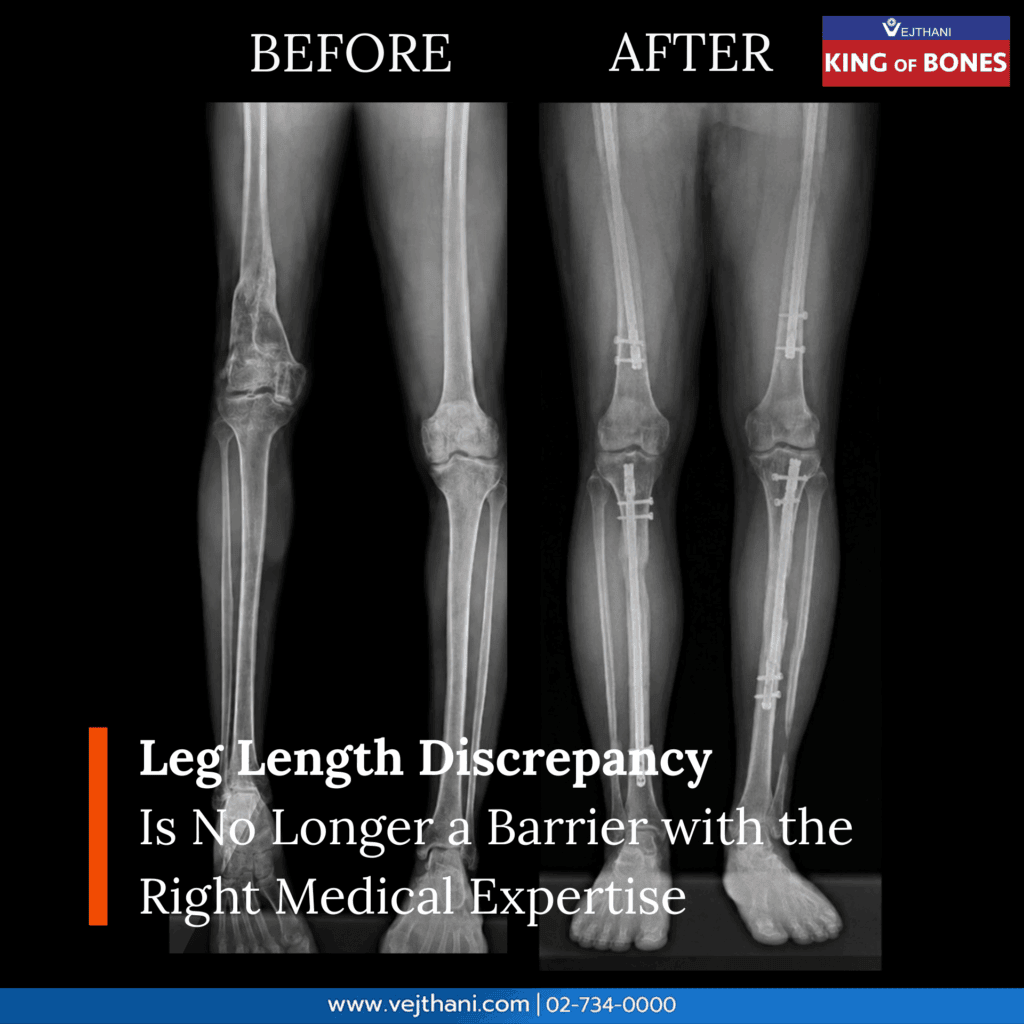
Leg Length Discrepancy Is No Longer a Barrier with the Right Medical Expertise
Health Articles
Select Topic
Leg length discrepancy (LLD) is a condition in which one leg is shorter or longer than the other. A small difference may not cause any noticeable problems, while a more significant discrepancy can affect walking, posture, balance, and overall movement. Some people may also experience discomfort in the hip, knee, or lower back as the body adapts to the difference.
Leg length discrepancy can result from differences in bone growth, congenital conditions, previous injuries, or other orthopedic problems. Identifying the underlying cause and determining whether the difference is clinically significant are important steps in choosing the right treatment.
What Is Leg Length Discrepancy?
Leg length discrepancy refers to a measurable difference in the length of the lower limbs. The difference may occur in the femur, tibia, or both bones. There are two primary types of leg length discrepancy:
Structural leg length discrepancy: One leg is physically shorter or longer because of a difference in bone length.
Functional leg length discrepancy: The bones may be similar in length, but changes in joint position, muscle tightness, pelvic alignment, or movement patterns can make one leg appear functionally shorter.
These two types can have different causes and may require different management approaches. A detailed medical assessment helps determine whether the difference is structural, functional, or a combination of both.
What Causes Leg Length Discrepancy?
Leg length discrepancy can develop due to differences in bone growth, congenital conditions, injuries, or changes in the joints and surrounding tissues. Common causes are:
Differences in Bone Growth: Abnormal growth of the femur or tibia can cause one leg to develop differently from the other.
Congenital Conditions: Differences in the development of the lower limbs may be present at birth and become more noticeable as a person grows.
Fractures and Previous Injuries: Fractures, particularly those involving a growth plate, or bones that heal with shortening or altered alignment, can affect limb length.
Bone or Joint Conditions: Bone infections, developmental disorders, and other orthopedic conditions can interfere with normal bone growth and lead to unequal leg lengths.
Previous Surgery: Orthopedic surgery involving the hip, knee, or lower limb can sometimes affect limb length or alignment.
Joint or Soft-Tissue Problems: Changes in joint alignment, muscle flexibility, or pelvic position can create a functional difference even when the actual bone lengths are similar.
Identifying the underlying cause is important because the right treatment approach depends on the type and severity of the discrepancy.
What Are the Symptoms of Leg Length Discrepancy?
Some people may have no symptoms, particularly when the discrepancy is small.
When symptoms occur, they may include:
Uneven walking or limping
Changes in gait or walking mechanics
Difficulty maintaining balance
One leg appearing shorter than the other
Hip or knee discomfort
Lower back pain
Changes in posture or pelvic alignment
Muscle fatigue during prolonged standing or walking
Difficulty with certain physical activities
The presence and severity of symptoms do not always correspond directly to the measured difference in leg length. Some people with a measurable discrepancy remain comfortable, while others may experience symptoms with a smaller difference.
Can Leg Length Discrepancy Cause Back Pain?
A significant leg length difference can change the way the pelvis, hips, and spine are positioned during standing and walking. The body may compensate by altering its movement pattern, which can contribute to discomfort in the lower back or other areas of the musculoskeletal system.
However, back pain can have many causes. An evaluation is important to determine whether leg length discrepancy is actually contributing to the symptoms or whether another condition is responsible.
How Is Leg Length Discrepancy Diagnosed?
Diagnosis begins with a medical history and physical examination. The orthopedic specialist may assess the patient’s posture, pelvic alignment, leg alignment, joint movement, muscle flexibility, and walking pattern.
The doctor may also perform a block test by placing blocks of varying heights under the shorter leg while the patient stands. This helps estimate the amount of discrepancy and determine whether the pelvis becomes level when the difference is compensated.
Imaging Tests
Imaging can provide a more precise measurement and help identify the location and cause of the discrepancy.
Depending on the individual case, imaging may include:
Standing X-rays: To evaluate leg length and alignment while the patient is standing.
Long-leg or specialized X-rays: To measure the length of individual bone segments.
Scanogram: To obtain measurements of the femur and tibia.
Other imaging studies: Used when additional information about the bones, joints, or surrounding structures is needed.
Accurate measurement is particularly important when surgical treatment is being considered, as the treatment plan must account for both limb length and overall alignment.
How Is Leg Length Discrepancy Treated?
Treatment for leg length discrepancy depends on the extent of the difference, its underlying cause, symptoms, functional impact, and the patient’s overall health. Some people may only need regular monitoring, while others may benefit from nonsurgical measures or surgical correction.
Treatment Approach
When It May Be Considered
Primary Goal
Observation and Monitoring
Small discrepancy with little or no functional impact
Monitor changes over time
Shoe Lifts or Orthotics
Mild discrepancy or when surgery is not necessary
Compensate for the difference and support balance
Physical Therapy
Gait, strength, flexibility, or movement problems
Improve mobility and movement patterns
Surgical Correction
Significant discrepancy affecting function or quality of life
Correct the difference and improve limb balance
The correct treatment is determined on an individual basis. The goal is not always to make both legs exactly equal in length, but to achieve a functional balance that supports comfortable movement and appropriate lower-limb alignment.
What Are the Possible Complications of Leg Length Discrepancy?
A significant untreated discrepancy may affect the way the lower limbs and spine work together. Over time, altered movement mechanics may contribute to:
Persistent gait abnormalities
Postural changes
Muscle fatigue
Hip or knee discomfort
Lower back discomfort
Difficulty with prolonged walking or standing
Increased stress on other parts of the musculoskeletal system
However, not everyone with leg length discrepancy develops complications. The clinical significance depends on the degree of difference, underlying cause, and how the individual’s body compensates for it.
Can Leg Length Discrepancy Be Prevented?
Not all cases can be prevented. Congenital and developmental causes are generally not preventable.
However, proper treatment of fractures, growth plate injuries, infections, and other orthopedic conditions may help reduce the risk of developing or worsening a limb length difference.
Early evaluation after a significant lower-limb injury is particularly important when the injury involves a growth plate or may affect normal bone development.
When Should You See an Orthopedic Specialist?
Consider an orthopedic evaluation if you notice:
A visible difference in leg length
Persistent limping or an uneven gait
Difficulty walking or participating in physical activities
Recurrent hip, knee, or lower back discomfort
Changes in posture or pelvic alignment
A history of a fracture, growth plate injury, bone infection, or orthopedic surgery
A known condition that may affect bone growth or limb development
Comprehensive Care at Vejthani International Hospital
Leg length discrepancy may involve more than a difference in bone length. Accurate diagnosis may require assessment of limb alignment, joint function, gait, and the underlying musculoskeletal condition.
The Orthopedics Center at Vejthani International Hospital provides evaluation and treatment for a broad range of orthopedic conditions, including limb lengthening and leg length discrepancies. The treatment approach is based on each patient’s condition, ranging from conservative methods to surgical correction when clinically needed.
A multidisciplinary approach can also help address the functional effects of an orthopedic condition. Rehabilitation may focus on strength, mobility, balance, and gait to support recovery and help patients return to daily activities.
Frequently Asked Questions About Leg Length Discrepancy
What is leg length discrepancy?
Leg length discrepancy is a difference in the length of the two lower limbs. It may result from an actual difference in bone length or from functional factors that make one leg appear or function as shorter.
What causes leg length discrepancy?
Common causes include congenital differences, abnormal bone growth, fractures, growth plate injuries, infections, previous orthopedic surgery, and changes in joint or pelvic alignment.
What are the symptoms of leg length discrepancy?
Some people have no symptoms. Others may experience an uneven gait, limping, changes in posture, balance problems, muscle fatigue, or discomfort in the hip, knee, or lower back.
How is leg length discrepancy measured?
A specialist may use a physical examination and block test to estimate the difference. Imaging, such as standing X-rays or specialized long-leg measurements, can provide a more precise assessment.
Does every leg length discrepancy require treatment?
No. Small differences that do not cause symptoms or functional problems may only require observation. Treatment is considered when the discrepancy has a meaningful effect on movement, comfort, or function.
Can a shoe lift correct leg length discrepancy?
A shoe lift can compensate for a leg-length discrepancy and may be appropriate for some patients with a mild discrepancy. The amount of correction should be determined based on an individual’s assessment.
Can leg length discrepancy cause back pain?
It may contribute to lower back discomfort by changing pelvic position and movement mechanics. However, back pain can have many possible causes, so a medical evaluation is needed to determine the underlying cause.
For more information, please contact
Orthopedics Center, 2nd Floor, King of Bones Building, Vejthani International Hospital Call +66 (0) 2734-0000 ext. 2298,2299 +66(0)85-223-8888 (English Hotline)
We use cookies to manage your personal information in order to provide you with the best personalized user experience on our website. If you continue using the website, we assume that you accept all cookies on the website. Find out more.