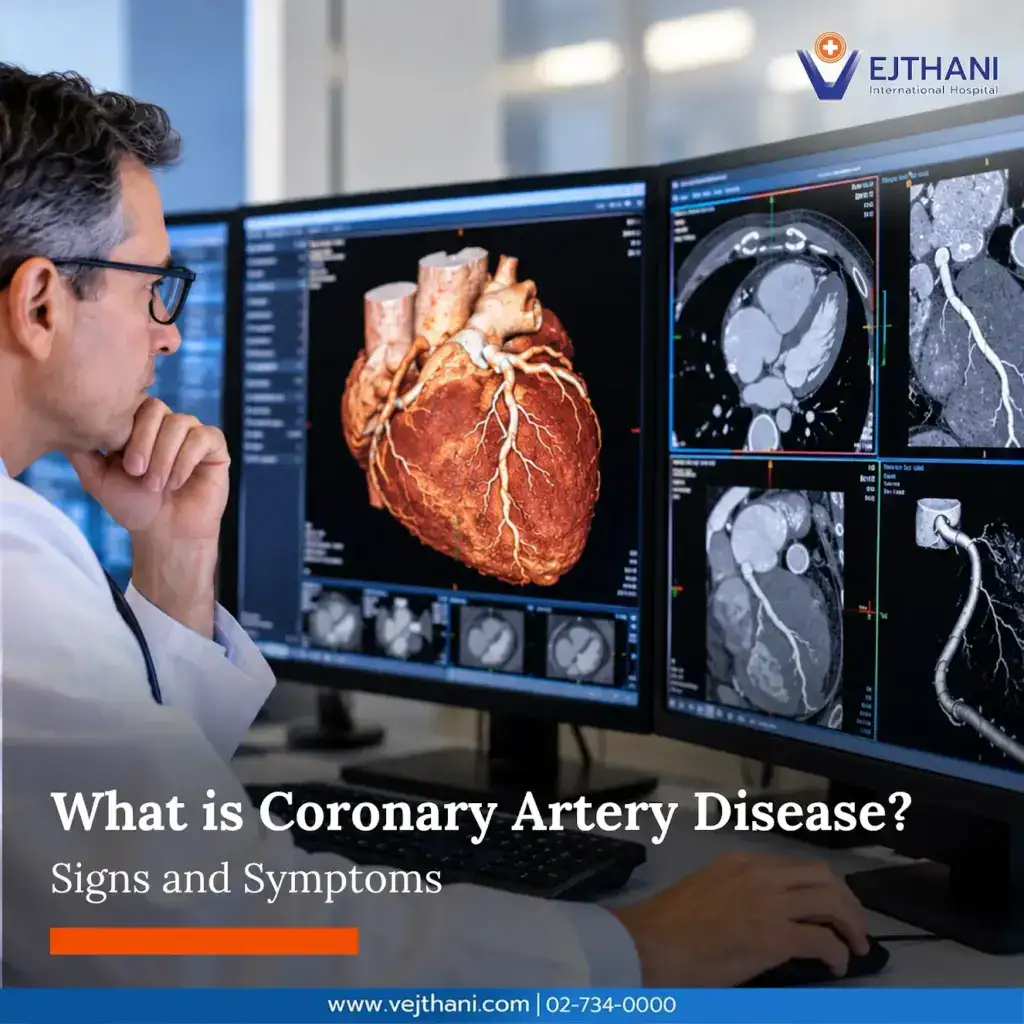
If you are wondering “what coronary artery disease (CAD) is,” it is a very common heart condition where the major blood vessels supplying your heart muscle with oxygen and vital nutrients become narrowed or blocked. Because this condition develops gradually over many years, it can often act as a “silent killer,” with symptoms going unnoticed until a serious event, like a heart attack, occurs. However, with modern awareness and proactive medical care, there is plenty you can do to manage and treat it.
Types of Coronary Artery Disease
CAD generally presents in two main forms, depending on how quickly the blockages develop and affect your heart:
Stable Ischemic Heart Disease
This is a chronic condition where your arteries narrow slowly over time. While your heart gets less blood, you can often manage this form day-to-day with medication and lifestyle changes.
Acute Coronary Syndrome
This is a sudden, medical emergency. It occurs when a plaque deposit ruptures, quickly forming a blood clot that severely blocks blood flow to the heart, leading to a heart attack.
Coronary Artery Disease Causes
When investigating coronary artery disease causes, the primary culprit is a condition known as atherosclerosis. This is the gradual buildup of fatty deposits, cholesterol, and waste products, collectively called plaque, on the inner walls of your arteries. As these plaques harden and grow over the years, the blood vessels become stiff and narrow. This traffic jam inside your arteries prevents your heart from receiving the steady supply of oxygen-rich blood it needs to pump effectively.
Coronary Artery Disease Risk Factors
Understanding coronary artery disease risk factors is the first step toward protecting your heart. While some factors are out of your control, many are tied to daily habits that you can change.
Age and Sex: The risk increases as you get older, particularly for men over 45 and women over 55 (or post-menopause).
Family History: Having a close biological relative (like a parent or sibling) with early heart disease elevates your risk.
Tobacco Use: Smoking or vaping heavily damages your artery walls and accelerates plaque buildup.
High Blood Pressure and Cholesterol: Unmanaged hypertension and high levels of “bad” (LDL) cholesterol are major contributors to arterial damage.
Medical Conditions: Diabetes, chronic kidney disease, and obesity significantly increase the strain on your heart and blood vessels.
Lifestyle Choices: A sedentary lifestyle, high-stress levels, and a diet rich in saturated fats and sugars all contribute to CAD.
Signs of Coronary Artery Disease
Because plaque builds up slowly, you might not notice any immediate red flags. However, as the narrowing worsens, your heart has to work much harder. Keep an eye out for these signs of coronary artery disease:
Chest Pain (Angina): This is a sensation of pressure, heaviness, or squeezing in the middle or left side of your chest. It is often triggered by physical exertion or emotional stress and usually goes away with rest.
Shortness of Breath: You may feel unusually winded or fatigued during light physical activities, indicating your heart isn’t pumping enough oxygen to your body.
Heart Attack Symptoms: If an artery becomes completely blocked, you may experience crushing chest pressure, pain radiating to your arm, neck, or jaw, accompanied by cold sweats, nausea, and severe shortness of breath. This is a medical emergency requiring immediate attention.
Diagnosis
Vejthani International Hospital offers state-of-the-art diagnostic testing to evaluate your heart’s condition. After a thorough physical exam and medical history review, your doctor may recommend the following tests to confirm a diagnosis:
Cardiac Enzymes or Cardiac Biomarkers: Are substances released into the bloodstream when the heart muscle is damaged or under stress, particularly from a lack of oxygen. A blood test can measure these biomarkers to help detect heart injury. Troponin is the primary cardiac biomarker used to assess possible heart attacks and acute coronary syndrome. Elevated cardiac enzyme levels may indicate myocardial ischemia or other forms of heart muscle injury. CK-MB (Creatine Kinase-MB) may also increase following heart muscle damage but is less specific than troponin. Myoglobin can rise rapidly after muscle injury, but it is not specific to the heart because it is also found in skeletal muscles.
Electrocardiogram (EKG): This is a quick, painless test that records the electrical signals in your heart. It helps doctors see how fast your heart is beating and can reveal evidence of a past or current heart attack.
Echocardiogram: Also known as a cardiac ultrasound, this uses sound waves to create images of your beating heart. It allows doctors to see if any parts of the heart wall are moving weakly due to a lack of oxygen.
Stress Test: This evaluates how your heart handles physical exertion. You will typically walk on a treadmill while your heart is monitored. If you cannot exercise, medication can be given to simulate the effects of exercise on your heart.
Cardiac CT Scan: This specialized computerized tomography scan takes detailed, cross-sectional images of your heart to visualize the arteries and check for calcium deposits.
Coronary Angiogram: This is a minimally invasive procedure where a flexible catheter is threaded through an artery (usually in the groin or wrist) up to your heart. A special contrast dye is injected, which lights up on X-ray images, showing doctors the exact location and severity of any blockages.
Coronary Artery Disease Treatments
Your specialist will design a personalized plan to improve blood flow and protect your heart. Coronary artery disease treatments generally fall into three categories:
1. Lifestyle Modification includes:
Regular Exercise
Avoidance of alcoholic beverages
Stop smoking
Eating a well-balanced diet regularly
Losing excess weight if obese
2. Medication
Your physician may prescribe you with one or more anti-hypertensive, anti-embolism, anti-angina and cholesterol modifying drugs depending on your over-all presentation which includes the blood and diagnostic tests.
3. Invasive Interventions
Percutaneous Trans-luminal Coronary Angiography (PTCA) or Percutaneous Coronary Intervention, a procedure in which a balloon and stent is inserted into the narrowed artery to make it open wider allowing a good passage of blood in the artery. This approach is suitable for single-vessel disease and uncomplicated two-vessel coronary artery disease. For triple-vessel coronary artery disease, coronary artery bypass grafting (CABG) can be an effective treatment option. Vejthani offers Off-Pump Coronary Artery Bypass Grafting (Off-Pump CABG), also known as beating-heart bypass surgery.
Unlike conventional CABG, Off-Pump CABG is performed without stopping the heart or using a heart-lung machine. The heart continues beating throughout the procedure, which may help reduce certain complications associated with cardiopulmonary bypass, such as bleeding, stroke, and kidney complications, in appropriately selected patients.
Preventions
Taking a proactive approach can stop CAD from developing or worsening. Here is how you can protect your heart:
Eat Smart: Focus on a diet rich in vegetables, fruits, whole grains, and lean proteins while minimizing sodium and saturated fats.
Stay Active: Aim for at least 30 minutes of moderate exercise, like brisk walking, most days of the week.
Stop Smoking: Quitting tobacco is one of the most impactful things you can do for your cardiovascular health.
Manage Stress: Find healthy coping mechanisms for stress, such as meditation, yoga, or deep breathing exercises.
Routine Check-ups: Regularly monitor your blood pressure, cholesterol, and blood sugar levels with your healthcare provider.
For more information or to schedule a consultation, please contact:
Cardiac Center, Vejthani International Hospital
Call: (+66)2-734-0000 Ext. 5300
English Hotline: (+66)85-223-8888
Frequently Asked Questions
Is coronary artery disease hereditary?
Yes, genetics play a role. If you have a biological parent or sibling who developed heart disease at an early age, your risk is higher. However, genetic risk does not guarantee you will get CAD, especially if you manage your lifestyle factors carefully.
How common is coronary artery disease?
It is incredibly common. Coronary artery disease is the leading type of heart disease and the primary cause of death globally, affecting millions of adults.
Do I need surgery for coronary artery disease?
Not necessarily. Many patients successfully manage their condition for years through dedicated lifestyle changes and daily medications. Surgery or minimally invasive procedures are typically reserved for patients with severe symptoms or critical arterial blockages.
We use cookies to manage your personal information in order to provide you with the best personalized user experience on our website. If you continue using the website, we assume that you accept all cookies on the website. Find out more.