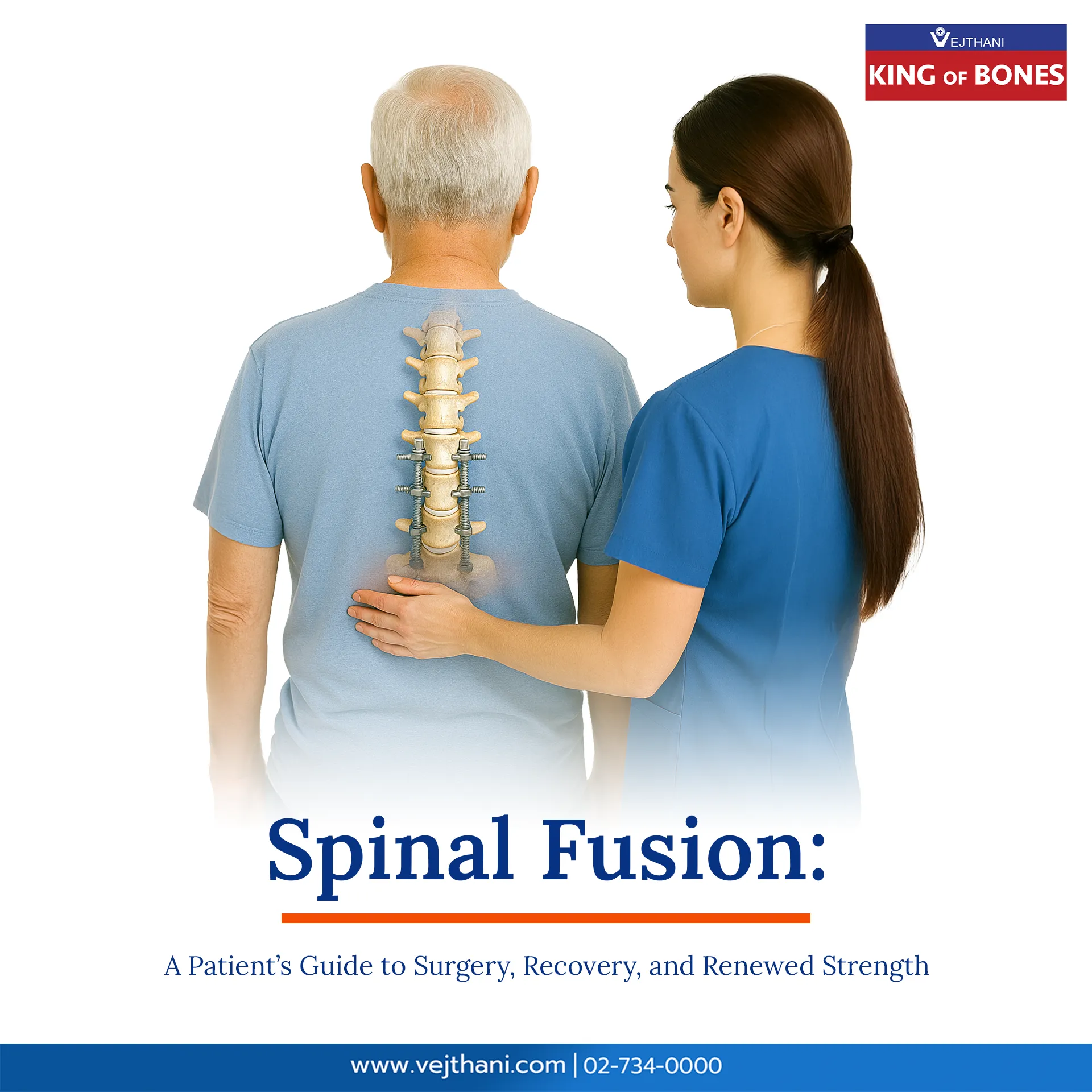
Spinal Fusion: A Patient’s Guide to Surgery, Recovery, and Renewed Strength
Health Articles
What Does Spinal Fusion Entail?
Spinal fusion is used to treat various back pain and spine issues. The surgery generally requires the participation of both neurologists or neurosurgeons and orthopedic surgeons.
The procedure connects two or more vertebrae in your spine to each other with bone grafts and holds the grafts together during recovery with small metal rods. This enables the vertebrae to form an interlocking column that helps strengthen the back and hold the body upright. Spinal fusion is used to treat conditions, including:
Congenital spine conditions
Foraminal stenosis (compression of the spinal nerves)
Herniated discs (ruptured, bulging, or slipped discs)
Infections of the bones or soft tissue of the spine
Spinal stenosis (when the space around the spinal cord becomes too narrow)
Spine fractures
Tumors affecting the spinal cord or nerves in and around the spine
Spinal Fusion Procedure
Spinal fusion surgery has three main parts:
Incisions Providing Access
Depending on the location of the area to be fused, the surgeon makes incisions either from the back to the side of the spinal column or directly over the spine. They can also access the spine from the front by cutting into the stomach area or throat.
Readying the Bone Grafts
The bone graft material comes from human-manufactured material or the pelvis of the person undergoing the surgery. To use the patient’s bone, the surgeon simply makes an incision near the pelvic bone, removes a small piece, and sutures the incision closed.
The Fusion Process
The surgeon places the bone graft material between the targeted bones and secures the grafts with metal screws, rods, or plates, depending on the condition. These hold the grafts in place until the surrounding bones can fuse with the graft materials.
Post Surgery Care and Recovery
For the first few days after leaving the hospital, monitor the wound and contact your doctor if you notice any of the following:
Tenderness or swelling in or around the area of the wound
Any changes in color (red, purple, or brown)
Chills that cause shaking
Fever higher than 38 degrees Celsius
Fluid oozing from the wound
Value of Physical Therapy
Spine surgery recovery may take months, or even more. To keep your spine aligned before physical therapy, your doctor may suggest a brace. This therapy focuses on spinal alignment during daily activities.
Physical therapy can also help you manage your activity levels and ensure your emotional and mental health throughout recovery.
Visit Vejthani International Hospital
If you have nagging or recurring back problems and are considering spinal fusion surgery, make an appointment with the Spine Center at Vejthani International Hospital and receive excellent care and treatment.
We use cookies to manage your personal information in order to provide you with the best personalized user experience on our website. If you continue using the website, we assume that you accept all cookies on the website. Find out more.