 Make an Appointment
 Talk to Doctor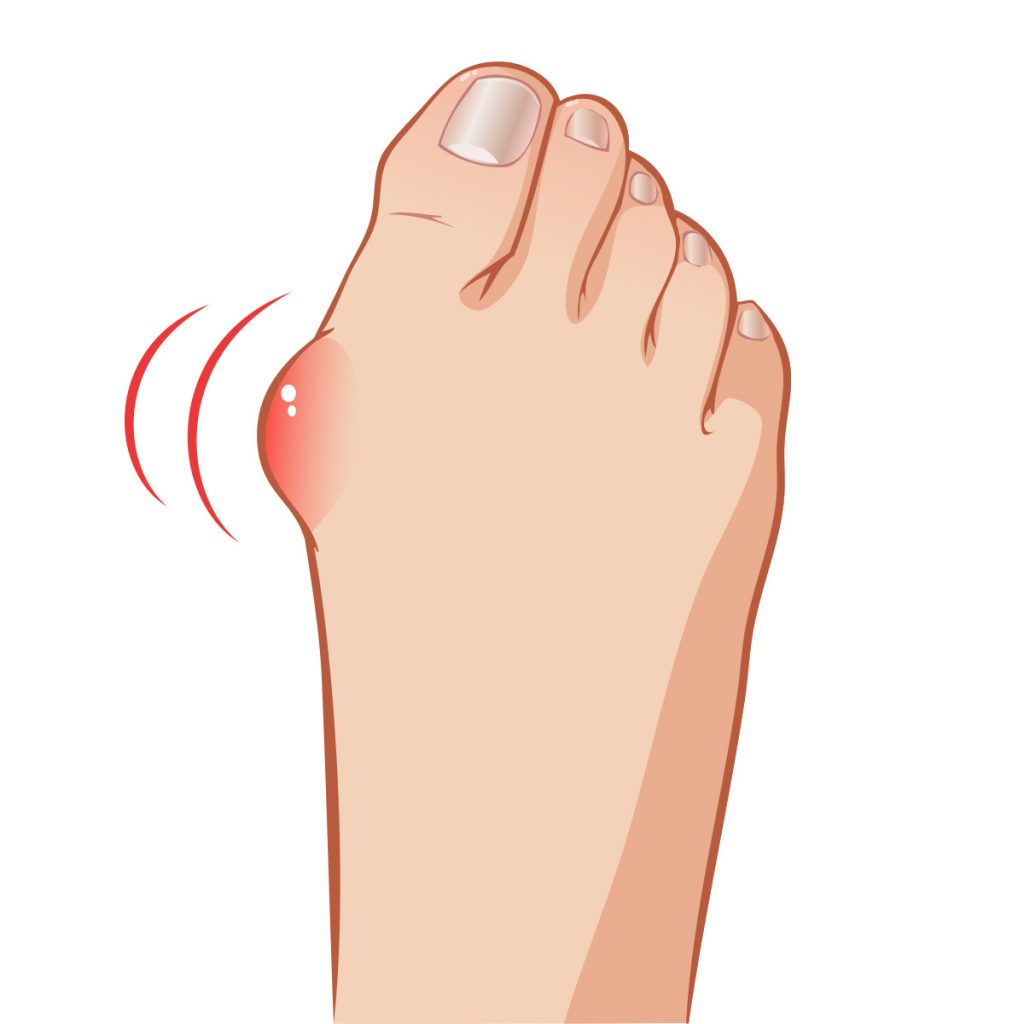
Overview
Bunion, also known as Hallux valgus is an abnormal structure (deformity) of the big toe that tilts toward the smaller toes. As it progresses, the pain sensation in the toe slowly develops and a bony lump on the side of the toe will appear and increase in size. Therefore, it will eventually affect daily living and confidence.
Similar condition which shows a small lumpy bone on the side of the little toe joint is called a Bunionette.
Symptoms
A bunion has the following signs and symptoms:
- Bony prominence or a bump found on the side of a big toe
- The big toe joint has soreness, redness and swelling
- Corn or calluses develops due to friction between the first and second toe
- On and off pain
- Movement limitation of the big toe
- Difficulty walking
Buinions usually do not require any treatment. But, if you are experiencing the following, consult a Foot specialist or Podiatrist:
- Persistent pain on the big toe
- Visible bump on the side of the foot
- Stiffness and restricted motion in the big toe
- Difficulty in finding a shoe that fits due to a bunion
Causes
The real cause of a bunion is unknown but there are various factors which may have caused it such as:
- Abnormal foot structure: Flat feet, a deformity in the big toe
- Abnormalities in muscle and tendon: Tendon inflammation, Rheumatoid arthritis
- Wearing inappropriate shoes: wearing too small, too high, or too tight cone heels that squeeze the tip of the toe.
Complications
Bunion can lead to the following complications:
- Bursitis.Inflamed bone cushion which becomes painful and swollen
- Hammertoe.The middle joint of the toe (commonly found on the toe beside the big toe) is bent that cause pressure and pain.
- Metatarsalgia.Swollen and painful ball of the foot.
Diagnosis
Doctor will perform physical examination to assess for any signs of bunion. X-rays can be recommended if any suspicious signs are detected.
Treatment
There are various treatment options available based on the condition and pain felt from the bunion.
Conservative treatment
For patients who have a mild symptom of the bunion, surgical treatment may not be necessary. The following are the nonsurgical options:
- Bunion pads and cushions. These can be found over-the-counter and choose the non-medicated type to protect the foot from the shoe and lessen the pain.
- Change your shoes. Comfortable shoes are recommended in order for your foot to have plenty of space.
- Over-the-counter pain-relief medications can be taken such as ibuprofen, acetaminophen, or naproxen sodium to lessen the pain. Another option that can help is a cortisone injection.
- Padded shoe Inserts. Reduces symptoms by distributing pressure to the feet inside the shoes. Prescribed or over-the-counter orthotic devices may also help.
- Ice application. Helps to relieve swelling and soreness if you have been standing for too long but make sure that you check with your doctor if you have any circulation issue or reduced sensation before applying ice directly to your feet.
- Physical therapy: Physical rehabilitation exercises, massage or ultrasound therapy to control the pain, reduce inflammation, better alignment and improve the strength of the muscle.
Surgical
Surgery may be recommended if your symptoms still persist and the bunion is already affecting your activities of daily living or causing you pain more often than usual. But, it is recommended not to be done if it’s for aesthetic reasons only.
There are many surgical technique to correct the bunion and not all techniques are indicated with each case. The following procedures are to be done alone or in pair to correct the bunion:
- Removing the swollen tissue surrounding the joint of the big toe
- Taking out some parts of the big toe bone to make it in correct alignment
- Correcting the deformed angle of one or more forefoot and realign them to a regular position.
- Permanently merging the bones of the defective joint.
You will be able to walk as normal right after the surgery, but it can take weeks to months to fully recover. Wear comfortable and correct shoes once you have already recovered to prevent the recurrence.



