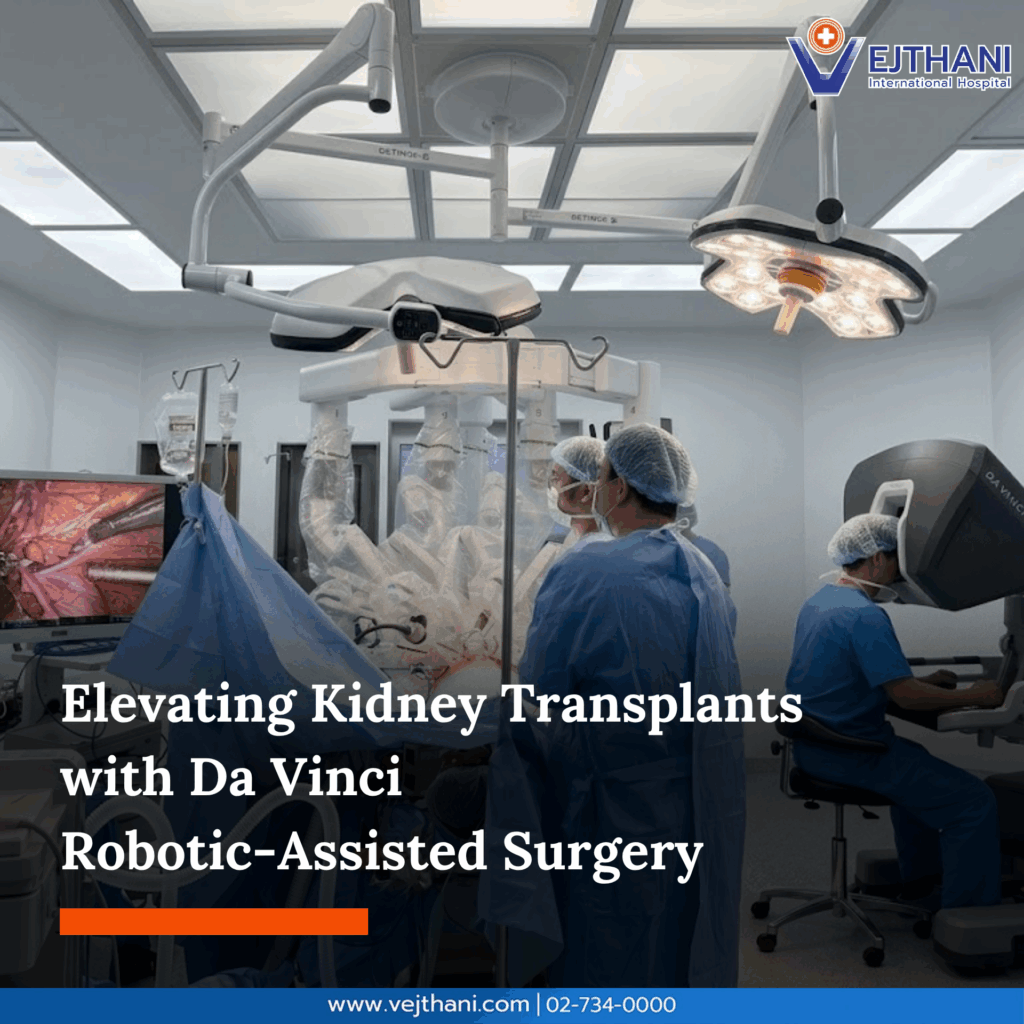
Elevating Kidney Transplants with Da Vinci Robotic-Assisted Surgery
Health Articles
Select Topic
Robotic-assisted kidney transplantation using the Da Vinci Surgical System is a minimally invasive technique for patients with end-stage kidney disease. By harnessing a high-definition 3D camera and intelligent robotic arms, the procedure delivers exceptional surgical precision while minimizing trauma to surrounding tissues and supporting a faster recovery. When a kidney transplant is successful, patients may no longer need to rely on dialysis, though lifelong follow-up care and immunosuppressive medication remain essential.
What Is a Kidney Transplant?
A kidney transplant is a surgical procedure in which a healthy kidney from a donor is placed into a patient with end-stage kidney disease, allowing the new kidney to filter waste and maintain the body’s fluid and electrolyte balance in place of the failing kidneys. It is one of the most effective treatment options for improving long-term quality of life and reducing dependence on dialysis.
For some patients, a successful kidney transplant can allow a return to a more normal daily life, with fewer dietary restrictions, less time spent on treatment, and greater freedom to travel. However, the most appropriate treatment depends on each patient’s health condition and must be thoroughly assessed by a nephrologist and transplant team.
What Is the Da Vinci Robotic System, and How Does It Work in Kidney Transplantation?
The Da Vinci Robotic System is a specialized, minimally invasive surgical platform comprising multiple intelligent robotic arms and a high-definition 3D camera. The Doctor controls these robotic arms from a console in the operating room, where every hand and finger movement is translated into precise, scaled instrument motion, significantly enhancing surgical technique and overcoming the limitations of conventional open surgery.
During a robotic kidney transplant, the doctor makes only a few small incisions in the abdominal wall in which the robotic arms and camera are inserted, eliminating the need for a large open incision. The donor kidney is then positioned in the pelvis and meticulously connected to the patient’s blood vessels and urinary bladder, all under magnified, three-dimensional visualization that allows for exceptional anatomical detail.
Robotic-Assisted Surgery vs. Open Surgery: What Is the Difference?
For patients weighing their options, the most apparent difference is the size of the surgical incision. Traditional open surgery requires a large abdominal incision to give the doctor direct access, whereas the Da Vinci system operates through only a few small ports, resulting in significantly less trauma to the surrounding muscles and soft tissues.
This difference translates directly into a better postoperative experience. Patients who undergo robotic-assisted transplantation typically experience less postoperative pain, require fewer pain relievers , and lose less blood during surgery, all of which contribute to a shorter hospital stay and faster return home.
From the surgeon’s perspective, open surgery relies on direct vision and tactile feedback, while, the da Vinci robotic surgical system provides a high-definition, magnified 3D view and robotic arms that filter out hand tremors, allowing surgeons to connect the kidney’s blood vessels and ureter, the most delicate part of a kidney transplant, with greater precision.
Benefits of Da Vinci Robotic Kidney Transplantation
Smaller Incisions Unlike traditional open surgery, which requires a large abdominal incision, the robotic approach involves only a few small entry points. Smaller incisions mean less damage to the skin, muscles, and surrounding tissue, with both short- and long-term benefits for recovery.
Less Postoperative Pain Because the robotic technique minimizes trauma to surrounding tissues, patients experience significantly less pain after surgery, require fewer pain medications, and recover more quickly, allowing them to return to everyday lives sooner.
Reduced Blood Loss The precision of the robotic arms, combined with the clarity of the 3D camera, enables improved vascular control during surgery, reducing intraoperative blood loss and enhancing overall patient safety.
Faster Recovery and Earlier Discharge Patients who undergo robotic kidney transplantation typically go home sooner than those who have open surgery, thanks to smaller incisions, less pain, and a shorter recovery period.
High-Definition 3D Visualization for Greater Precision The Da Vinci system 3D camera provides a magnified, highly detailed view of the abdominal cavity that far surpasses what the naked eye can see. This is especially beneficial when connecting the blood vessels and ureter, a step that requires exceptional precision and accuracy.
Tremor Filtration for Steadier Surgical Movements The robotic arms are engineered to filter out natural hand tremors, ensuring that every movement during surgery is stable and controlled, particularly important during the most delicate stages of the procedure.
Who Is a Candidate for Robotic Kidney Transplantation?
Robotic kidney transplantation is suitable for patients with end-stage kidney disease who are in adequate overall health for surgery. The transplant team will evaluate each patient’s medical history, comorbidities, and individual risk factors to develop a personalized treatment plan.
In certain patients with obesity, the minimally invasive approach may help address some of the challenges associated with open surgery and simplify postoperative care. The final decision regarding surgical technique is always based on an evaluation by the multidisciplinary transplant team.
Our specialists at the Comprehensive Transplant Center, Vejthani International Hospital, walk with patients through every stage of their journey, from pre-transplant evaluation and surgical preparation to long-term post-transplant follow-up, helping them reclaim their quality of life.
What Patients Need to Know After a Kidney Transplant
Although Robotic-Assisted Surgery significantly reduces the physical impact of the procedure, patients must still adhere to careful post-transplant care. This includes lifelong immunosuppressive medication to prevent the body from rejecting the new kidney, a condition known as transplant rejection. Regular follow-up appointments with the transplant team, close monitoring for signs of infection and a commitment to maintaining overall health are all essential components of long-term success.
Frequently Asked Questions
Is robotic kidney transplantation safer than open surgery?
In general, the robotic approach reduces risks associated with large incisions, such as significant blood loss, wound infection, and prolonged recovery. However, overall risk depends on each patient’s specific health condition and must be evaluated by a specialist.
How long will I need to stay in the hospital after robotic kidney transplant surgery?
Patients who undergo robotic transplantation are typically discharged earlier than those who have open surgery, due to the smaller incisions and faster recovery. The actual length of stay will vary based on each patient’s condition.
Will I still need dialysis after a successful kidney transplant?
If the transplant is successful and the new kidney functions well, dialysis will no longer be necessary. However, patients must continue taking immunosuppressive medications for lifetime to prevent rejection of the new kidney.
Can a kidney be received from a living donor?
Yes. A kidney can be donated by either a deceased or a living donor, most commonly a relative or close individual who is biologically compatible. All living donors must undergo a thorough evaluation before transplantation can proceed.
Is every patient with kidney failure a suitable candidate for transplantation?
Not every patient is eligible. Kidney transplantation is best suited for patients who are in sufficient overall health, without severe cardiac disease or a high risk of infection. Each patient requires a comprehensive evaluation by a nephrologist to determine the most appropriate course of treatment.
We use cookies to manage your personal information in order to provide you with the best personalized user experience on our website. If you continue using the website, we assume that you accept all cookies on the website. Find out more.