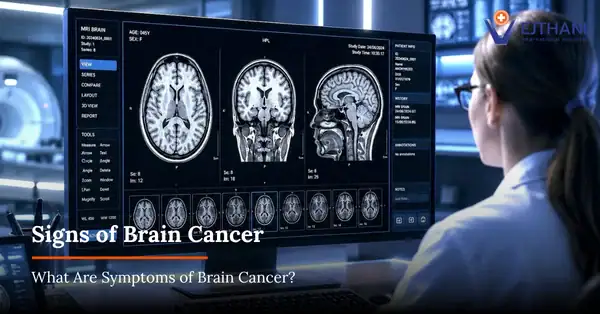
Signs of Brain Cancer
Brain cancer is detected when a cancerous or malignant tumor is found in the brain. The tumor may form in the brain itself or when cancer cells in other parts of the body spread to the brain.
Select Topic
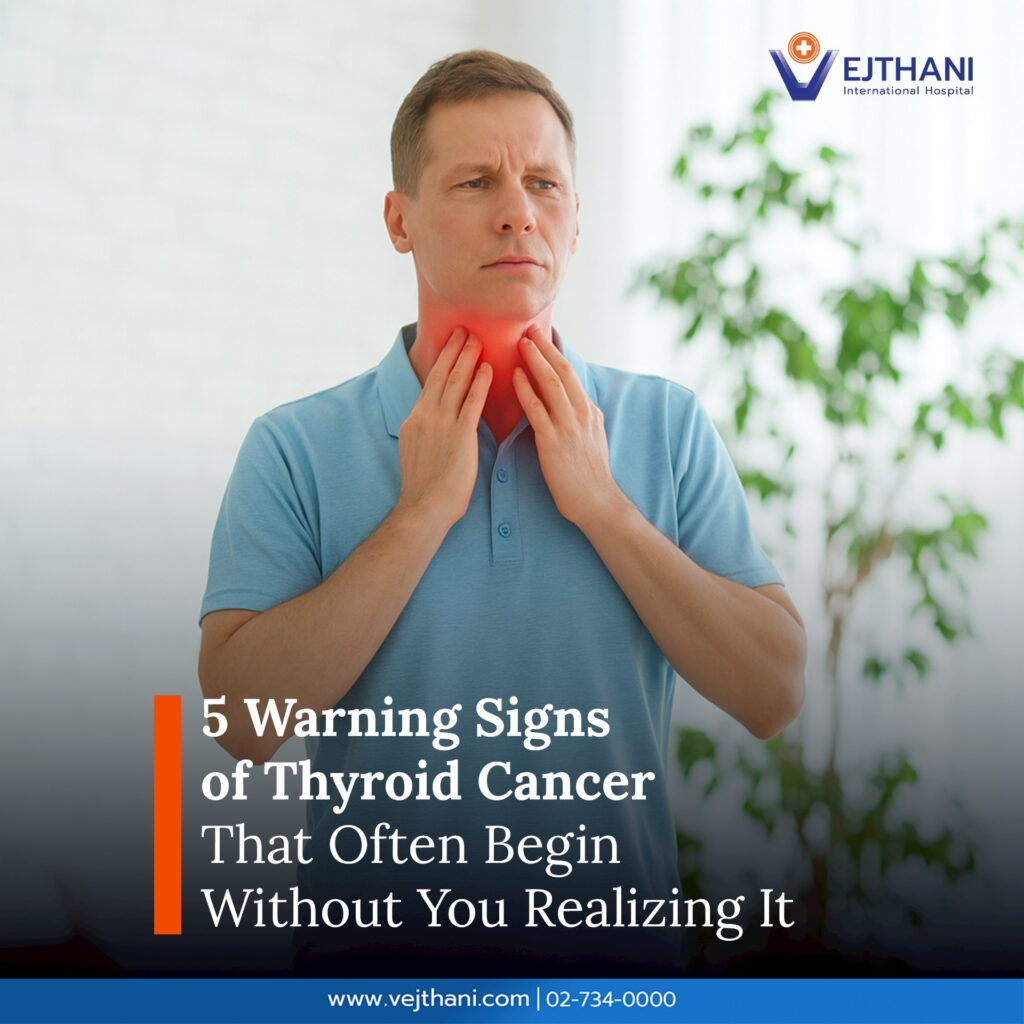
Thyroid Cancer is a condition that many people may not realize they have, as it often shows no obvious symptoms in its early stages. However, advances in modern medical screening and diagnostic technology now make it possible to detect thyroid cancer at an early stage, significantly improving the chances of successful treatment and allowing patients to return to the quality of life they were once accustomed to.
Thyroid cancer occurs when cells in the thyroid gland undergo abnormal changes and begin to grow uncontrollably, forming malignant tumors. The thyroid gland plays a vital role in regulating metabolism, energy levels, body temperature, and hormone balance. When abnormalities develop in this gland, they can affect overall health and bodily functions.
Although early symptoms are often mild, watch out if you notice any of the following:
If you experience any of these symptoms, seek medical attention promptly.
The most widely accepted screening method for thyroid glands today is high-resolution thyroid ultrasound. Because the thyroid gland is located close to the skin, high-frequency sound waves can produce highly detailed images of thyroid glands, including:
This allows doctors to accurately assess cancer risk from an early stage. Beyond that, ultrasound also plays a crucial role in ultrasound-guided fine needle aspiration (FNA), which helps determine whether a thyroid gland is benign or malignant through pathological examination.
To improve diagnostic accuracy, doctors often evaluate multiple imaging features together, such as:
These characteristics help classify mass as low, intermediate, or high-risk for malignancy, which directly affects decisions about further testing and treatment.
In cases where cancer spread to lymph nodes or deeper neck structures is suspected, CT scans or MRI may be used to provide a more comprehensive assessment of disease extent.
Thyroid cancer is highly treatable, especially when diagnosed early. Treatment typically involves surgery combined with radioactive iodine therapy, with additional treatments considered on an individual basis.
Surgery is the primary method for removing cancerous thyroid tissue. The surgical approach depends on disease stage and tumor characteristics, including:
Nowadays, surgical techniques focus on minimizing side effects, such as preserving the parathyroid glands to prevent low calcium levels and protecting the vocal cord nerves to reduce the risk of hoarseness.
Surgery typically takes about two hours, with an average hospital stay of 3–5 days. The removed thyroid tissue is examined by a pathologist to assess cancer spread in detail.
If pathology results indicate cancer spread or a higher risk of recurrence, radioactive iodine therapy (I-131) is often recommended approximately four weeks after surgery.
Patients swallow radioactive iodine, which is absorbed by remaining thyroid cancer cells and destroys them selectively. This treatment significantly reduces recurrence risk. For safety, patients stay in a radiation-isolated room for about 2–4 days until radiation levels fall to safe limits.
In cases where standard treatments are insufficient, additional therapies may be considered, including:
Treatment plans are created for each patient’s cancer type and response.
Thyroid cancer is not a distant or rare disease. When detected early, the chances of successful treatment and a return to normal life are very high. Screening is simple, fast, painless, and safe.
Is thyroid cancer life-threatening?
Most thyroid cancers respond very well to treatment. When detected early, cure rates are high, and patients can live normal lives.
Should I worry if I have a lump in my neck?
Not all neck lumps are cancerous. However, if a lump grows quickly, is painful, or is accompanied by hoarseness or difficulty swallowing, a thyroid ultrasound should be performed promptly.
Who is at the highest risk for thyroid cancer?
Life Cancer Center, Vejthani International Hospital
Call: (+66)2-734-0000 Ext. 2720
English Hotline: (+66)85-223-8888