Not All Heart Arrhythmias Are Racing: The Hidden Danger of Bradycardia (Slow Heartbeat) and the Implantation of Pacemaker
Health Articles
Select Topic
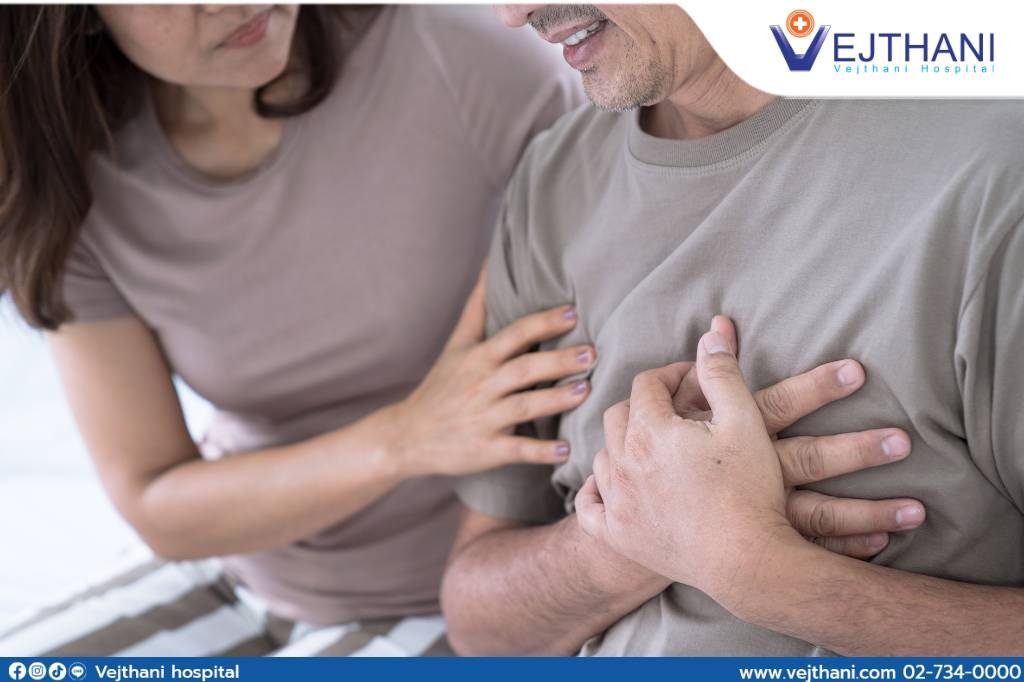
People tend to associate heart arrhythmia with rapid heartbeat only. But heart arrhythmia is also characterized by a slow heartbeat that people often overlook, despite the fact that it can pose a significant risk. With an effective treatment, heart arrhythmia can be cured.
Asst. Prof. Dr. Sarawuth Limprasert, a cardiac electrophysiologist at Vejthani Hospital, explains that bradycardia is a condition in which the heart beats slower than usual, typically less than 60 beats per minute. When the heart beats too slowly, the amount of blood pumped out of the heart decreases, leading to insufficient oxygen supply to various parts of the body, especially vital organs like the brain and heart. In general, bradycardia may not cause any noticeable symptoms, especially in healthy individuals. However, some patients or the elderly can experience various abnormalities.
Abnormal symptoms ofpatients with bradycardia include:
Fatigue
Chest pain
Tiredness
Palpitations
Dizziness
Fainting
Confusion, memory loss, difficulty concentrating
Bradycardia is more common in people over 65, but it can also occur in younger individuals with underlying conditions or genetic predispositions. Other common causes include electrolyte imbalances, certain infections or inflammations, cardiovascular disease, rheumatic heart disease, sick sinus syndrome, abnormal conduction of electrical signals in the heart, and complications from medications, surgery, or radiation therapy.
Nevertheless, accurate diagnosis is crucial for effective treatment. If the cause is treatable, the bradycardia itself will resolve. To determine the cause of bradycardia, doctors will conduct a thorough medical history, physical examination, electrocardiogram (EKG), and blood tests. Additional specialized cardiac tests may be necessary depending on the patient’s condition.
If the investigation shows that bradycardia is caused by an underlying condition that can be cured, addressing that condition will resolve the bradycardia. However, if the bradycardia is due to an untreatable condition, pacemaker implantation may be necessary. The goal is to reduce the patient’s symptoms or lower the risk of developing severe arrhythmias.
Pacemaker implantation is a procedure in which a small electronic device is inserted under the skin in the chest area to stimulate the heart’s rhythm. The pacemaker sends electrical signals to the heart’s chambers that function abnormally. The electrical signals ensure a regular heartbeat that allows adequate blood supply to the rest of the body and vital organs.
Preparation for Pacemaker Implantation
Before the pacemaker implantation, patients are instructed to discontinue certain medications as advised by their doctor and refrain from food and water for 8 hours prior to the procedure. The chest area will be shaved for the implantation. Typically, the pacemaker will be placed on the nondominant side. For right-handed people, the device will be implanted on the left side of the chest. For left-handed people, it will be placed on the right side.
Post-Pacemaker Implantation Care
After pacemaker implantation, patients need to stay in the hospital for 1-2 days for recovery. Avoid these during the first seven days:
Raising the arm on the same side as the pacemaker above shoulder level.
Engaging in strenuous activities.
Rubbing or scratching the incision site.
Chest massage.
Lifting heavy objects for at least a month.
If any unusual symptoms arise during recovery, such as palpitations, dizziness, excessive fatigue, or persistent hiccups, prompt medical attention is crucial to investigate the function of the pacemaker. Regular follow-up appointments are also essential to monitor the device.
Potential risks and complications associated with pacemaker implantation include:
Pneumothorax (collapsed lung) due to the needle used to guide the lead wires, which is a rare complication.
Short-term swelling and bruising around the implantation site, especially in patients taking antiplatelets
Wire displacement, which is uncommon due to the multiple-step verification process before connecting the leads to the pacemaker
Pacemaker and lead infection, which is often associated with underlying medical conditions and can be prevented by prophylactic antibiotics before and after the procedure
Long-term risks require collaboration between patients and doctors to detect and address any potential complications promptly.
For more information, please contact
Cardiac Center, 5th floor, Vejthani Hospital Call: (+66)2-734-0000 Ext. 5300 English Hotline: (+66)85-223-8888
We use cookies to manage your personal information in order to provide you with the best personalized user experience on our website. If you continue using the website, we assume that you accept all cookies on the website. Find out more.