Make an Appointment
 Talk to Doctor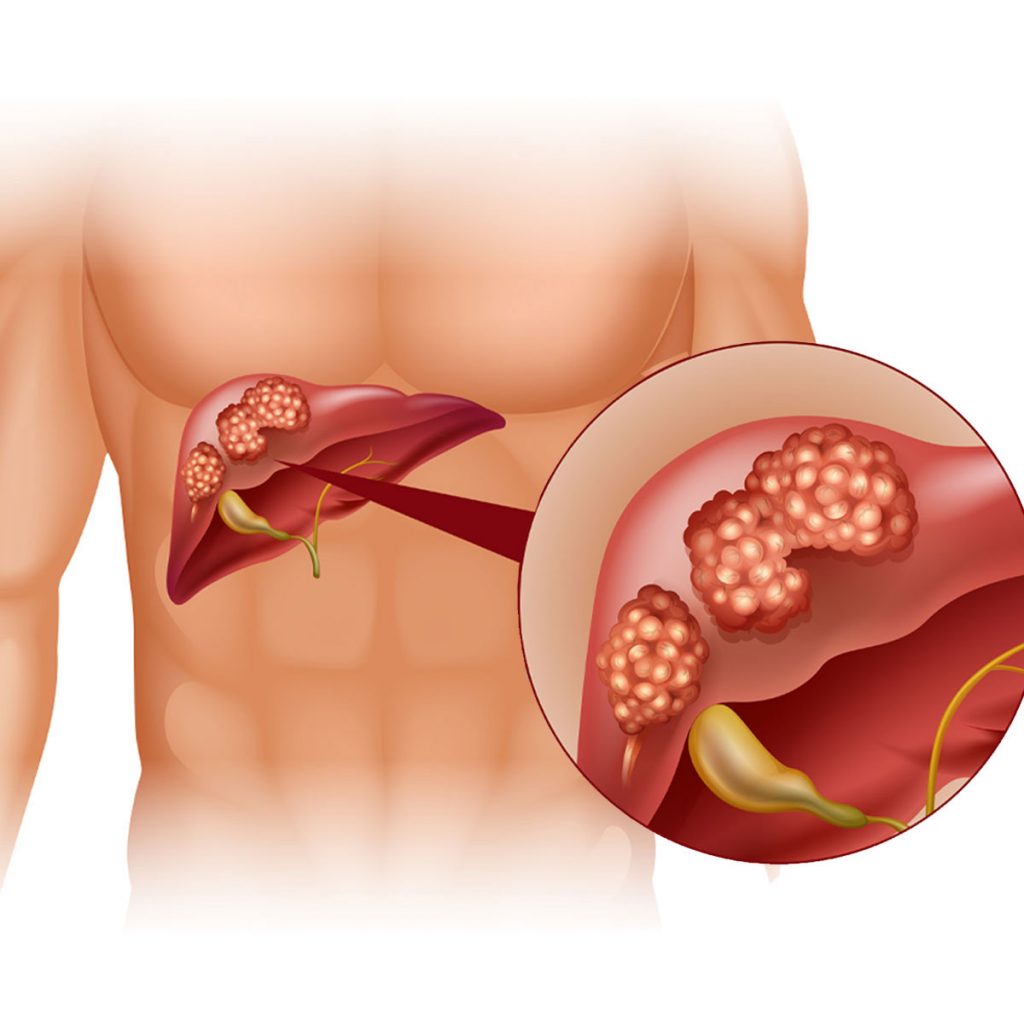
Overview
The liver is an organ that has a size as big as a football located at the upper right area of the abdomen just above the stomach and below the diaphragm. Liver cancer begins at the liver cells (hepatocytes). The most common type of liver cancer is hepatocellular carcinoma that mainly affects the hepatocytes. There are other types of liver cancer which are rare such as intrahepatic cholangiocarcinoma and hepatoblastoma.
Cancers that originate from other parts of the body (e.g. breast, lung or colon cancer) can spread to the liver. This is called metastatic cancer.
Symptoms
Signs and symptoms mostly not show when primary liver cancer is in its early stage.
The following are the signs and symptoms of liver cancer:
- Unintentional weight loss
- Nausea and vomiting
- Loss of appetite
- Fatigue
- Pain in the upper abdomen
- Swollen abdomen
- Jaundice (yellowish discoloration of the skin and eyes)
- Dark-colored urine
- Pale/clay-colored stool
If you have any of these signs and symptoms and it worries you, consult a doctor.
Causes
Liver cancer generally starts from the DNA mutation of the normal cells. The mutation of liver cell causes uncontrolled duplication resulting in forming a mass of cells also known as a liver tumor. This tumor then begins to invade and destroy the healthy tissues.
The cause of liver cancer may be known such as having chronic infection with hepatitis. However, the cause is sometimes unknown if there are no underlying conditions which may have resulted in liver cancer.
Risk factors
These are the factors which may develop into primary liver cancer:
- Chronic infection with Hepatitis B Virus (HBV) or Hepatitis C Virus (HCV).
- Cirrhosis. Cirrhosis causes scars in the liver and can result to liver cancer.
- Inherited liver disease. Hemochromatosis and Wilson’s disease are some of the diseases that can result to liver cancer.
- Having Diabetes.
- Nonalcoholic fatty liver disease. Fat accumulation in the liver can increase the risk of liver cancer.
- Exposure to aflatoxins. Aflatoxins are toxic materials that come from molds that can be found on crops (e.g. grains and nuts) that are not stored properly. The toxins may contaminate the food produced by the crops.
- Excessive alcohol consumption. Heavy alcohol use results to liver damage that cannot be reversed and may lead to liver cancer.
Diagnosis
Diagnosing liver cancer
These are the tests done to diagnose liver cancer
- Blood tests. Liver function test to detect any abnormalities.
- Imaging tests. Ultrasound, Computed Tomography (CT) Scan and Magnetic Resonance Imaging (MRI).
- Biopsy. A sample of liver tissue is taken for examination under a microscope to check for cancer.
Determining the extent of the liver cancer
The doctor will do the staging of cancer after liver cancer diagnosis. Cancer is staged in order to know the location and size of cancer. Computed Tomography (CT), Magnetic Resonance Imaging (MRI) and bone scans are done to stage cancer.
There are different types of liver cancer staging. One is using Roman numerals such as from I to IV and the other is using letters such as from A to D. Staging will figure out which treatment is best done and determine the prognosis of the disease.
Treatment
Primary liver cancer is treated based on its stage, the patient’s age, general health and treatment choice.
Surgery
- Surgery to remove the tumor. In some cases where the liver function test is normal and the tumor is still small, surgery is done to remove part of the liver where the cancer is located, as well as some healthy tissues around it.
- Liver transplant surgery. The liver with cancer is removed and replaced with a new liver from a donor mostly done for those who are at an early stage.
Localized treatments
Treatment that targets only the cancer cells and its surrounding area is called a localized treatment. The following choices are available:
- Heating cancer cells (Radiofrequency ablation). Electric current is utilized to heat up and kill the cancer cells by radiofrequency ablation.
Ultrasound is used to guide the doctor and see the image where a thin needle will be inserted in the abdomen to reach for the tumor. The needle then applies heat into the tumor by electric current to destroy the cancer. - Freezing cancer cells (Cryoablation). The doctor uses a cryoprobe which is an instrument that contains liquid nitrogen with the assistance of an ultrasound imaging to apply extremely cold temperature into the liver cancer to destroy it.
- Injecting alcohol into the tumor. Pure alcohol is injected into the tumor to kill cancer cells by injecting it through the skin or directly into the liver during surgery.
- Chemoembolization. A chemotherapy drug to counteract cancer is applied directly into the liver with cancer to destroy cancer cells.
- Placing beads filled with radiation in the liver. Radiation may also be applied directly into the liver to kill cancer cells using small beads containing radiation.
Radiation therapy
Cancer cells are targeted using X-rays and protons with strong energy beams to shrink the tumor. This treatment may be applied if other treatments are not effective or for advanced stage liver cancer to relieve symptoms. During this procedure, the patient will lie down on the table and a machine will target directly the part of the body that needs treatment. Another way of applying direct radiation into the cancer cells is by stereotactic radiotherapy which utilizes tiny radiation beams on a specific body part.
Targeted drug therapy
Targeted therapy blocks the specific abnormalities or genetic mutation of the cancer cells which will be tested for specific receptor within laboratory.
Immunotherapy
Immunotherapy uses the body’s own immune system to destroy cancer cells. Cancer cells produce proteins to disguise themselves so that the body’s own immunity wouldn’t attack them. Immunotherapy counteracts this disguise process of the tumor so that the body can fight the cancer cells. This therapy may be applied on advanced stage liver cancer.
Chemotherapy
Chemotherapy uses chemical medications to destroy cancer cells administered orally by the use of pills or intravenously. It may also be used sometimes for advanced-stage liver cancer.