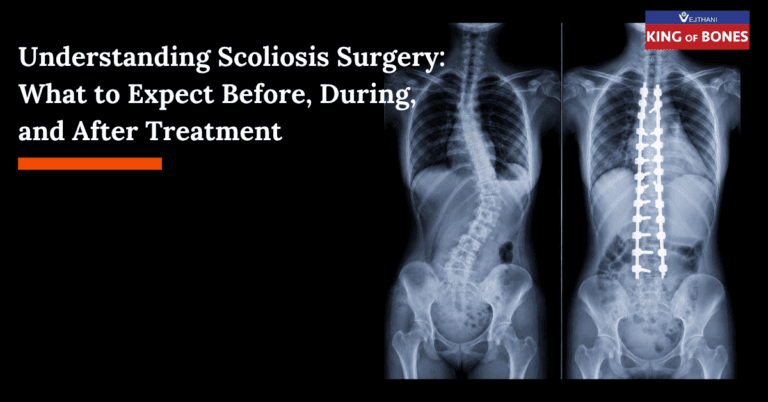
Understanding Scoliosis Surgery: What to Expect Before, During, and After Treatment
Scoliosis can be a frustrating condition that causes a great deal of pain and discomfort. Doctors work to present as many quality solutions for scoliosis

We can’t deny that the smartphone takes over our lives nowadays. Most of us spend a huge amount of time looking down at the smartphone or tablet as a routine without knowing that this behavior can cause a negative outcome.
Cervical Spondylosis is found increasing in modern technological society for several reasons. Daily behavior of looking up and down too frequently adds more responsibility to the neck. Another reason is age; elderly has fragile cervical spine caused by the degeneration.
A treatment plan for cervical spondylosis depends on its severity. The doctor may suggest easy exercises and emphasize more body movements to relieve the pain together with lifestyle modification. But if the pain has interfered with the daily routine, the doctor may consider using medical or physical therapy. In some patients with detrimental conditions, the doctor will introduce surgical treatment to prevent further nerve damage.
Currently, there is a minimally invasive surgery for the management of cervical spondylosis that allows the surgeon to work through 2-2.5 centimeters open incisions, giving patients less pain and quick recovery.
Make sure that your neck is in the proper posture in each of your daily task such as standing, sitting or walking to prevent the neck injury. Avoid tilting your head up and down too often or staying in one position for too long.
Furthermore, you should pay attention to a minor abnormality because a common neck pain can develop to a chronic condition. Seeking medical advice from a specialist in advance can prevent further damage and plan a proper treatment.
Spine Center, Vejthani Hospital
Call 02-7340000 or Ext. 5500
English Hotline: (+66)8-522 38888