
Reduce the Risk of SIDS Actions Caregivers Must Take
Learn how to reduce the risk of Sudden Infant Death Syndrome (SIDS) with safe sleep practices, caregiver guidance, and early preventive measures.
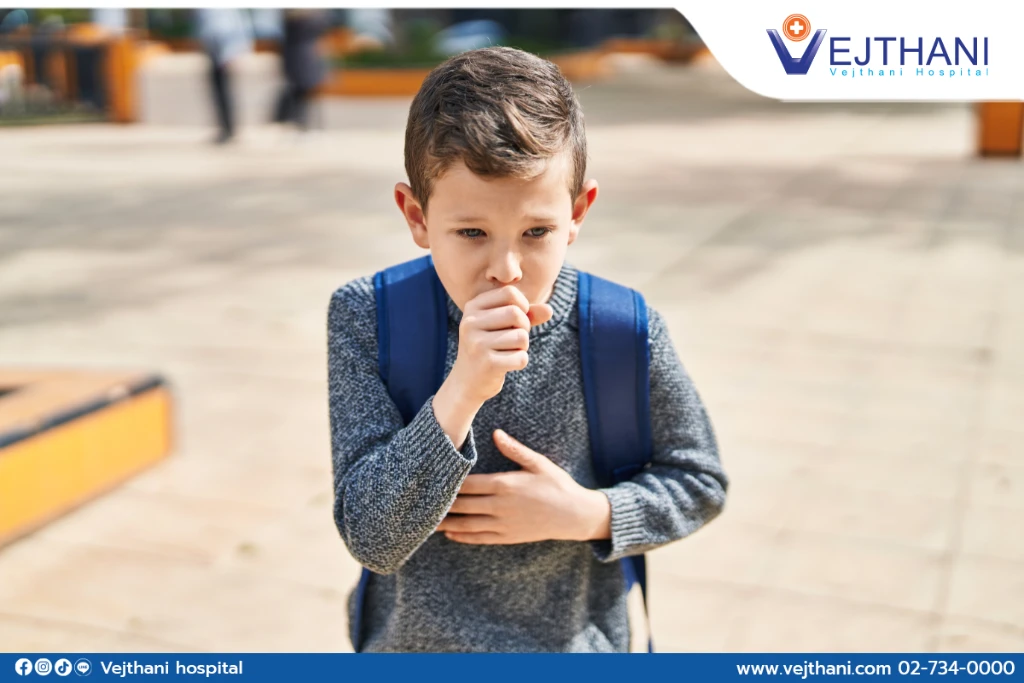
Often, people may overlook a seemingly ordinary cough, but in reality, it could be a sign of pertussis, or whooping cough—a condition that, if untreated, can lead to severe complications in children. This is because a child’s immune system isn’t strong enough to fight off infections effectively, putting young children at higher risk for severe illness and even death compared to adults.
Dr. Issaranee Vareesunthorn, a pediatric pulmonologist at Vejthani Hospital, explains that whooping cough (pertussis) is a respiratory infection caused by the bacterium Bordetella pertussis, which spreads through droplets from coughing or sneezing of an infected person. This disease is severe in infants and young children whose immune systems are still developing. If not treated promptly, it can lead to severe complications such as pneumonia, seizures, or even death.
Currently, whooping cough is resurging in several countries. Although vaccination has significantly reduced cases compared to the pre-vaccine era, the World Health Organization (WHO) reported that in 2023, there were over 150,000 reported cases of whooping cough worldwide. Most cases occurred in countries with low vaccination rates or inadequate vaccine access. For example, in the United States, more than 15,000 cases are reported each year—a rise compared to the past decade. In Thailand, there has been a rise in cases, especially among young children and those not fully vaccinated.
Across all stages, children with pertussis typically experience coughing for an average of about 112 days. This prolonged and intense coughing can lead to several complications, such as fractured ribs, ruptured blood vessels in the eyes, back pain, and urinary incontinence.
Whooping cough can be treated with antibiotics targeting Bordetella pertussis, with treatment being most effective within the first 7 days of symptoms. However, some young children may require hospitalization and intravenous fluids if coughing is severe enough to affect their ability to eat, causes vomiting, or leads to a severe loss of appetite.
The best prevention against whooping cough is vaccination, typically included in the combined diphtheria-tetanus-pertussis (DTP) vaccine, administered at 2, 4, 6, and 18 months, with a booster between 4-6 years. In addition, adolescents and adults should receive booster shots every 10 years to maintain immunity.
Super Kid’s Center, Vejthani Hospital
Call: (+66)2-734-0000 Ext. 3310, 3312, 3319
English Hotline: (+66)85-223-8888
service@vejthani.com