Sleeve Gastrectomy: Definitive Solution for Lasting Weight Loss
Health Articles
Obesity is a growing global health concern that significantly affects overall well-being. Beyond its visible impact on self-confidence and physical appearance, Obesity increases the risk of serious health complications, including cardiovascular disease, type 2 diabetes, and certain forms of cancer. For people struggling with Obesity, achieving and maintaining a healthy weight can be challenging despite lifestyle changes. However, effective and safe medical interventions—known as bariatric surgery, particularly gastric sleeve surgery—offer a proven solution. These procedures not only support sustainable weight loss but also contribute to long-term improvements in health and reduces the risks of developing chronic kidney diseases in patients with MASH or MASLD in combination with Obesity and diabetes.
What is “Sleeve Gastrectomy”?
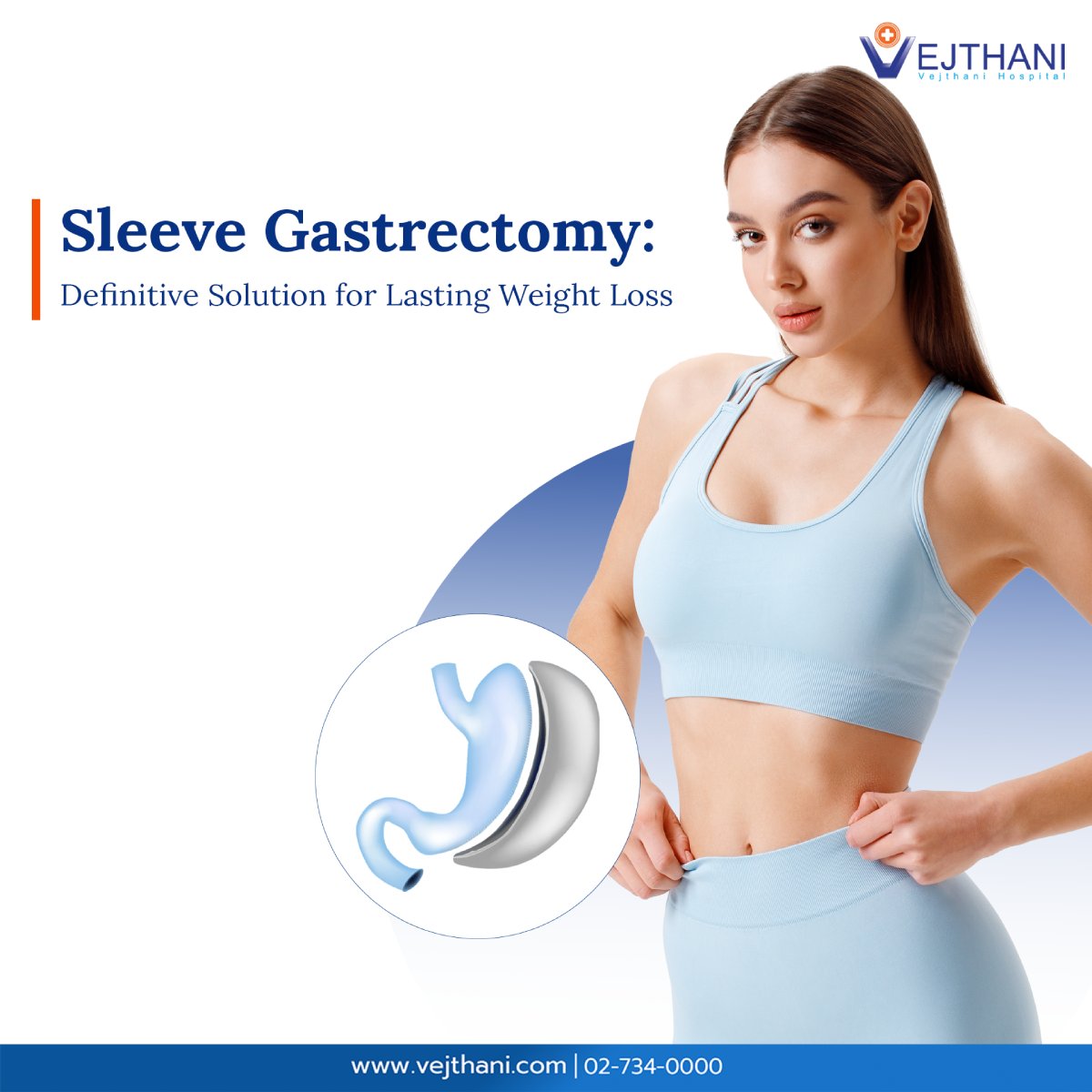
Sleeve gastrectomy is a type of bariatric Surgery designed to support significant and sustainable weight loss. The procedure involves removing the area responsible for producing the hunger hormone (ghrelin) in the stomach. As a result, patients feel full more quickly and experience a reduced appetite, making it easier to control food intake.
This surgical approach is typically recommended for people with Obesity who have not achieved sufficient weight loss through diet and exercise alone. Sleeve gastrectomy has been proven effective in promoting long-term weight loss.
Sleeve gastrectomy is not a quick fix, but a medically guided weight-loss solution that requires a commitment to healthier eating habits and regular physical activity to ensure long-term success.
Benefits of Sleeve gastrectomy for Obesity
Reduces obesity-related complications: Successful weight loss helps lower the risk of conditions associated with Obesity, such as diabetes, high blood pressure, and heart disease.
Improves quality of life: Patients often experience increased energy, improved mobility, and greater confidence in their appearance after losing weight.
Lowers long-term mortality risk: Sleeve gastrectomy has been shown to reduce the long-term risk of death from obesity-related conditions.
What happens during the Surgery?
Bariatric surgery is commonly performed using advanced laparoscopic technology, making it a minimally invasive procedure. This approach results in smaller incisions, less postoperative pain, and a faster recovery compared to traditional open Surgery.
Several surgical techniques are available, and the surgeon will determine the most suitable approach based on the patient’s health records. Currently, there are four primary approaches used in clinical practice:
1. Sleeve Gastrectomy or Gastric Sleeve
The procedure involves removing approximately 75–80% of the stomach, reducing its capacity to around 150–200 cc. This not only significantly decreases the stomach’s volume but also reduces the body’s production of the hunger hormone, ghrelin. As a result, patients feel full more quickly and consume less food, leading to effective weight loss—without affecting the absorption of calories and nutrients in the intestines.
It is a weight-loss surgery that restructures the digestive system by creating a small pouch from the upper portion of the stomach and connecting it directly to the upper part of the small intestine, forming a Y-shaped pathway. This rerouting causes most food to bypass the larger section of the stomach and the initial segment of the small intestine, thereby reducing calorie and nutrient absorption. Additionally, the procedure lowers the release of appetite-regulating hormones, helping patients feel full more quickly and consume less food.
3. Sleeve Plus Surgery
This procedure combines a standard sleeve gastrectomy with the bypass of approximately 300 cm of the small intestine, further reducing the absorption of calories and nutrients. It helps patients feel full more quickly and typically results in greater weight loss compared to sleeve gastrectomy alone.
4. OAGB (One Anastomosis Gastric Bypass)
This procedure reduces the stomach size by about 15–20% by creating a new smaller pouch, which is then directly connected to the jejunum (a part of the small intestine) without removing the original stomach. Performed through small incisions, OAGB typically leads to faster weight loss compared to other techniques and has shown to be particularly effective in improving obesity-related conditions such as diabetes.
Who is eligible for Bariatric Surgery for weight loss?
Bariatric surgery is not suitable for everyone seeking to lose weight. Before proceeding, doctors conduct a physical examination and screening to determine if patients meet the necessary criteria:
People with a Body Mass Index (BMI) of 30 or who have poorly controlled diabetes.
People with a BMI of 32.5 or higher with comorbidities such as type 2 diabetes, high blood pressure, or sleep apnea.
People with a BMI of 37.5.
Those who are physically and mentally prepared—patients must be healthy enough to undergo surgery and committed to making long-term changes to their eating habits and lifestyle after the procedure.
People who understand the potential risks and side effects—patients must be fully informed and provide consent regarding the risks associated with the surgery.
Calculating BMI
The formula to calculate BMI (Body Mass Index) is:
BMI = Weight (kg) ÷ Height (m)²
Example:
If a person weighs 50 kilograms and is 160 centimeters tall, their BMI would be calculated as follows:
BMI = 50 ÷ (1.60 * 1.60) = 19.5
For those considering bariatric surgery for weight loss, it is essential to consult an experienced doctor who can assess each individual’s condition and develop the most appropriate treatment plan. Bariatric surgery is not a shortcut to weight loss but rather an effective and safe tool for patients with a medical necessity who are prepared to commit to significant lifestyle changes.
Consultations are available at Vejthani Hospital for those interested in weight loss and obesity treatment through bariatric surgery. We offer accurate guidance, diagnosis, and treatment around the clock, supported by a team of specialists in personalized weight management and equipped with advanced medical technology. Our expert surgeons are highly experienced and committed to providing safe and effective weight loss solutions designed for each individual’s needs.
We use cookies to manage your personal information in order to provide you with the best personalized user experience on our website. If you continue using the website, we assume that you accept all cookies on the website. Find out more.