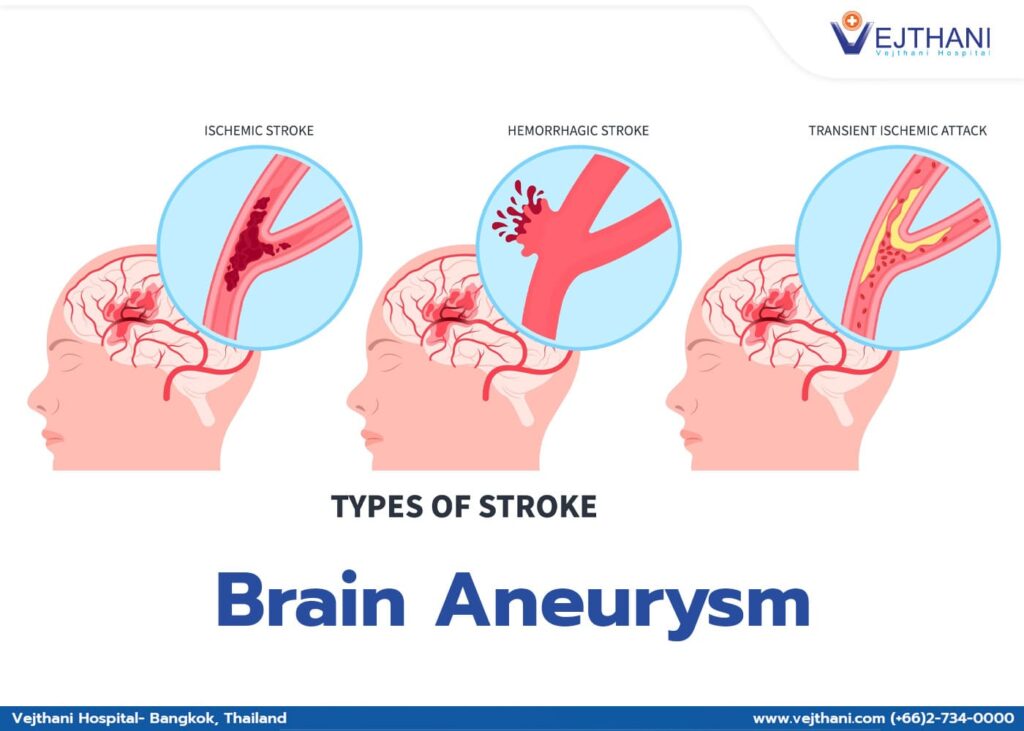
A cerebral aneurysm happens when an artery in a weak area that fills with blood in or around the brain bulges. The constant pressure from the blood flow causes the weakened section to move outward, increasing its size and ballooning like a bump that looks like a blister.
Brain aneurysms may occur in any part of the brain. Approximately 10% to 30% of people with a brain aneurysm have multiple aneurysms. Every cerebral aneurysm can rupture, which may cause bleeding inside the brain or the surrounding region (called hemorrhage).hat
What happens when a brain aneurysm ruptures?
Tiny aneurysms do not bleed or cause symptoms. The symptoms (like a severe headache called a thunderclap headache) appear when the aneurysms become larger and pressure the nerves or brain tissues in the surrounding. Leaking or rupturing of the aneurysm will cause bleeding in the brain tissues.
A ruptured aneurysm is a life-threatening condition and needs emergency medical treatment because it can lead to critical health issues such as:
Subarachnoid hemorrhage (SAH) is bleeding in the area between the brain and the arachnoid layer.
Hemorrhagic stroke occurs when there is uncontrolled bleeding inside your brain. It can cause permanent brain damage if the patient doesn’t get immediate medical attention.
Hydrocephalus occurs when a buildup of cerebrospinal fluid caused by blood around your brain increases pressure on the artery.
Vasospasm happens when blood vessels get narrower and less oxygen reaches your brain.
Seizure is a brief and uncontrollable surge of electrical activity in the brain.
Coma is an extended period of unconsciousness that can persist for days to weeks.
Death can occur in 50% of ruptured brain aneurysm patients.
Whom do brain aneurysms affect?
Brain aneurysms can affect anyone. But they’re most likely to affect people between 30 and 60. They’re also more common in women than men.
How common are brain aneurysms?
Unruptured brain aneurysm occurs in up to 6% of people. A ruptured brain aneurysm is less common, but the condition is more critical.
Symptoms and Causes
Brain aneurysm symptoms vary according to size and whether it’s unruptured or ruptured.
Symptoms of a ruptured aneurysm:
Thunderclap headache (sudden and severe, frequently characterized as “the worst headache of my life”).
Nausea and vomiting.
Photophobia ( sensitivity to light)
Stiff neck.
Blurred or double vision.
Seizures
Drooping eyelid
Confusion.
Weakness and/or numbness.
Loss of consciousness.
Symptoms of unruptured aneurysm:
Dilated pupil
Pain above and behind one eye
Change in vision or double vision
Numbness on one side of the face
Sometimes, a brain aneurysm may leak a small amount of blood called a sentinel bleed. You may experience warning headaches from a tiny aneurysm leak; a more severe rupture often follows after days or weeks. Seek medical attention immediately if you experience any of these symptoms.
What causes brain aneurysms?
Brain aneurysms arise when the walls of a brain artery become thin and weak. Sometimes brain aneurysm could be a congenital disability in an artery wall. However, various other factors can play a role in the weakening of an artery.
Followings are the hereditary factors that have an impact on the health of your arteries and can raise the risk of developing a brain aneurysm:
Vascular Ehlers-Danlos syndrome.
Family history of a brain aneurysm – your chance of developing an aneurysm becomes high if two or more first-degree relatives such as parents, brothers, sisters, or children have an aneurysm.
Polycystic kidney disease
Marfan syndrome
Fibromuscular dysplasia
Arteriovenous malformation ( when the arteries and veins are tangled)
High blood pressure
Cigarette smoking
Substance use, particularly cocaine
What causes a brain aneurysm to rupture?
These factors can contribute to developing a brain aneurysm and aggravate rupture. Known but untreated high blood pressure is the most common cause. Situations that can suddenly increase blood pressure:
Stressful condition or a sudden burst of intense emotions like anger
Straining while lifting, carrying, or pushing heavy objects.
Factors that determine the aneurysm is likely to rupture:
Size and shape: Larger aneurysms are more likely to burst due to the high pressure inside them, and also irregularly shaped ones.
Growth: If an aneurysm gets more prominent over time, it is more likely to burst quickly.
Location: Aneurysms on the posterior and anterior communicating arteries have a higher risk of rupturing than brain aneurysms in other locations.
Race: Japanese or Finnish heritage people have a higher risk of aneurysm rupture.
Older age: People over 70 are at higher risk of aneurysm rupture.
People with multiple brain aneurysms or who’ve had a previous aneurysm bled are at the highest risk of a brain aneurysm rupture.
Diagnosis and Test
Most people with very small or unruptured aneurysms won’t notice unless it shows the symptoms. They are detected only on brain imaging like CT scans or MRIs.
CT scan is the first recommended test to detect if the aneurysm is present and if there is a bursting or bleeding in your brain. CT angiogram (CTA) is the gold standard diagnostic test and can show an unruptured or ruptured aneurysm’s size, location, and shape.
MRI (magnetic resonance imaging) scan: can detect the effects of blood vessel abnormalities and the anatomy of aneurysms and other vascular lesions.
Cerebral angiography: performed by a neurosurgeon or interventional neuroradiologist injecting the dye by inserting a catheter into a blood vessel in either the groin or wrist area. This can show the abnormalities of aneurysms and vascular conditions inside the neck, head, and brain. It can also show the cause of bleeding in your brain and the exact location, size, and shape of the aneurysm.
Lumbar puncture for Cerebrospinal fluid (CSF) analysis: This test is done only when there is no evidence of aneurysms on imaging tests, but the symptoms indicate aneurysms. The doctor may aspirate a small amount of spinal fluid between the spinal cord and the protective covering. Blood in the spinal fluid indicates bleeding or brain hemorrhage.
Mangement and Treamtent
How are brain aneurysms treated?
Surgical intervention or endovascular treatment is used to repair a ruptured aneurysm to reduce the blood flow into the aneurysm. If it is unruptured, the doctor may recommend other possible treatments, such as active observation. If there is a high risk, preventive surgery may be recommended. The neurosurgeon will decide on the treatment plan according to benefits, risk, size, location, and shape of the aneurysm.
Microvascular surgical clipping for brain aneurysms
The neurosurgeon makes a small opening in your skull to access your brain and see the aneurysm. If it is found, the surgeon will use a small metal clip at the bottom of the aneurysm to pinch it off; this technique is called a shunt. This prevents the aneurysm from bursting after massive blood flow.
It may need several weeks or months for a ruptured aneurysm to recover and 2-4 weeks for an unruptured aneurysm. After clipping, the aneurysms are less likely to bleed again.
Endovascular coiling for brain aneurysm
Neuro specialist places a tiny coil of soft wire into the aneurysm through the flexible tube by inserting it through your groin or wrist and threads it to your brain. In this method, the aneurysm is sealed with a coil that blocks the blood flow and prevents other complications, such as seizures.
Flow diversion stents for brain aneurysm
A neurosurgeon or an interventional neuroradiologist inserts the mesh tube through the catheter in the groin or wrist and threads it to the brain. The merge changes the blood flow direction from entering the aneurysm.
WEB device for brain aneurysm
A neurosurgeon will insert a metal mesh-like cube or sphere through the catheter in the groin or wrist and thread it to the brain. This material has sealing properties to block blood flow and prevent aneurysms from bursting.
Additional treatments for a ruptured brain aneurysm
Antiseizure medications
Calcium channel blockers: to prevent stroke
Shunt: to prevent hydrocephalus by reducing CSF fluid pressure
Patients with ruptured aneurysms require the abovementioned treatments and rehabilitation, like speech therapy, occupational therapy, and physical therapy, to prevent long-term disability.
We use cookies to manage your personal information in order to provide you with the best personalized user experience on our website. If you continue using the website, we assume that you accept all cookies on the website. Find out more.