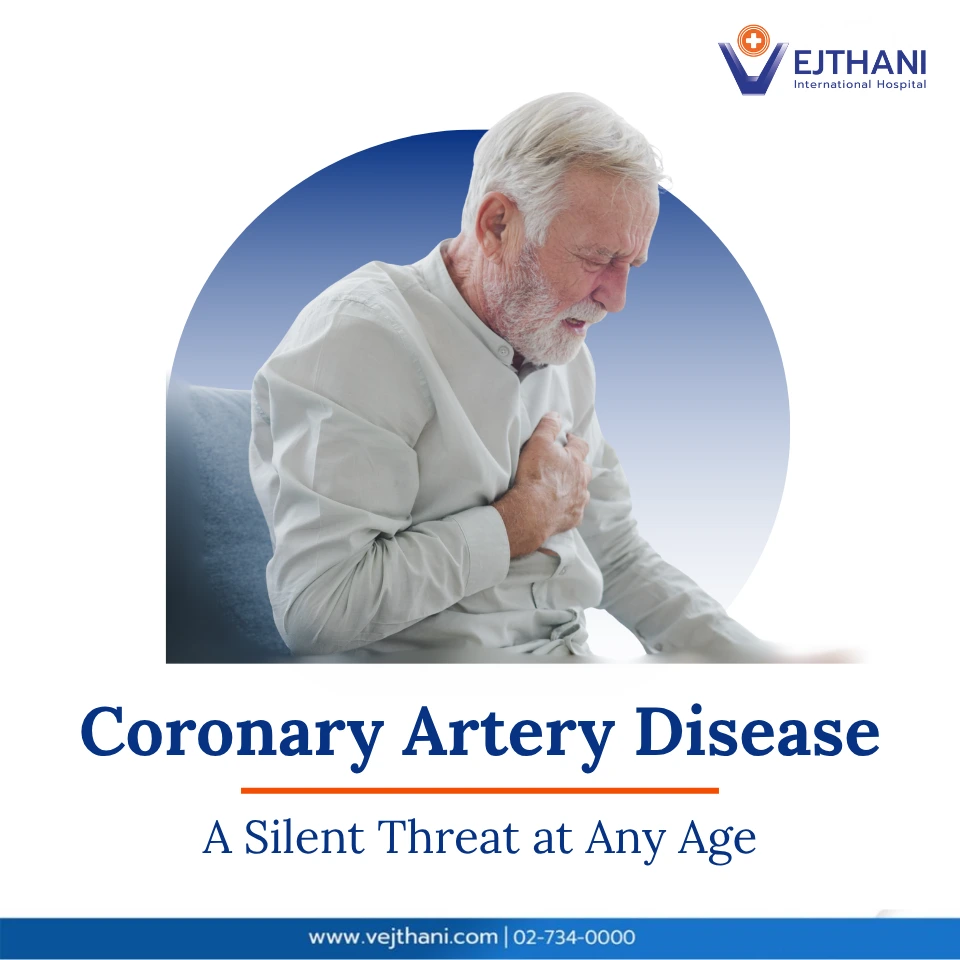
Coronary Artery Disease: A Silent Threat That Can Strike at Any Age
Health Articles
Cardiovascular disease remains one of the leading causes of death worldwide, with Coronary Artery Disease (CAD) being among the most common. While many believe it is a condition affecting only the elderly, the truth is that CAD can occur at any age—even in individuals under 40.
Dr. Zaida Buranasin, Cardiologist at Vejthani International Hospital, explains that Coronary Artery Disease (CAD) develops when fatty deposits (plaque) build up along the walls of the coronary arteries. This narrowing reduces blood flow to the heart muscle, leading to symptoms such as chest tightness, especially during exertion or stress, shortness of breath, fatigue, pain radiating to the shoulder, left arm, neck, or jaw, or in severe cases, sudden cardiac arrest.
Coronary artery disease (CAD) can occur at any age. Modern lifestyles have contributed to an increasing incidence of CAD among younger adults. Sedentary work, high stress, unhealthy diets, and lack of exercise are accelerating risk factors, making even those under 40 vulnerable.
Coronary artery disease (CAD) develops through a complex process, but several key factors can significantly increase the risk, including:
High cholesterol and elevated blood lipids: Low-density lipoprotein (LDL) can accumulate along the artery walls.
High blood pressure (Hypertension): Causes damage to the arterial lining and accelerates the narrowing of the vessels.
Diabetes: People with diabetes are several times more likely to develop coronary artery disease compared to the general population.
Smoking: Toxic substances in cigarettes damage the arterial walls and increase the tendency of platelets to clump together.
Stress and insufficient rest: Directly affect heart function.
Genetics/Family History: Having a family history of heart disease increases the overall risk of developing heart disease.
The diagnosis of coronary artery disease can be made through several methods, including taking a detailed medical history to assess risk factors and undergoing routine health check-ups. For patients who visit a doctor with symptoms such as chest tightness, shortness of breath, palpitations, or dizziness, diagnostic tools may include an echocardiogram (ECHO), electrocardiogram (EKG), chest X-ray, and exercise stress test (EST). In some cases, a CT coronary angiography (CTA) may also be required to detect abnormalities and support an accurate diagnosis.
The treatment approach for coronary artery disease can be divided into two groups:
Non-acute cases: Patients may experience recurring symptoms such as chest tightness, shortness of breath, or difficulty breathing over the course of 1–2 weeks. Treatment may involve medications, lifestyle modification, angioplasty (ballooning), or coronary artery bypass surgery, depending on the severity of the disease.
Acute cases: Patients usually present with severe symptoms such as chest pain accompanied by shortness of breath, dizziness, fainting, loss of consciousness, or even cardiac arrest. In such emergencies, doctors will perform immediate coronary angioplasty to restore blood flow.
The Best Approach is prevention
Despite advancements in treatment, prevention remains the most effective strategy. Eating a healthy diet rich in vegetables, fruits, and whole grains while limiting fatty, salty, and sugary foods is essential. Engaging in regular exercise for at least 30 minutes a day, getting adequate rest, and scheduling routine heart check-ups can significantly reduce your risk.
Every year, September 29 is recognized as World Heart Day, a global reminder to prioritize heart health. It is the perfect opportunity to re-evaluate lifestyle choices and begin caring for the heart—because CAD does not discriminate by age.
Protecting your heart means not only preventing disease but also ensuring a longer, healthier, and more fulfilling life with your loved ones.
We use cookies to manage your personal information in order to provide you with the best personalized user experience on our website. If you continue using the website, we assume that you accept all cookies on the website. Find out more.