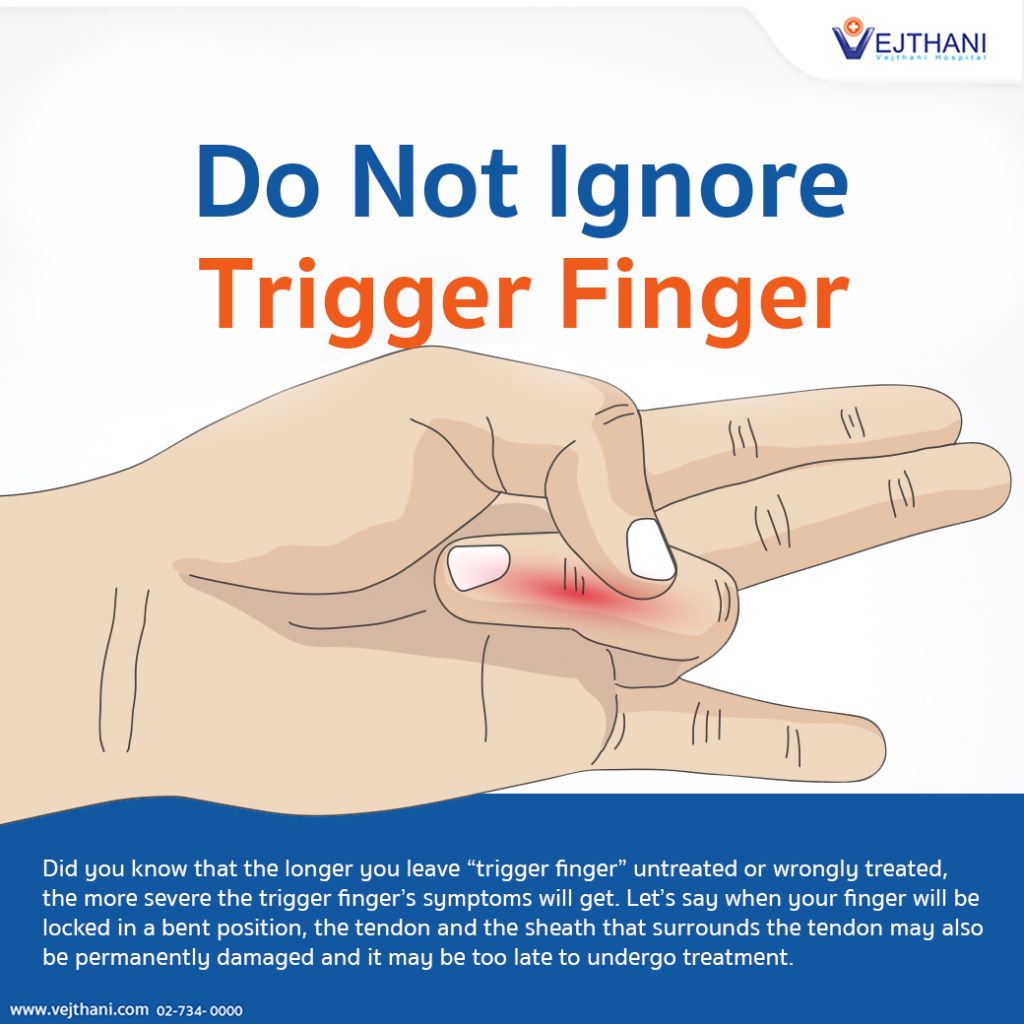
Many people may think that trigger finger is just an annoying disease that is not severe nor needs immediate treatment. But, did you know that the longer you leave “trigger finger” untreated or wrongly treated, the more severe the trigger finger’s symptoms will get.
What Is Trigger Finger?
Trigger finger is a condition that affects the tendons in your thumb or fingers. Tendons are cord-like tissues that connect muscles to bones, allowing your fingers to bend and straighten. Each tendon is enclosed in a protective sheath. When this sheath becomes inflamed or narrowed, the tendon can’t glide smoothly. This causes a catching or locking sensation when you try to move your finger, much like a trigger on a gun.
Symptoms of Trigger Finger
The symptoms of trigger finger can vary in severity and may include:
Pain at the base of the affected finger or thumb, especially when you try to move it.
Stiffness, particularly in the morning.
A clicking or snapping sensation when you bend or straighten your finger.
A tender lump or nodule at the base of the affected finger.
The finger locking or getting stuck in a bent position, requiring you to manually straighten it with your other hand.
Unable to perform full bending / full straight of particular fingers or thumbs.
What Causes Trigger Fingers?
What causes trigger finger is often a combination of factors, including repetitive movements, underlying medical conditions, and sometimes, no clear reason at all.
Aging
Injury: A direct injury to the palm or finger can damage the tendon sheath, which may eventually lead to trigger finger symptoms.
Repetitive Hand Movements: Activities that involve repeated gripping, grasping, or typing can put stress on the finger tendons, leading to inflammation and swelling. This is why it’s common in people who do a lot of manual labor, play musical instruments, or have jobs that require heavy computer use.
Medical Conditions: Conditions like rheumatoid arthritis, gout, and diabetes are known to increase the risk of developing trigger finger. These diseases can cause changes in the body’s connective tissues and lead to inflammation in the tendons.
What Will Happen if Left Untreated
Let’s say when your finger will be locked in a bent position, the tendon and the sheath that surrounds the tendon may also be permanently damaged and it may be too late for satisfactory results , even a surgical treatment might be too late. Hence, if you think that you are about to have a trigger finger or have pain in your hand, and have the stiffness kind of feeling when moving your fingers; you should see the doctor in order to receive proper treatment.
Trigger Finger Treatment
There are several effective trigger finger treatment options available. The right treatment for you will depend on the severity of your symptoms.
Non-Surgical Options
Non-surgical treatments are often the first step in treating trigger finger.
Rest and Splinting: Resting the affected finger and using a splint to keep it straight, especially at night, can help reduce inflammation and give the tendon time to heal.
Medication: Your doctor may recommend oral anti-inflammatory medications or steroid injections to reduce pain and swelling.
Ultrasound-guided percutaneous trigger finger release: During this procedure, a doctor uses an ultrasound to guide a special needle into the affected tendon sheath. The needle is then used to open the constricted area, allowing the tendon to move freely. Most importantly, this non-surgical treatment is done under ultrasound imaging, so you can be assured that the nearby tendons and nerves wouldn’t be damaged. This treatment can be done in approximately 5 minutes. It will leave no incision scar and the patient can already wash their hands with water 24 hours after the procedure.
Surgical Options
When non-surgical treatments aren’t successful, a doctor may recommend an open trigger finger release surgery. The procedure involves a small incision at the base of the finger to cut the constricted part of the tendon sheath. This permanently relieves the pressure on the tendon.
Trigger Finger Prevention
Take Breaks and Stretch: If you do repetitive tasks with your hands, take frequent breaks to stretch your fingers and hands. Gently bend and straighten your fingers to keep them flexible.
Use Ergonomic Tools: Use tools and equipment that are designed to reduce strain on your hands and wrists.
Avoid Excessive Force: Be mindful of how much force you use when gripping objects. Try to relax your grip whenever possible.
Listen to Your Body: If your hands are starting to ache or feel stiff, take it as a sign to rest and avoid the activity that’s causing the discomfort.
Trigger Finger Treatment at Vejthani Hospital
At Vejthani Hospital, our team of specialists can accurately diagnose your condition and provide a personalized trigger finger treatment plan. We offer both conservative and advanced surgical options, including ultrasound-guided percutaneous trigger finger release, to ensure you receive the most effective care with the best possible outcomes.
Contact us today to schedule a consultation with one of our specialists.
We use cookies to manage your personal information in order to provide you with the best personalized user experience on our website. If you continue using the website, we assume that you accept all cookies on the website. Find out more.