Bispecific T-Cell Engager (BiTE): An Advanced Immunotherapy Approach to Cancer Treatment
Health Articles
Select Topic
What is a Bispecific T-cell Engager (BiTE)?
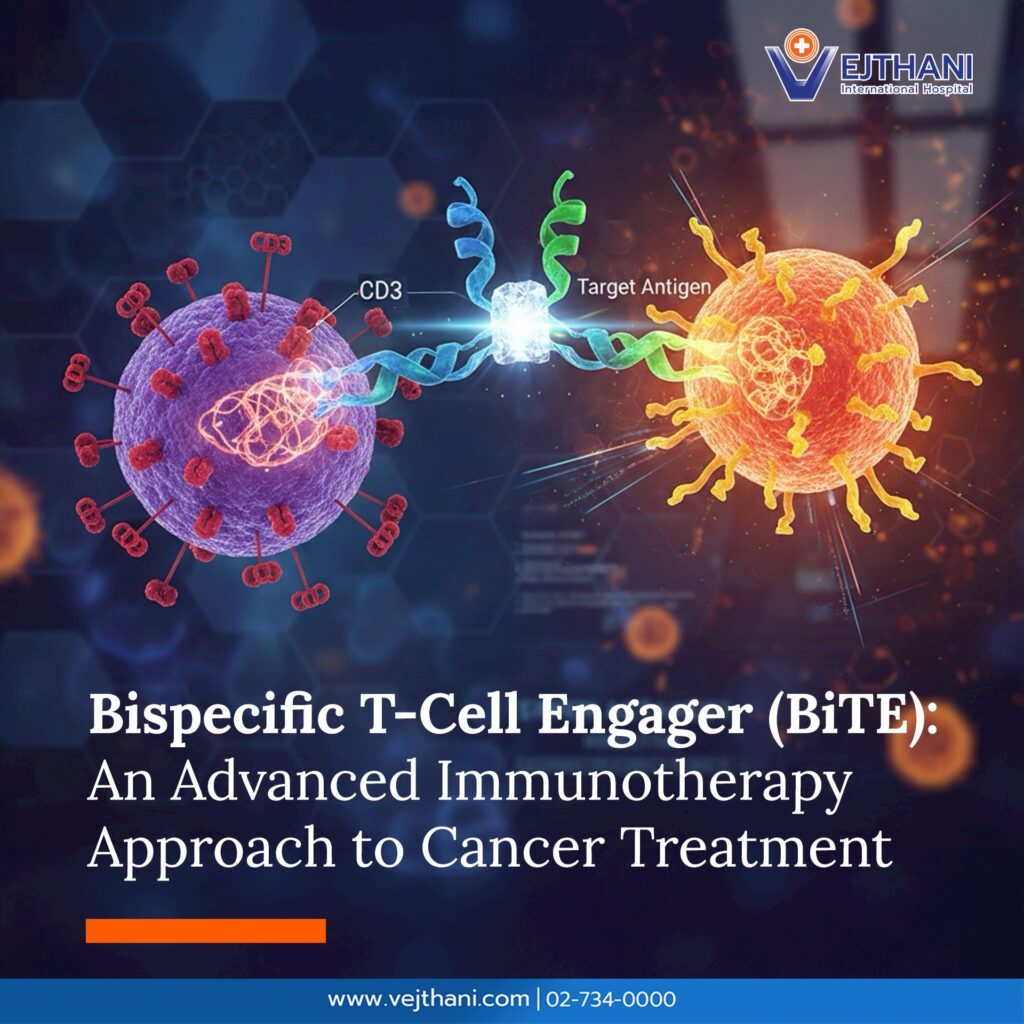
Bispecific T-cell engager (BiTE) therapy is an advanced form of immunotherapy designed to bring T-cells directly into contact with cancer cells. By linking the body’s immune cells to tumor cells, it helps T-cells recognize and destroy cancer more effectively. This therapy is used in the treatment of lung cancer, melanoma, and certain types of blood cancers.
BiTEs are engineered antibodies with two distinct binding sites:
One arm binds to CD3 receptors on T cells
The other arm binds to a specific antigen on cancer cells
By physically linking T cells to cancer cells, BiTEs enable direct immune-mediated destruction of malignant cells.
Mechanism of Action
Once administered, BiTE therapy works through the following steps:
The BiTE molecule binds to T cells via the CD3 receptor
Simultaneously, it binds to target antigens on cancer cells
T cells are brought into close contact with cancer cells
T cells become activated and release cytotoxic molecules
Targeted cancer cell death occurs
BiTE therapy relies on specially engineered antibodies designed to bind to two different targets at once. Antibodies normally protect the body by identifying unfamiliar or harmful proteins. In this therapy, one part of the antibody attaches to a T-cell, while the other binds to a cancer cell—effectively bringing the two together.
T-cell: T-cells are immune cells that continuously monitor the body for threats or abnormal cells. Once a T-cell identifies a cancer cell, it becomes activated and eliminates it. However, cancer cells often evade detection, making this process difficult without assistance.
Engager: The engineered antibodies act as a bridge, physically linking T-cells to cancer cells. By positioning them in close proximity, the therapy allows T-cells to recognize cancer cells as harmful and destroy them more efficiently.
A key advantage of this mechanism is that T-cell activation does not rely on conventional antigen presentation, allowing BiTEs to overcome certain immune evasion mechanisms of cancer.
How BiTE Differs from Conventional Cancer Therapies
Compared with traditional treatment modalities, BiTE therapy offers several unique advantages:
Targeted approach Minimizes damage to healthy cells compared with chemotherapy
Harnesses the patient’s own immune system No need for external immune cell modification
Rapid immune activation Due to direct engagement between T cells and tumor cells
Represents next-generation cancer therapy Reflecting major advances in immuno-oncology
How BiTE therapy is administered?
During BiTE therapy, the medication is given either as an injection or through an intravenous (IV) infusion. Treatment typically begins with a low dose, which is gradually increased over several days. This step-by-step approach allows your healthcare team to safely reach the dose that is most appropriate for your individual condition.
Clinical Applications of BiTE Therapy
BiTE therapy has been successfully used and actively studied in several cancer types, particularly:
Hematologic malignancies such as
Leukemia
Certain types of lymphoma
Solid tumors Currently under ongoing clinical development and investigation
Patient selection depends on tumor characteristics, antigen expression, and overall clinical condition.
Safety and Patient Monitoring
As with other immunotherapies, BiTE treatment may be associated with immune-related adverse events, including:
Cytokine release syndrome (CRS)
Fever, fatigue, or selected neurological symptoms
Therefore, BiTE therapy should be delivered in specialized medical centers with:
Experienced multidisciplinary teams
Structured monitoring systems
Capability to manage potential complications promptly
What are the conditions that can be treated with BiTE therapy?
When standard treatment options are no longer effective, BiTE therapy may be considered for patients with the following conditions:
Acute lymphoblastic leukemia
Lymphoma
Multiple myeloma
Lung cancer
Melanoma
Hospital Readiness for BiTE Therapy at Vejthani Life Cancer Center
The successful delivery of BiTE therapy requires a high level of institutional preparedness. At Vejthani Life Cancer Center, this readiness is supported by a comprehensive, patient-centered ecosystem that includes:
Highly specialized oncologists and hematologists with expertise in advanced immunotherapies
Dedicated multidisciplinary teams, integrating medical oncology, hematology, nursing, pharmacy, and supportive care specialists
International-standard clinical pathways designed to ensure safety, precision, and treatment consistency
Continuous patient monitoring and structured follow-up, enabling early detection of side effects and optimized long-term outcomes
Together, these capabilities ensure that every patient receives safe, effective, and personalized cancer care, delivered to global standards, reflecting Vejthani’s objective to advanced treatment.
We use cookies to manage your personal information in order to provide you with the best personalized user experience on our website. If you continue using the website, we assume that you accept all cookies on the website. Find out more.