 Make an Appointment
 Talk to Doctor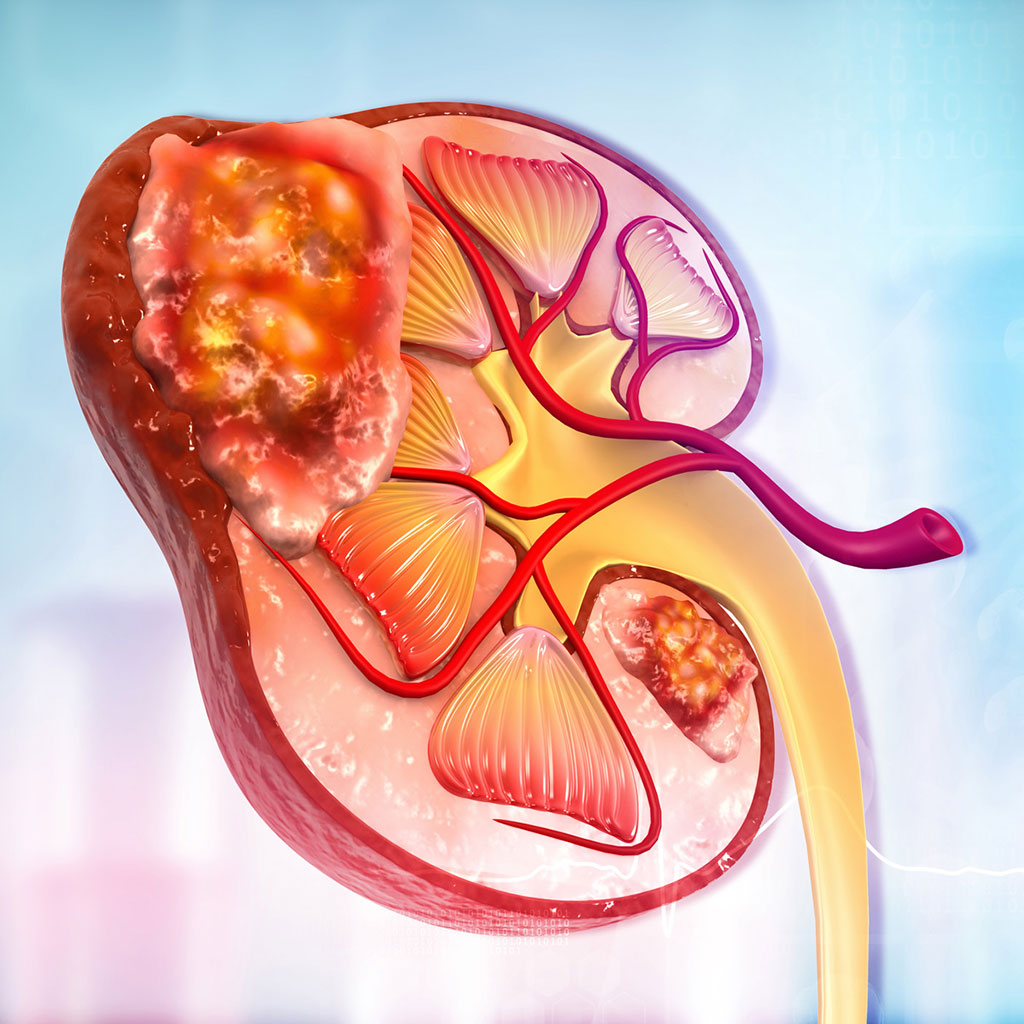
Overview
Kidney cancer also called renal cancer, is type of cancer that originate from the renal cell. Kidneys are two bean-shaped organs that is located below the rib cage, behind the abdominal organs.
The major function of the kidneys is to purify the blood, turn the waste products into urine, and control the body’s fluid balance. It also regulates blood pressure by producing renin (an enzyme that regulate and maintain blood pressure).
Early diagnosis of kidney cancer increases the chance for successful treatment. Treatment options for kidney cancers are surgery, cryoablation, radiofrequency ablation, targeted therapy, immunotherapy, and radiation therapy.
Different types of kidney cancer
- Renal cell carcinoma (RCC): is the most common type of adult kidney cancer. It develops as a single tumor within one kidney, or sometimes both kidneys could be affected at the same time.
- Transitional cell carcinoma – the cancer can develop in the ureter or bladder. It begins at the transitional zone where the ureter connects to the kidney.
- Renal sarcoma – a rare type of kidney cancer that develops at the connective tissues of the kidney.
- Wilm’s tumor (nephroblastoma): is the most common kidney cancer in children.
Symptoms
Signs and symptoms of kidney cancer are not likely to detected at an early stage. However, if there development of kidney cancer the signs and symptoms of are as follows:
- Hematuria (blood in the urine)
- Lower back pain
- Unexplained weight loss
- Loss of appetite
- Fatigue / tiredness
- Low grade fever
- High blood pressure
If you notice any signs and symptoms that are persistent, make an appointment with your doctor. Investigation may be recommended due to that kidney cancer symptoms are not specific with cancer.
Causes
The cause of kidney cancer is unclear. Generally, cancer starts when the cell’s DNA mutates. This mutation causes the cells to grow and divide rapidly outliving the healthy cells, and later on forms a tumor which can invade surrounding tissue or spread to other part of the body.
Risk factors
Factors that may increase kidney cancer risk includes:
- Age: all age is at risk to develop kidney but higher risk as the person get older.
- Family history: it is highly possible to develop a kidney cancer if there is a history of cancer from the parents or siblings.
- Smoking: people who smokes have higher risk to develop kidney cancer compared to nonsmokers.
- Obesity: people who are obese have higher risk to develop kidney cancer.
- Hypertension (high blood pressure): people who have hypertension are at risk of kidney cancer.
- Dialysis: cleanse the blood by using a special machine, people who undergone a long-term treatment for kidney failure have higher risk to develop kidney cancer.
- Inherited syndromes: people who have inherited disorders such as Von Hippel-Lindau disease and Birt-Hogg-Dube syndrome, and others have higher risk to develop kidney cancer.
Diagnosis
In order to diagnose kidney cancer, the following procedures may be recommended:
- Blood test: There is no blood tests that can diagnose kidney cancer, but there are those that can help indicateproblems with kidney function such as complete blood count (CBC) and blood chemistry.
- Urinalysis: the test will determine if the urine have blood (hematuria).
- Diagnostic imaging procedure: includes Computerized Tomography (CT), and Magnetic Resonance Imaging (MRI). This is to create a detailed imaging of the structure inside the body to accurately show the abnormal masses in the kidney. It can show the size, shape, location and determine the extent of the cancer.
- Tissue biopsy – Tissue sample is a procedure which removes a kidney sample for testing in the laboratory.
Staging
Once the specialist confirmed the diagnosis of kidney cancer, then the following step is to know the extent (stage) of the cancer. The stages of cancer are indicated by Roman numerals ranging from I to IV. The lowest stage indicates a cancer is isolated within kidneys. The highest stage – stage IV – indicates that the cancer had spread and it is so called advanced stage.
Treatment
The type, location and stage of cancer are some of the factors which can affect how to choose appropriate treatment to apply aside from the general health and personal choice of treatment. Treatment options would be discussed with the specialist.
Treatment for kidney cancer is commonly start by surgical removal of the cancer. However, if the cancer reaches advance stage then additional treatment are needed.
Surgical treatment:
- Partial nephrectomy: is a procedure to removes only part of kidney that has tumors.
- Radical nephrectomy: is a procedure to remove the whole kidney and surrounding fat and lymph nodes.
When the patient had one kidney remove, the remaining kidney could still function properly.
Nonsurgical treatment:
- Cryoablation: The doctor uses a cryoprobe which is an instrument that contains cold gas with the assistance of an ultrasound imaging to apply extremely cold temperature into the kidney cancer to eradicate the tumor.
- Radiofrequency ablation: A needle is inserted through the skin into the kidney then an electrical current is used to destroy the cancer cells. Ultrasound is used to guide the doctor and see the image where a thin needle will be inserted inside the body to reach for the tumor.
- Radiation Therapy: Cancer cells are targeted using X-rays and protons with high energy beams to shrink the tumor. This treatment may be applied if other treatments have failed or for advanced stage kidney cancer to relieve symptoms.
- Targeted Drug Therapy: The treatment may be used in the treatment of advanced cancer when surgery treatments is not an option.
- Immunotherapy: Immunotherapy uses the body’s own immune system to destroy cancer cells. Cancer cells produce proteins to disguise themselves so that the body’s own immunity wouldn’t attack them. Immunotherapy counteracts this disguise process of the tumor so that the body can detect and fight against the cancer cells. This therapy may be applied on advanced stage kidney cancer.



