 Make an Appointment
 Talk to Doctor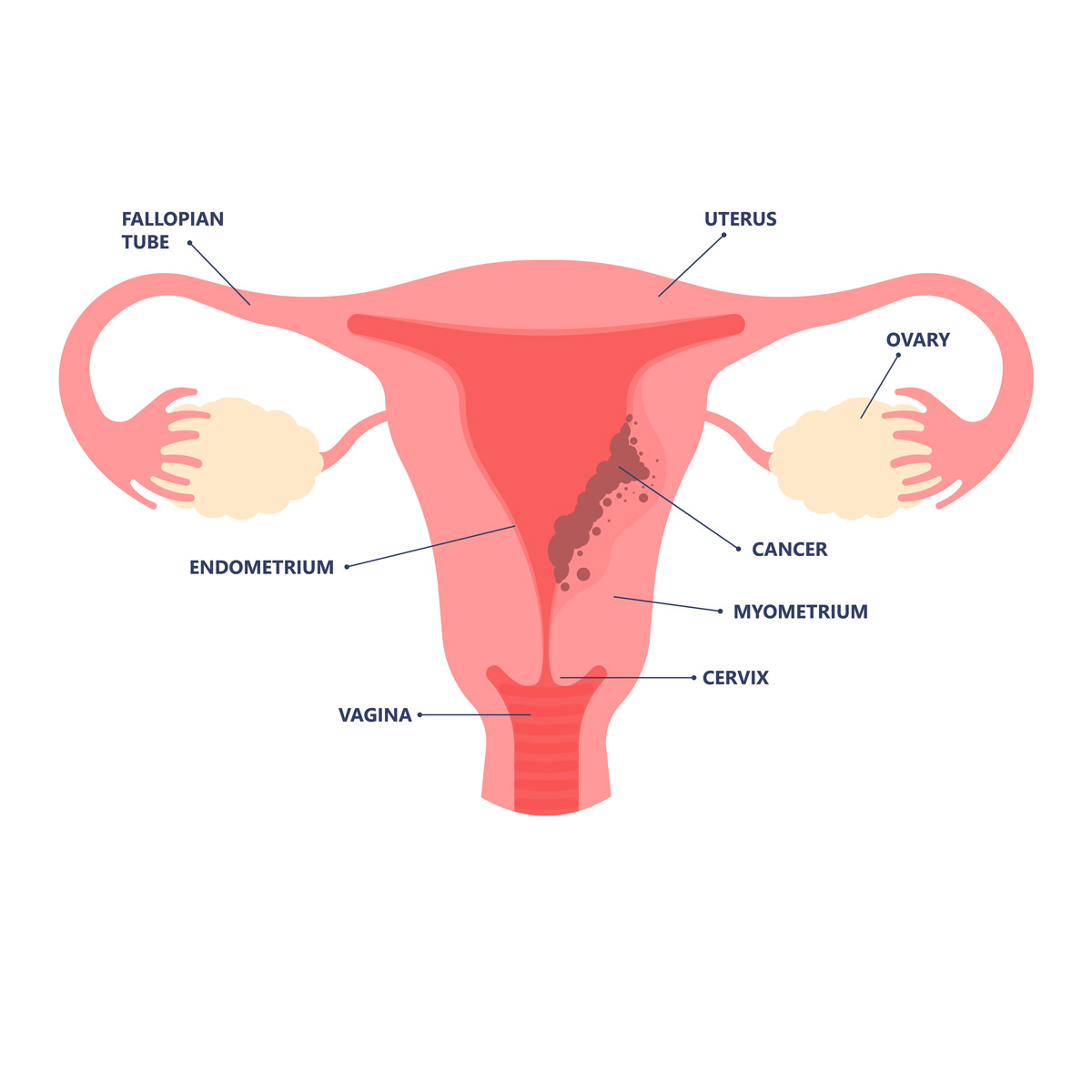
Overview
Endometrial cancer occurs within the uterus (hollow cavity compose of muscle in the pelvic area where fetus develops). Endometrial cancer develops in the endometrium, the inner lining of the uterus. Certain times, it is known as uterine cancer.
As endometrial cancer causes unusual bleeding from the vagina therefore it can be detected at the first stage. When endometrial cancer is found in early stage, surgical removal of the uterus tends to cure the cancer.
Causes
The definite causes of endometrial cancer are unknown. The mutation of endometrial cell causes uncontrolled duplication resulting in forming a mass of cells also known as a tumor. This tumor then begins to invade and destroy the normal cell. These cells have the tendency to metastasize (spread to other parts of the body).
Risk factors
- Hormonal imbalances: The ovaries are responsible for producing two female hormones; estrogen and progesterone. When the balance in these hormones fluctuates, changes in the endometrium occur. A risk of developing endometrial cancer arises from a high level of estrogen. This may occur with irregular ovulation patterns, which may found in polycystic ovary syndrome, obesity and diabetes. The intake of estrogen hormones after reaching menopause can put a patient at higher risk of getting endometrial cancer.
When a rare type of tumor in the ovaries release estrogen, the risk of developing endometrial cancer increases.
- Early menarche or late menopause: Having menstruation at an early age or before age 12 years old or reaching menopause late increase the chance of getting endometrial cancer.
- Women who have never been pregnant: When a person has never conceived, she has a higher chance of developing endometrial cancer.
- Aging: Older age, puts people at risk of getting endometrial cancer. The disease tends to occur after menopause.
- Being obese: Excess level of body fats may cause increase estrogen level and the higher the estrogen may increase risk of endometrial cancer.
- Breast cancer hormonal therapy: Tamoxifen is hormone therapy medication that increases the risk of endometrial cancer. Generally, the benefits of tamoxifen dominate the minor risk of endometrial cancer.
- Hereditary colon cancer syndrome: Also known as Lynch syndrome. This syndrome increases the risk of colon cancer and other cancers such as endometrial cancer due to gene mutation. If a patient has been diagnosed with Lynch syndrome, consultation on what cancer screening tests is necessary is required.
Symptoms
- Postmenopausal vaginal bleeding
- Vaginal bleeding between periods
- Lower abdominal pain or pelvic pain
Diagnosis
Diagnosing endometrial cancer
- Pelvic examination: An examination of the genitals will be done. Index and middle finger will be inserted into the vagina while pressing the other hand on the abdomen to feel the uterus and ovaries. A speculum device will be inserted to examine the vagina to look for any abnormalities of the cervix and vagina.
- Transvaginal ultrasound: Sound waves is an effective method of screening for endometrial cancer to see the thickness and texture of the endometrium. Transducer is a device that will inserted into the vagina. The objective of a transducer is to create a moving image of the uterus with the help of sound wave, showing the abnormalities present within the endometrium.
- Hysteroscopy: A procedure done by inserting a thin, flexible tube with a light into the uterus through the vagina and cervix. Doctor can examine the inside of the uterus and endometrium.
- Endometrial biopsy: A procedure done by inserting a thin, flexible tube through the cervix to remove of a sample tissue from inside the uterus. Once the samples have been collected, they will be sent to the laboratory for analysis. This involves removing tissue from your uterine lining for laboratory analysis.
- Surgical removal of tissue sample: If biopsy cannot retrieve enough tissue samples or results come are unclear, dilation and curettage (D&C) may be required. This procedure is done by scraping off tissues from the lining of the uterus for examination under a microscope to check for cancer.
Staging endometrial cancer
After the diagnosis of endometrial cancer, staging is the next process of diagnosis by a chest X-ray, a computerized tomography (CT) scan, positron emission tomography (PET) scan and blood tests. The first stage (Stage I) signifies that the growth of the cancer has not exceeded outside the uterus and Stage IV signifies that the cancer has grown and spread to the surrounding tissues, such as the bladder or other parts of the body.
Treatment
Endometrial cancer is treated by surgical removal of the uterus, fallopian tubes and ovaries. Radiation therapy can also be a treatment option. Chemotherapy can be used as well. Hormone therapy helps blocking hormones which cancer cells depend on. Targeted therapy is an alternative treatment which uses certain drugs to attack specific cancer cells while immunotherapy work with the immune system to fight against cancer.
-
Surgery
Hysterectomy is surgical procedure to remove uterus, fallopian tubes, and ovaries. Removal of ovaries will lead to early menopause. The surrounding areas of the uterus will be inspected to see if cancer has metastasized. Lymph nodes may be removed to determine the stage of the cancer.
-
Radiation therapy
Radiation therapy is the use of high-powered energy beams, such as X-rays and protons, to destroy cancer cells. Radiation is given to reduce the chance of cancer recurrence in post surgery, and can be given before the surgery to reduce the tumor size for easier removal.
For patients who cannot undergo surgery, radiation can be an alternative treatment.
-
- Radiation given externally or through a machine outside the body. During this procedure, the machine aims radiation on specific parts of the body.
- Radiation internally or through a machine inside the body. This step is done by placing a device (small seeds, wires or a cylinder) filled with radiation inside of the vagina.
-
Chemotherapy
Chemotherapy is drug that uses chemicals to kill cancer cells. A combination or a single drug can be given. Chemotherapy comes in a form of a pill or intravenously.
Sometimes, chemotherapy is given prior the surgery to shrink the cancer so it will be easier to remove, or after the surgery to decrease the chance for cancer to relapse.
Chemotherapy may be suggested to treat advanced stage of endometrial cancer when it has metastasized or when the cancer reoccurs.
-
Hormone therapy
Hormone therapy is the intake of medications to decrease the level of hormones in the body. As a result, cancer cells that grow by depending on hormones may die. Hormone therapy may be alternative treatment for patients with endometrial cancer further from the uterus.
-
Targeted drug therapy
Targeted therapy attacks the cancer cells. The drug kills cancer cells by stopping the weak factors. Advanced endometrial cancer is often treated with the combination of targeted drug therapy and chemotherapy.
-
Immunotherapy
Immunotherapy uses drugs to help the immune system to fight against cancer. Naturally, the immune system may not be able to harm cancer because cancer cells create proteins which immune system cannot detect. Immunotherapy interferes with this natural process.



