Make an Appointment
 Talk to Doctor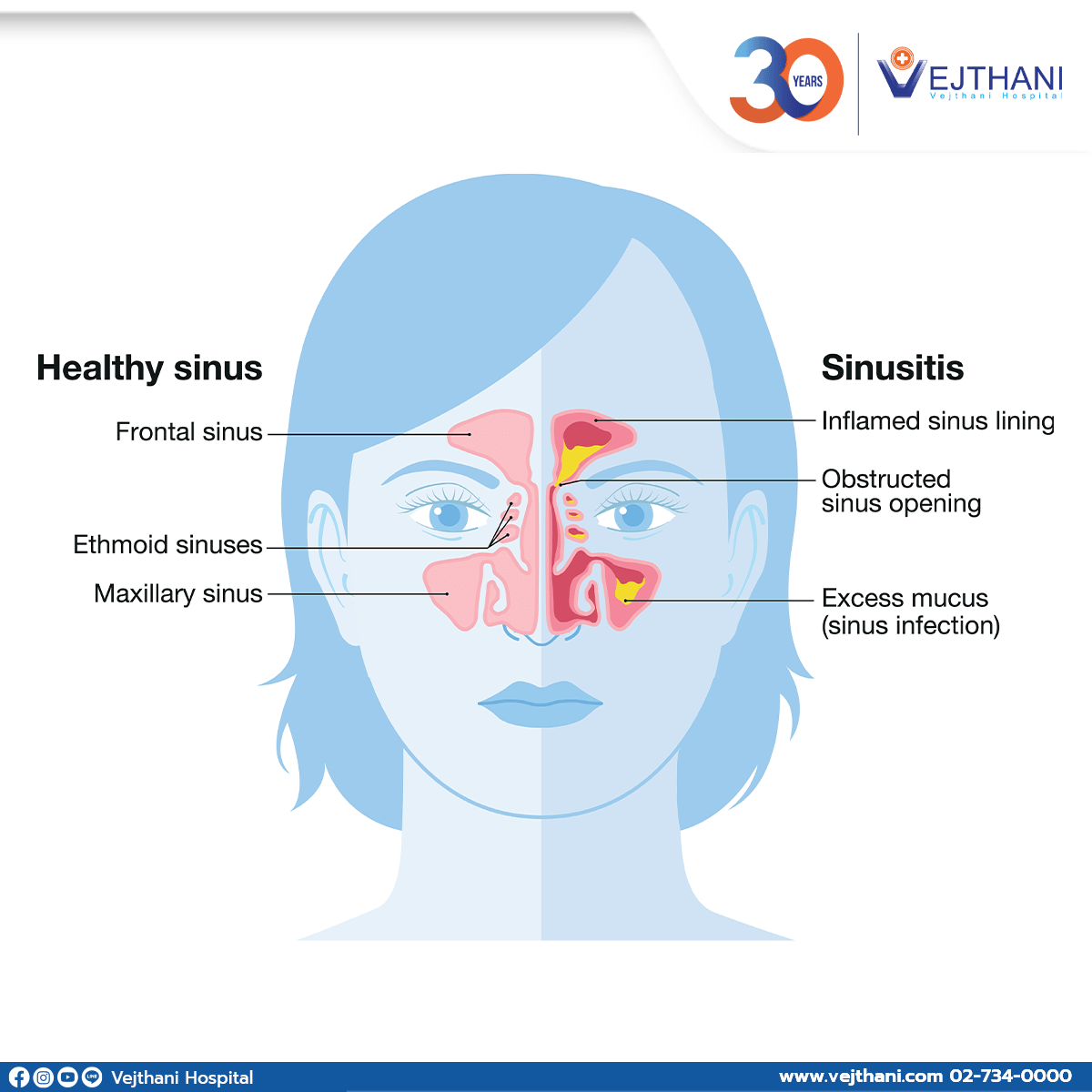
Overview
Chronic sinusitis is a medical condition where the sinuses, which are small cavities inside the head, become swollen and inflamed. This can lead to the accumulation of mucus and cause difficulty breathing through the nose, as well as pain, headaches, and facial swelling. The condition can be caused by infections, nasal polyps, or swelling of the sinuses’ lining, and it can affect both adults and children.
There are different types of sinusitis, including acute, subacute, chronic, and recurrent. While acute sinusitis typically lasts only a few days and can go away with little or no treatment, chronic sinusitis can last longer than 12 weeks and require different types of treatment.
Treatment for chronic sinusitis may include medications, such as antibiotics, steroids, or nasal sprays, to reduce inflammation and fight infections. In severe cases that do not respond to other methods, surgery may be necessary.
Symptoms
Chronic sinusitis commonly manifests as the following:
- Difficulty breathing through the nose due to a blocked or congested nose.
- Swelling, pain, or discomfort around the eyes, cheekbones, nose, or forehead.
- Diminished ability to smell or taste.
- Swelling or inflammation of the nose.
- Thick and brownish nasal discharge or a runny nose.
- Postnasal drainage or drainage down the back of the throat.
Other warning signs and symptoms could be:
- Upper jaw pain
- Toothache
- Exhaustion
- Cough, throat irritation or sore throat
- Ear pain
- Headache
- Foul breath
Similar signs and symptoms are present in both acute and chronic sinusitis. However, acute sinusitis is a brief sinus infection that is often associated with a cold. While you may experience several episodes of acute sinusitis before developing chronic sinusitis, the signs and symptoms of chronic sinusitis last for at least 12 weeks. Although fever can occur with acute sinusitis, it is not common.
If you’ve had sinusitis multiple times and it doesn’t go away with treatment, or if you have symptoms that last more than 10 days despite treatment, it’s important to schedule an appointment with your doctor. Also, if you see your doctor but your symptoms don’t improve, it’s important to follow up with them.
However, if you experience fever, swelling or redness around your eyes, severe headache, forehead swelling, confusion, double vision or other vision changes, or a stiff neck, it’s crucial to seek medical attention immediately. These symptoms may indicate a serious infection that requires prompt treatment.
Causes
Chronic sinusitis can be brought on by:
- Deviated nasal septum. The wall separating the nostrils, known as the septum, can become crooked and limit or block sinus passageways, exacerbating sinusitis symptoms.
- Nasal polyps. The sinuses or nasal passageways may get blocked by these tissue growths.
- Other diseases. Nasal obstruction can be caused by the side effects of illnesses including HIV, cystic fibrosis, and other immune system-related ailments.
- Respiratory tract infections. Colds are the most frequent respiratory tract infections that can thicken and swell your nasal membranes and prevent mucus from draining. Bacteria or viruses may be at blame for these infections.
- Allergies like hay fever or acute sinusitis. Your sinuses may get blocked by the inflammation that comes with allergies.
Risk factors
The following conditions enhance your risk of developing chronic sinusitis:
- Immune system conditions such as cystic fibrosis or HIV/AIDS
- Other allergies like hay fever
- Frequently inhaling toxins like cigarette smoke
- Nasal septum deviation
- Nasal polyps Asthma
- Tumors
- Allergic reaction to aspirin Infection: fungal or on the teeth
Diagnosis
Your physician may inquire about your symptoms during a physical examination, feeling for any soreness in your nose and face and examining inside your nose.
There are several ways to identify chronic sinusitis:
- Imaging tests. Your sinuses and nasal area can be seen in detail in computed tomography (CT) or magnetic resonance imaging (MRI) images, which could identify physical obstructions or deep inflammatory conditions that are difficult to see with an endoscope, such as polyps, tumors, or fungi.
- Looking into your sinuses. Your doctor can view the interior of your sinuses by inserting a small, flexible tube through your nose that has a fiber-optic light inside. This may enable your doctor to detect polyps, tumors, or a deviated nasal septum.
- An allergy tests. If your doctor suspects allergies may be causing your chronic sinusitis, they may advise a skin test for allergies. Skin testing is rapid, safe, and can identify the allergen causing your nasal flare-ups.
- Nasal cultures. In most cases, cultures are not necessary for the diagnosis of chronic sinusitis. However, if the problem doesn’t improve with treatment or is getting worse, your doctor may take samples from inside your nose to help identify the cause, such as bacteria or fungi.
Treatment
Chronic sinusitis is treated with:
- Nasal corticosteroids. Inflammation can be treated and prevented by using nasal sprays such as fluticasone, triamcinolone, budesonide, mometasone, and beclomethasone. If the sprays are not sufficiently effective, your doctor may advise using a nasal mist of the solution or rinsing with a saline solution containing drops of budesonide.
- Saline nasal spray or solution irrigation. Decreases drainage and flushes allergens and irritants away.
- Oral or injected corticosteroids. These drugs are used to treat severe sinusitis inflammation, especially if you also have nasal polyps. Only severe symptoms are treated with oral corticosteroids because prolonged use of these medications can have serious side effects.
- Allergy medications. Your doctor might advise taking allergy drugs if allergies are the root cause of your sinusitis.
- Aspirin desensitization therapy. If you experience aspirin-related responses that result in sinusitis and nasal polyps. You gradually receive higher aspirin doses while under physician supervision in order to build tolerance.
- Antifungal treatment. You might receive antifungal medication if fungi are the cause of your infection.
- Medication to treat nasal polyps and chronic sinusitis. Your doctor might administer an injection of dupilumab or omalizumab to treat your persistent sinusitis and nasal polyps. These drugs could relieve nasal congestion and shrink nasal polyps.
- Balloon sinus ostial dilation. Places a balloon inside a sinus cavity to widen it and create extra space.
- Antibiotics. When a bacterial infection is the cause of your sinusitis, antibiotics may be required. Your doctor may advise taking an antibiotic, often together with other medications, if an underlying infection cannot be ruled out.
- Immunotherapy. If your sinusitis is caused by allergies, allergy shots (immunotherapy) that lessen the body’s response to particular allergens may ease the illness.
- Surgery. Endoscopic sinus surgery is a potential solution for cases where treatment or medication has been ineffective. The procedure involves the use of an endoscope, a thin tube with a light, to explore the sinus passages. Depending on the cause of blockage, the doctor may remove tissue or a polyp with various instruments, or widen a narrow sinus opening to promote drainage.