 Make an Appointment
 Talk to Doctor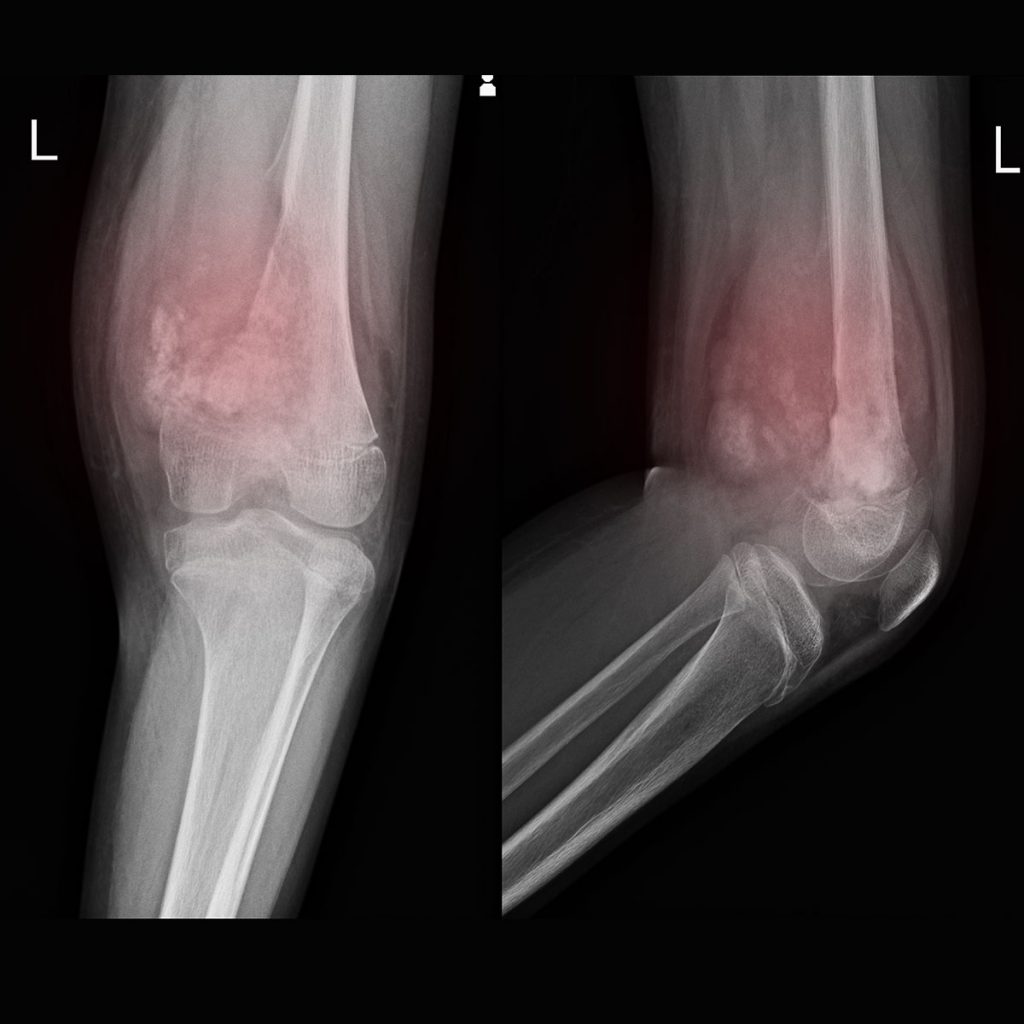
Overview
Bone cancer can develop in any bone in the body, but symptoms are commonly found in the long bones of the arms, legs, or pelvis. Cancers that begin in the bone also known as primary bone cancer. Bone cancer is a rare disease that represents less than 1 % of all types of cancer.
The mutation of bone cell causes uncontrolled duplication resulting in forming a mass of cells also known as a bone tumor. This tumor then begins to invade and destroy the healthy bone and tissues. It can develop in both children and adults.
Bone cancer and bone metastasis are not the same. Bone metastasis occurs when cancer cells from another origin of the body spread to the bone such as breast cancer, prostate cancer or lung cancer.
Symptoms
- Bone pain (often gets worse at night)
- Swelling and tenderness around the affected site
- Bone weakening may cause fragility fracture
- Fatigue
- Have trouble with mobility
- Fever
- Unexplained weight loss
If you are worried that you have any of these symptoms, consult a doctor for proper medical history taking, diagnosis, and treatment.
Causes
The reason why bone cancer occurs is unknown. There has been evidence of some types of bone tumors being hereditary, while other cases have shown an association with exposure to radiation.
Types of Bone Cancer
Bone cancers are categorized by the type of cells that cancer originated from. The following are the most common types:
- Osteosarcoma. The most common form of bone cancer, osteosarcoma occurs when the bone produces cancerous cells. It is commonly found in children or in young adults who are still developing. The cancer occurs primarily in the bones of leg or arm. Osteosarcomas rarely develops outside the bones, which is a condition known as extraskeletal osteosarcomas.
- Chondrosarcoma. The second most common type of bone cancer, chondrosarcoma causes the cartilage to produce cancerous cells. This tumor is mostly found in middle-aged and older adults and commonly develops in the pelvis, legs or arms.
- Ewing sarcoma. Tumors appear predominantly in the bones or soft tissues in the pelvis, legs, arms or hips. Children and young adults usually experience this type of bone cancer.
Bone Cancer Risk Factors
- Inherited genetic syndrome such as Li-fraumeni and hereditary retinoblastoma have a higher risk of developing bone cancer.
- Paget’s disease of the bone is a chronic disorder of the bone which can increase the risk of bone cancer. It causes enlargement and deformity of the bones and usually happens to patients who are older.
- Radiation therapy for cancer can increase your risk of developing bone cancer due to the high dosage of radiation.
Diagnosis
Imaging tests are used to localize the bone tumors and their sizes. The tests can also detect if the tumors have spread to other body parts. The types of investigation imaging should be done depending on the signs and symptoms of each individual.
- Bone scan
- Computerized tomography (CT)
- Magnetic resonance imaging (MRI)
- Positron emission tomography (PET)
- X-ray
Needle or surgical biopsies
Biopsy which is done by taking a sample of tissue from the tumor for further laboratory tests may be required. This procedure will identify the cancerous tissue if it exists, it will also reveal the type of cancer the patient has as well as the speed of the tumor growth.
The following types of procedures are biopsy that is utilized to make a diagnosis of bone cancer.
- A needle will be inserted into the tumor through the skin. It will then collect small pieces of tissues from the tumor.
- A surgical biopsy is done by an incision on the skin and removal of the part of the tumor. Biopsy should be done in a way that it will not affect any surgery may or may happen in the future for the removal of cancer.
Stages of bone cancer
The stages of bone cancer are identified by the size and where the tumor is located. Determining the stages of bone cancer will determine the treatment options for the patient. The following factors will be considered:
- Tumor size
- The speed of the cancer growth
- The amount of bones affected by cancer
- Spread of the cancer to other parts of the body
Bone cancers are generally categorized into four stages:
- Stage 1: Low-grade tumor while the cancer cells have not spread to other areas.
- Stage 2: High-grade tumorbut the cancer cells are still localized.
- Stage 3: High-grade with the spread of cancer to other areas but still in the same bone.
- Stage 4: Cancer cell spreads from bone to other parts of body, such as breast or lungs.
Treatment
Surgery
Surgery is carried out with the objective of removing the entire tumor. This procedure requires special techniques so the tumor is removed out as a one complete piece, instead of multiple pieces. A tiny portion of healthy tissue surrounded the area is also removed. The bone that has been lost can be replaced with a bone from another part of the body or with a metal or hard plastic replacement.
Chemotherapy
Chemotherapy is the application of anti-cancer drugs. It is generally given intravenously. The medication aims to kill cancer cells.
Radiation therapy
Radiation therapy is the use of high-powered beams of energy, similar to X-rays. The goal of radiation therapy is also to kill cancer cells. Using this therapy before a surgery can decrease the size of the tumor so it becomes easier to be removed. This reduces the chance of amputation.
Bone cancer that cannot be treated with surgery may require radiation therapy. For some post-operation cases, there are cancer cells that may still be lingered on, which can be cleared by radiation therapy. In advanced stage of bone cancer, radiation therapy can be used to control certain symptoms, such as pain.



