Ankylosing spondylitis
 Make an Appointment
 Talk to Doctor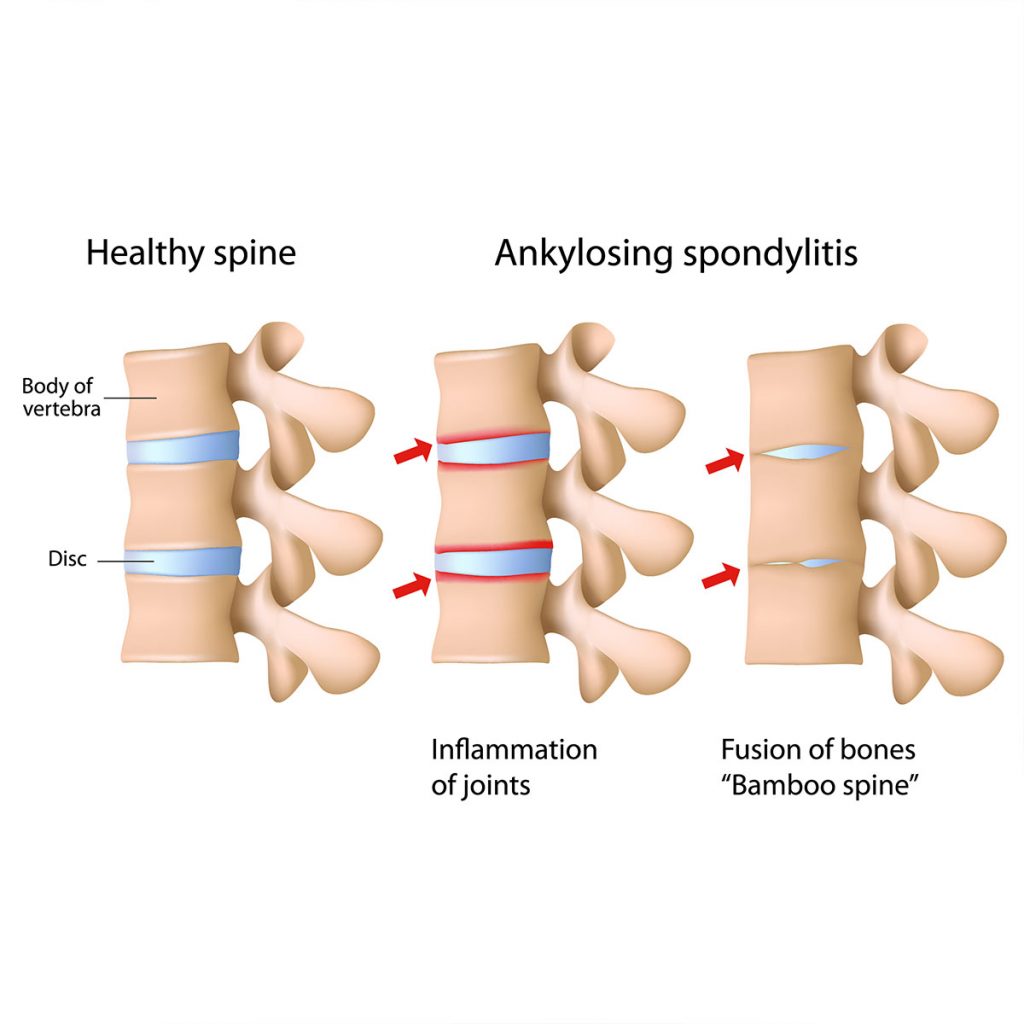
Overview
A condition where the vertebrae (spinal bones) fuses over time is called ankylosing spondylitis. It is an inflammatory disease which affects the flexibility of the spine and causes the posture to hunch. If this condition reaches the ribs, it can cause breathing difficulty. Men are most likely to acquire this disease than women and the signs and symptoms usually begins in young adults. The eye is another part of the body which may be affected by this condition. This disease has no cure but undergoing treatment can delay its development and decrease symptoms.
Symptoms
Lower back and hip pain with stiffness, especially in the morning or after a couple of tasks are the early signs of ankylosing spondylitis. Other symptoms are pain and feeling extremely tired. On the other hand, these symptoms may improve or worsen or even stop irregularly.
The following parts of the body are mostly affected:
- Lower back
- Shoulder joint
- Hip joint
- The joint in between the pelvis and the base of the spine
- Areas where the bones connect with the tendons and ligaments, at the back of the heel but most commonly in the spine
- The cartilage in between the ribs and breastbone
If you experience the following characteristics, it is recommended to consult your doctor:
- A buttock or lower back pain that worsens in the morning or awakens you while you are asleep at night.
- The pain improves with exercise but worsens at rest.
- Painful and blurred vision, severe sensitivity to light or red eyes.
Cause and risk factors
There is no certain cause of ankylosing spondylitis but it could be due to genetic condition, especially people with HLA-B27 gene. Also, ankylosing spondylitis is more commonly seen in men than in women.
Diagnosis
The doctor will perform a physical examination and also evaluate the range of motion of the spine by instructing the patient to move in certain direction. Your doctor may apply pressure on your pelvis and move your legs into specific positions to reproduce the pain while testing. The doctor will also ask you to take a deep breath to assess any difficulties in chest expansion.
Imaging tests
- X-rays. Shows any changes in bones and joints but if you have just started to develop the disease, it might not be visible.
- Magnetic resonance imaging (MRI). Views a more detailed soft tissues and bone images using a strong magnetic fields and sound waves. This test can also show ankylosing spondylitis at an early stage.
Laboratory tests
There are no specific lab tests to diagnose the disease. Certain blood tests can check for inflammation markers although inflammation can also be caused by other conditions. HLA-B27 gene can be detected in your blood but many people may have this gene but they don’t have ankylosing spondylitis.
Treatment
Treatments are done for pain and stiffness relief, delay or prevent complications and spinal deformity. It is better to treat it at its early stage in order to avoid permanent impairment.
Medications
- Nonsteroidal Anti-Inflammatory Drugs (NSAIDs). Doctors mostly prescribe naproxen, and ibuprofen for pain and stiffness relief but their side effect is bleeding of the gastrointestinal tract.
- Injection. The drugs are injected on the skin or intravenously. On the other hand, the side effect can be reactivation of tuberculosis that was left untreated and makes you immunocompromised.
- Tumor Necrosis Factor (TNF) blocker. Such as Adalimumab, Certolizumab pegol, Etanercept, Golimumab, and Infliximab
- Interleukin-17 (IL-17) inhibitor. Such as secukinumab and ixekizumab
Physical therapy
Physical therapy can regain muscle strength and elasticity and it is an important aspect of the treatment with various advantages. It can be customized for each patient by the physical therapist.
The following will be instructed for better posture:
- Stretching and range-of-motion exercises
- Exercises to make the abdomen and back muscles stronger
- Correct walking posture and sleeping position.
Surgery
Ankylosing spondylitis usually don’t need surgery but if there is severe damage on the joint of the hip and the pain is getting worse, surgery which is joint replacement surgery implant will be recommended.



