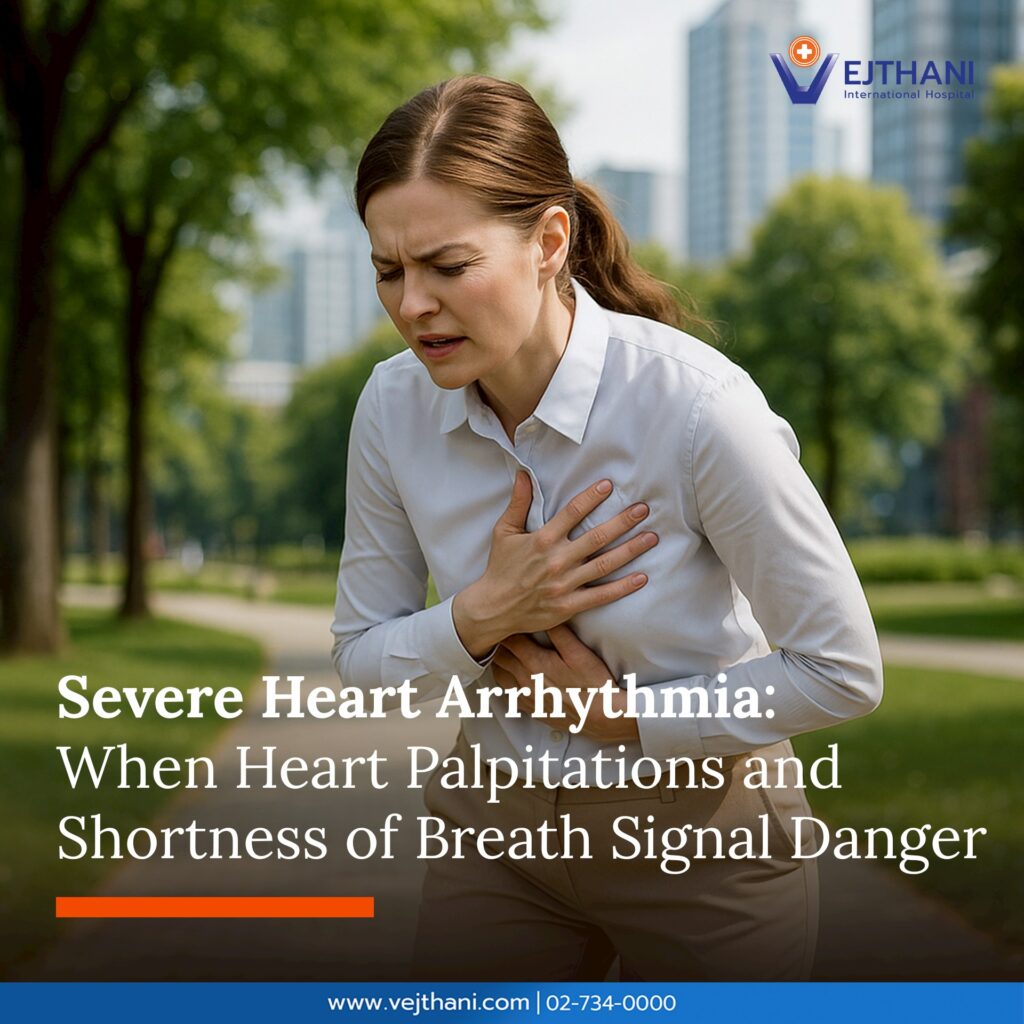
Severe Cardiac Arrhythmia: When Heart Palpitations and Shortness of Breath Signal Danger
Health Articles
Select Topic
Many people tend to think that fainting is caused by fatigue, stress, or dehydration. However, sudden fainting can be a dangerous sign of severe cardiac arrhythmia, which is a primary cause of sudden death even in seemingly healthy individuals.
Why is Severe Cardiac Arrhythmia Life-Threatening?
Cardiac arrhythmia refers to abnormal heart rhythm conditions, and some forms are more dangerous than others. Types of arrhythmias with high severity and risk of sudden death include:
Ventricular Tachycardia (VT) An abnormal, rapid heartbeat in the lower chambers (ventricles), leading to inadequate blood flow and sudden loss of consciousness.
Ventricular Fibrillation (VF) Chaotic, ineffective contractions of the ventricles that often cause the heart to stop pumping, resulting in sudden death.
Severe Heart Block Electrical conduction is blocked, slowing the heartbeat so much that insufficient blood reaches the brain, causing fainting or cardiac arrest.
Sinus Node Dysfunction The heart’s natural pacemaker malfunctions, causing dangerously slow heartbeats that can lead to fainting or sudden cardiac arrest.
Although Cardiac Arrhythmia can happen suddenly, there are often warning signs that should not be ignored and require medical attention.
An irregular heartbeat that comes and goes
Abnormal electrical signals on the EKG
Structural heart disease
Existing heart conditions or risk factors such as coronary artery disease, weakened heart muscle, high blood pressure, diabetes, or high cholesterol
The primary screening tests to confirm cardiac arrhythmia include:
EKG (Electrocardiogram)
Holter monitor: continuous heart rhythm recording for 24–72 hours
Echocardiogram: heart ultrasound
Electrophysiology Study (EPS): detailed electrical mapping of the heart
Who Requires Immediate Medical Evaluation? If you have:
Unexplained fainting or loss of consciousness
Strong palpitations or an abrupt, rapid heartbeat
Shortness of breath or chest tightness
Family history of sudden cardiac arrest
Heart disease, hypertension, diabetes, or high cholesterol
Treatment of Severe Cardiac Arrhythmia
Even severe cardiac arrhythmias can be treated. Doctors will choose the most appropriate approach based on the type and cause of arrhythmia. Current treatments include:
Pacemaker or Implantable Cardioverter-Defibrillator (ICD): This treatment can prevent sudden death.
Catheter Ablation: A minimally invasive procedure where targeted abnormal electrical pathways in the heart are destroyed using radiofrequency energy. This treatment has a 90–95% chance of cure and can eliminate the need for lifelong medication, allowing patients to live a normal life.
If you experience these symptoms, you may schedule an appointment with a doctor at Vejthani International Hospital.
Frequently Asked Questions About Severe Cardiac Arrhythmia
What is a severe cardiac arrhythmia, and why is it life-threatening? Severe cardiac arrhythmia occurs when the heart beats too fast or too slowly, reducing blood circulation to the brain and other essential organs. This can lead to fainting, cardiac arrest, or even sudden death. Even in people who appear healthy.
Which types of cardiac arrhythmia are dangerous? Life-threatening types include:
Ventricular Tachycardia (VT): A rapid heart rhythm originating from the lower chambers of the heart, resulting in inadequate blood circulation and sudden loss of consciousness.
Ventricular Fibrillation (VF): Chaotic and ineffective heart rhythm causing the heart to stop functioning abruptly, leading to sudden cardiac death.
Severe Heart Block / Sinus Node Dysfunction: An extremely slow heart rate that prevents sufficient blood flow to the brain, potentially causing fainting or cardiac arrest.
How are severe cardiac arrhythmias treated? Treatment depends on the specific type of arrhythmia and its cause. Current treatment options include:
Implantation of a pacemaker or implantable cardioverter-defibrillator (ICD): to help prevent sudden cardiac death.
Catheter ablation: A treatment that applies radiofrequency energy to destroy abnormal electrical pathways in the heart with a high success rate of up to 90–95%, potentially eliminating the need for lifelong medication.
For more information, please contact Cardiac Center, Vejthani International Hospital Call: (+66)2-734-0000 Ext. 5300 English Hotline: (+66)85-223-8888
We use cookies to manage your personal information in order to provide you with the best personalized user experience on our website. If you continue using the website, we assume that you accept all cookies on the website. Find out more.