Hemorrhoid Grades 1–4: Why Surgery Is Not Always the Answer
Internal hemorrhoids are graded into 4 different categories according to the severity of the disease. Grade 1 The hemorrhoids or the swollen veins bulge inside
Select Topic
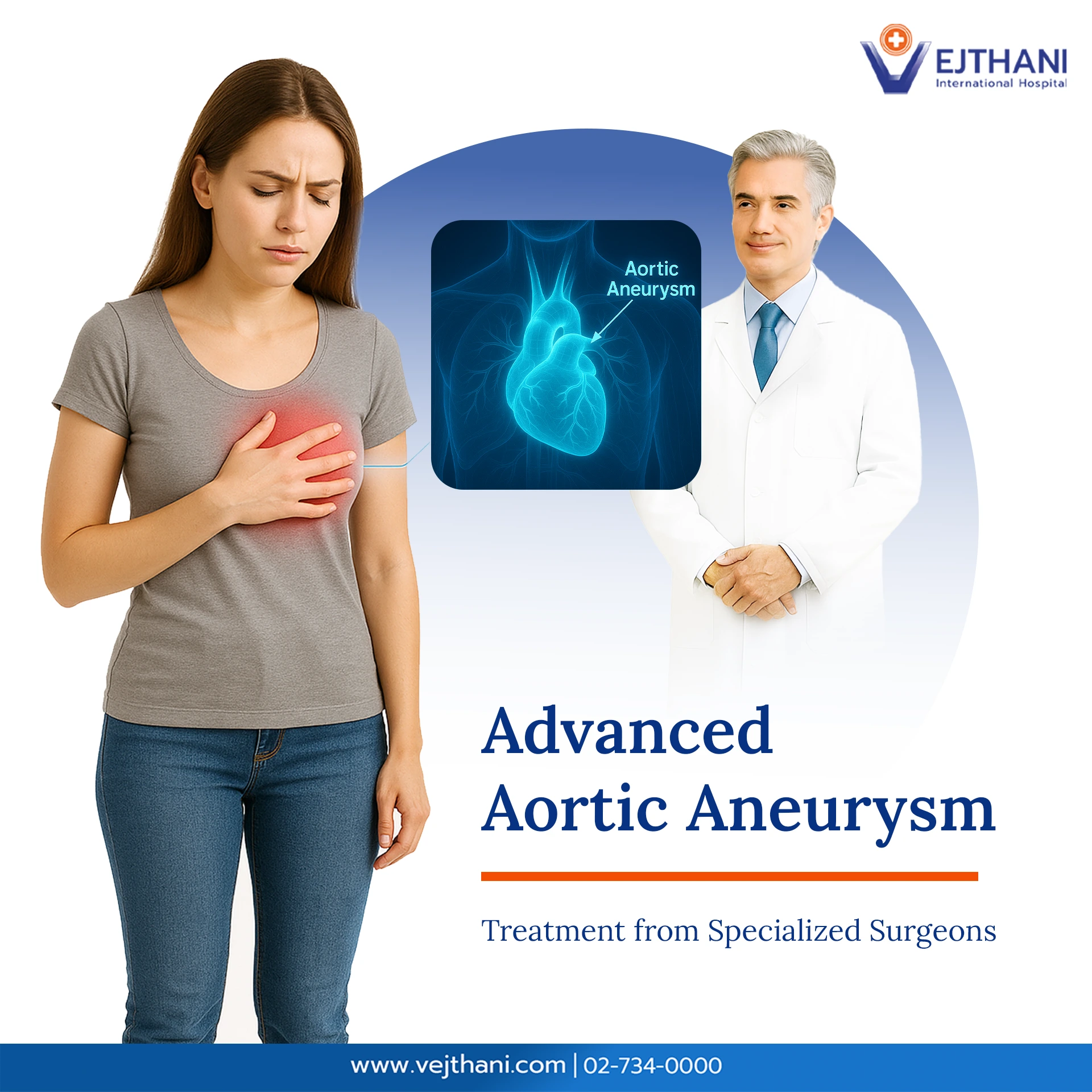
Your heart pounds as you climb the stairs, but this time it feels different. The chest discomfort isn’t from exertion – it could be something more concerning. While many people dismiss such symptoms as signs of aging or stress, they could indicate a serious cardiovascular condition: an aortic aneurysm. This potentially life-threatening condition affects thousands of people worldwide, yet many remain unaware of its warning signs until it’s too late.
An aortic aneurysm is a bulging or ballooning in the wall of the aorta, your body’s main artery. Early detection becomes crucial because aortic aneurysms can prove life-threatening if they rupture.
An aortic aneurysm occurs when a weak spot develops in the aorta – the largest artery in your body that carries oxygen-rich blood from your heart to the rest of your body. The aorta plays a vital role in your circulatory system, beginning at the heart, traveling through the chest, abdomen, pelvic organ and extending to the upper and lower extremities.
There are three main types of aortic aneurysms: Abdominal aortic aneurysm (AAA), thoracic aortic aneurysm (TAA) and a third type, thoracoabdominal aortic aneurysm, which affect both regions. An abdominal aortic aneurysm develops in the portion of the aorta that passes through your abdomen, while a thoracic aortic aneurysm occurs in the section running through your chest. Understanding these differences helps healthcare providers determine the most appropriate diagnostic and treatment approaches for each patient.
Many aortic aneurysms remain asymptomatic until they become large or rupture, making awareness of potential warning signs critical. Common symptoms include:
Dizziness or lightheadedness may occur as blood flow patterns change. You might experience a rapid heart rate as your cardiovascular system attempts to compensate for altered circulation.
Sudden, severe chest pain, abdominal pain, or back pain represents one of the most serious warning signs, potentially indicating aneurysm expansion or rupture. Difficulty breathing or shortness of breath can develop as the aneurysm affects nearby structures.
Some patients report feeling full even after a small meal, particularly with abdominal aortic aneurysms. Pain at the site could occur in your neck, back, chest, or abdomen, depending on the aneurysm’s location.
Other symptoms may include leg pain caused by small clots breaking off from the aneurysm and blocking blood flow, or bleeding in the digestive tract due to an abnormal connection (called a fistula) between the aorta and parts of the intestines or esophagus.
Modern medical technology offers several effective diagnostic tools for detecting aortic aneurysms. Ultrasound is a primary screening tool, particularly for abdominal aortic aneurysms. This non-invasive technique allows healthcare providers to visualize the aorta and measure any abnormal enlargements.
Computed tomography angiography scans provide more detailed imaging, especially valuable for thoracic aortic aneurysms and thoracoabdominal aortic aneurysms. These advanced imaging techniques help assess the aneurysm’s size, location, and relationship to surrounding structures, enabling healthcare providers to develop comprehensive treatment plans tailored to each patient’s specific condition.
Vejthani International Hospital, offers comprehensive Aortic aneurysm treatment options using cutting-edge medical technology and internationally trained specialists.
Monitoring and lifestyle changes may be appropriate for smaller, stable aneurysms. Healthcare providers conduct regular imaging studies to monitor aneurysm growth and advise heart-healthy lifestyle changes.
Medications can help manage blood pressure and reduce stress on the aortic wall, potentially slowing aneurysm progression.
Surgical interventions at Vejthani International Hospital include both conventional and minimally invasive approaches. Open surgical repair involves replacing the diseased aortic section with a synthetic graft, creating a new pathway for blood flow. For eligible patients, Endovascular Aortic Repair (EVAR) and Thoracic Endovascular Aortic Repair (TEVAR) are less invasive alternative treatments. They involve placing a stent graft through a small cut in the groin to help reroute blood flow and prevent it from reaching the aneurysm.
Recovery following aortic aneurysm surgery varies depending on the procedure performed. Open surgical repair typically requires an intensive care unit stay and several weeks of recovery, with physical activity restrictions lasting four to six weeks. Minimally invasive procedures like EVAR and TEVAR generally allow for faster recovery, with patients often returning to normal activities within a few weeks.
Ongoing monitoring remains essential after treatment. Regular imaging studies help healthcare providers assess the repair’s effectiveness and monitor for potential complications, providing long-term cardiovascular health maintenance.
Prevention strategies focus on maintaining overall cardiovascular health. Eating a heart-healthy diet rich in fruits, vegetables, whole grains, and lean proteins supports arterial health. Getting regular exercise strengthens the cardiovascular system and helps maintain healthy blood pressure.
Maintaining a healthy weight reduces stress on the cardiovascular system. Most importantly, quitting smoking and using tobacco products significantly reduces aneurysm risk, as tobacco use is considered one of the strongest risk factors for aortic aneurysm development.
Aortic Aneurysm at Vejthani International Hospital is managed by surgeons specialized in each specific area of the condition. Abdominal aortic aneurysms are treated by specialized vascular surgeons; thoracic aortic aneurysms are treated by cardiothoracic surgeons while thoracoabdominal aortic aneurysms are treated by both vascular surgeons and cardiothoracic surgeons. Care is supported by the use of advanced diagnostic tools and a dedicated team of highly skilled healthcare professionals.
Early detection and treatment of aortic aneurysms can save lives. If you experience any concerning symptoms or have risk factors for cardiovascular disease, seeking evaluation at a specialized cardiac center or vascular center provides access to expert care and advanced treatment options.
Taking care of your heart and vascular today can protect your health tomorrow. Schedule a consultation with us and start your journey toward a stronger heart and a healthier life.
Surgery Center, Vejthani Hospital
Call: (+66)2-734-0000 Ext. 4500, 4501
English Hotline: (+66)85-223-8888
Cardiac Center, Vejthani Hospital
Call: (+66)2-734-0000 Ext. 5300
English Hotline: (+66)85-223-8888