Cervical Cancer is Preventable: Stop It Before It Starts
Cervical cancer is preventable. Learn how HPV vaccines and regular screenings at Vejthani International Hospital help protect women’s health and save lives.
Select Topic
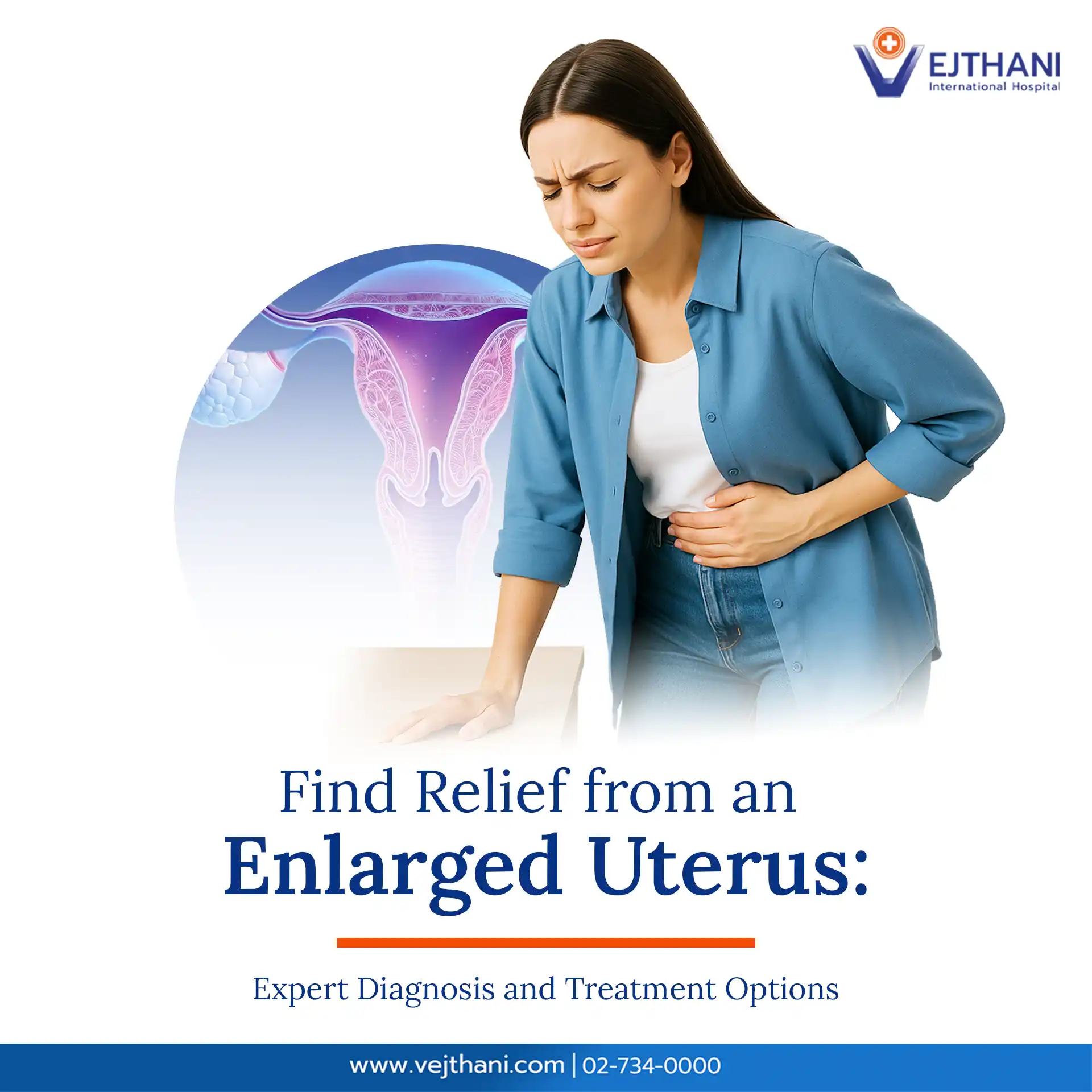
Many women go through life unaware that their uterus may be larger than normal. An enlarged uterus, medically known as uterine enlargement, affects millions of women worldwide yet often goes undiagnosed until a routine pelvic examination reveals the condition. Research shows that between 20 to 80 percent of women develop fibroids before age 50, one of the most common causes of uterine enlargement. Additionally, studies indicate that endometriosis affects roughly 10% (190 million) of reproductive-age women globally, making it another significant contributor to this condition.
Understanding the signs of an enlarged uterus is crucial for maintaining optimal reproductive health. Early recognition can lead to timely intervention, preventing complications and improving quality of life. This comprehensive guide explores the causes, symptoms, diagnostic methods, and treatment options available to help you make informed decisions about your health.
Uterine fibroids are the leading cause of uterine enlargement, affecting up to three-quarters of women by age 50. These noncancerous growths develop in the muscular wall of the uterus and can range from pea-sized to melon-sized masses. Fibroids tend to grow when estrogen levels are higher.
During pregnancy, the uterus naturally expands to accommodate the growing fetus. This normal enlargement can sometimes mask other underlying conditions, making post-pregnancy evaluation important for detecting any persistent enlargement.
This condition occurs when tissue similar to the endometrial lining grows outside the uterus, causing inflammation and potential enlargement. Endometriosis significantly impacts women’s quality of life and can lead to fertility challenges if left untreated.
Adenomyosis develops when the tissue lining the uterus grows into the uterine wall muscle, causing the organ to become enlarged and tender. Research indicates that approximately 60% of women with adenomyosis experience abnormal uterine bleeding, and 25% suffer from severe menstrual pain.
Fluctuating hormone levels, particularly during perimenopause, can cause temporary uterine enlargement. These changes typically resolve once menopause is reached.
A routine pelvic exam is typically the first step in detecting an enlarged uterus. Healthcare providers can assess the size, shape, and consistency of the uterus through manual examination.
Transvaginal ultrasound provides detailed images of the uterus and can identify fibroids, measure uterine size, and detect other abnormalities. This non-invasive imaging technique is highly effective for diagnosis.
Magnetic Resonance Imaging (MRI) offers the most comprehensive view of the uterus, clearly showing the size, location, and number of any growths. MRI is particularly useful for diagnosing adenomyosis and planning treatment approaches.
Additional diagnostic imaging methods may include hysteroscopy, which allows direct visualization of the uterine cavity, or specialized ultrasound techniques for more detailed assessment.
Conservative management may include hormonal medications to regulate menstrual cycles, pain medications to manage symptoms, and lifestyle modifications.
When conservative measures prove insufficient, surgical interventions may be necessary. Options range from minimally invasive procedures like laparoscopic fibroid removal to more comprehensive treatments such as hysterectomy for severe cases.
Identifying the signs of an enlarged uterus early can significantly improve treatment outcomes and preserve fertility options. Early diagnosis can also help detect more serious conditions, such as the symptoms of uterine cancer, allowing healthcare providers to implement appropriate interventions before complications develop.
Vejthani International Hospital’s Women’s Health Center in Bangkok, Thailand, offers comprehensive gynecological care with internationally trained specialists and cutting-edge medical technology. Our experienced team provides thorough evaluation using advanced diagnostic tools, including 4D ultrasound and MRI imaging. With over 13 years of experience in obstetrics and gynecology, our specialists have successfully performed thousands of minimally invasive procedures, offering patients safer treatment options with faster recovery times.
The hospital’s JCI-accredited facility serves over 300,000 patients from more than 100 countries annually, providing world-class healthcare standards with authentic Thai hospitality. Our multidisciplinary approach includes comprehensive women’s health screenings, cancer detection, and specialized treatment for complex gynecological conditions.
Don’t let the signs of an enlarged uterus go unnoticed. Regular gynecological checkups are essential for maintaining reproductive health and detecting potential issues before they become serious. Schedule an appointment with Women’s Health Center at Vejthani International Hospital today to receive a comprehensive evaluation from our expert specialists.
Our team is ready to provide personalized care tailored to your specific needs, utilizing the latest diagnostic techniques and treatment options. Early intervention can make all the difference in your treatment outcomes and overall quality of life.
Women’s Health Center, Vejthani Hospital
Call: (+66)2-734-0000 Ext. 3200, 3204
English Hotline: (+66)85-223-8888
Obstetrics and Gynaecology
Obstetrics Gynecology - Gynecologic Laparoscopy