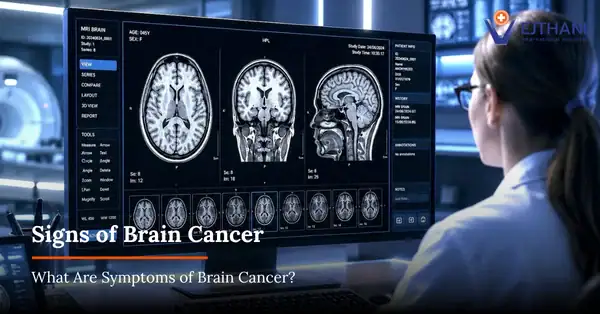
Signs of Brain Cancer
Brain cancer is detected when a cancerous or malignant tumor is found in the brain. The tumor may form in the brain itself or when cancer cells in other parts of the body spread to the brain.

Select Topic
A chronic cough, difficulty breathing, or unusual fatigue may seem like minor symptoms that many people overlook—often mistaking them for just a cold or allergies. In reality, these signs could be early warnings of lung cancer, one of the world’s leading causes of death.
Lung cancer is one of the most common cancers and a leading cause of cancer-related deaths worldwide. Since it often shows no symptoms in its early stages, many patients are diagnosed only after the disease has advanced, which significantly reduces the chance of a permanent cure.
If these symptoms persist for more than 2–3 weeks, it is strongly recommended to undergo lung cancer screening.
Detecting lung cancer at an early stage is key to the most effective treatment outcomes. Annual health check-ups are highly recommended, and those at higher risk should consider a Low-Dose CT Scan for early screening.
If a “nodule” or “abnormal spot” is detected in the lungs, doctors may recommend EBUS-TBNA (Endobronchial Ultrasound-Guided Transbronchial Needle Aspiration). This advanced technique combines bronchoscopy with ultrasound, allowing doctors to precisely collect tissue samples from nodules or lymph nodes in the chest—without the need for surgery.
EBUS is a safe and highly accurate diagnostic option that helps doctors create a treatment plan at an early stage—enhancing the chance of a complete cure from lung cancer.
Internal Medicine Center, Vejthani Hospital
Call: (+66)2-734-0000 Ext. 2720, 2721
English Hotline: (+66)85-223-8888

Internal Medicine
Pulmonary Medicine and Pulmonary Critical Care