Hemorrhoid Grades 1–4: Why Surgery Is Not Always the Answer
Internal hemorrhoids are graded into 4 different categories according to the severity of the disease. Grade 1 The hemorrhoids or the swollen veins bulge inside
Select Topic
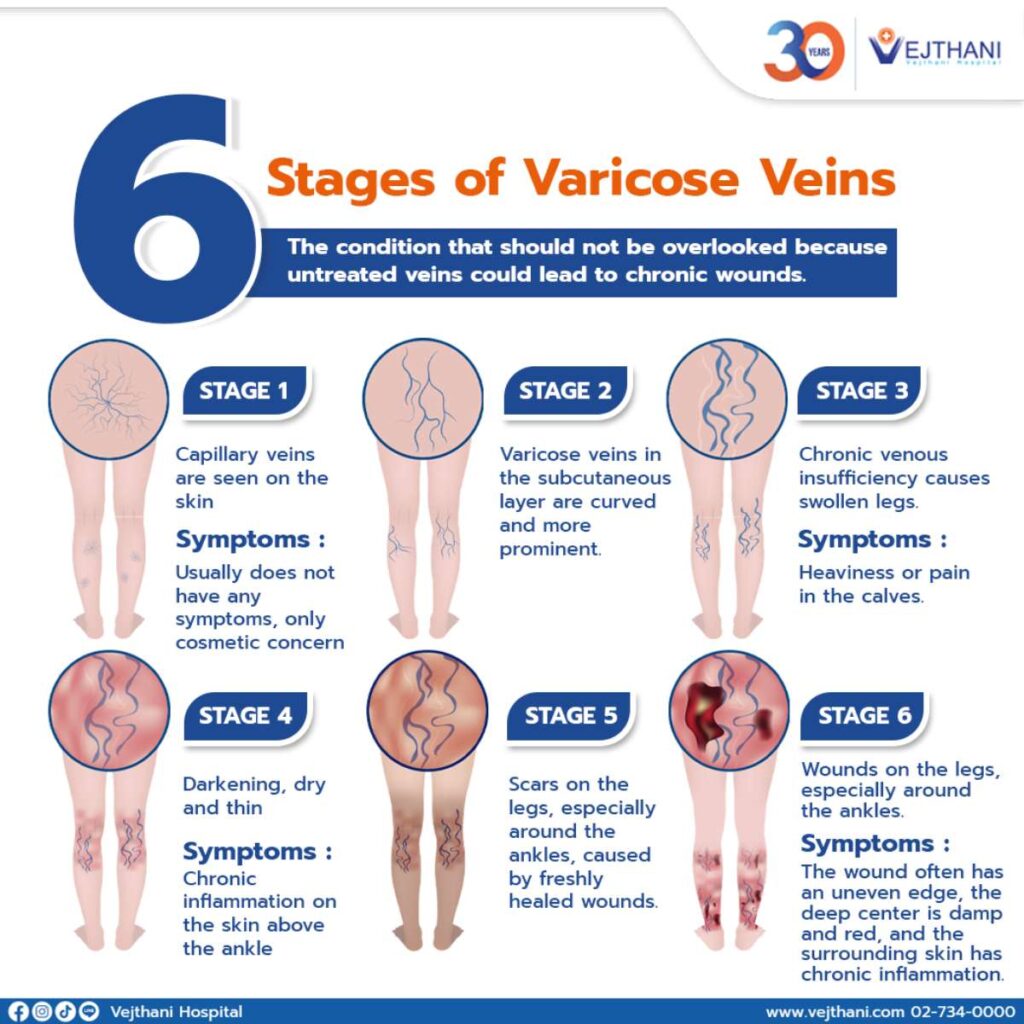
Varicose veins progress through six stages; the condition should not be overlooked, as untreated veins could lead to chronic wounds.
Varicose veins are abnormal enlargements and twisting of veins that can be categorized based on their depth: telangiectasia and reticular veins, which people often see as capillaries, and varicose veins, which are more extensive, more profound, and visible in thinner people. Beyond cosmetic concerns, varicose veins can cause heaviness, discomfort, or pain in the calves. Leaving the disease untreated can progress to chronic venous insufficiency (CVI), which is the result of the pooling of blood over time, causing high blood pressure in the veins or venous hypertension.
Currently, minimally invasive surgical treatment is as effective as traditional surgery. It can be done using thermal ablation, which is endovenous laser treatment (EVLA) or endovenous radiofrequency ablation therapy (EVRFA), and non-thermal ablation, which is sclerotherapy and endovenous cyanoacrylate closure. This approach will help destroy the veins so there is no blood flowing, which causes high venous blackness. This method is the latest surgical technique that has been gaining popularity and provides better treatment results than traditional surgery. This procedure leaves a small wound (2-3 mm), resulting in minimal discomfort with reduced risk of complications, and can be done on an outpatient basis.
Surgery Center, Vejthani Hospital.
Call +66 (0) 2734-0000 Ext. 4500, 4501
English Hotline: +66 (0) 85-223-8888