Make an Appointment
 Talk to Doctor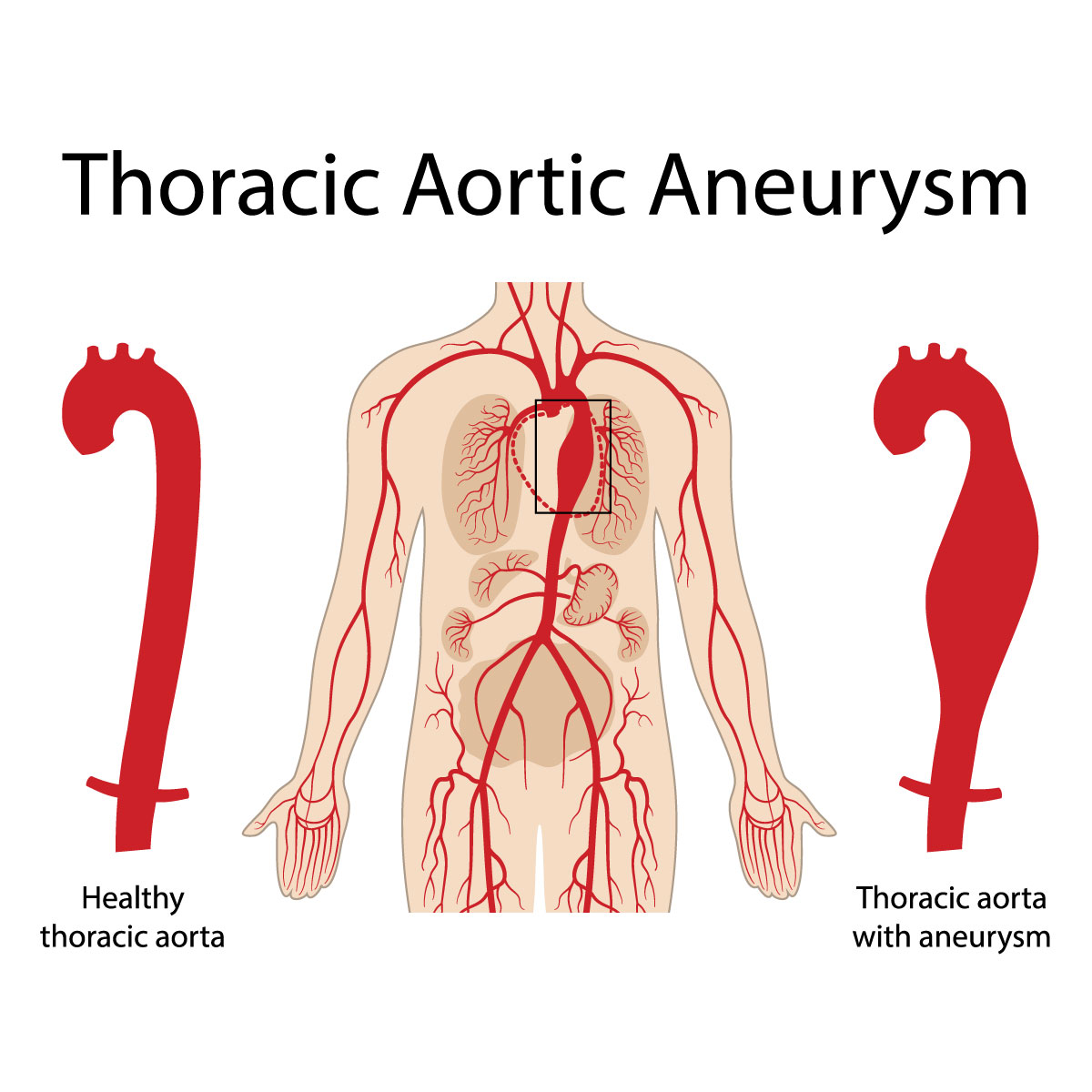
Overview
Aortic aneurysm is a bulging at the wall of the aorta. Aorta is responsible carrying blood from the heart to the body. Aortic aneurysms can develop anywhere in the aorta and can either be round (saccular) or tube-shaped (fusiform).
A weakening in the aorta’s wall leads to the development of an aortic aneurysm. A balloon-like bulge forms in the weak spot of the aorta due to the pressure of blood circulating through the artery. A tear in the inner layer of the aorta’s wall (aortic dissection) is more likely to occur if there is an aortic aneurysm. They may split or rupture, which could result in internal bleeding which could be fatal or obstruct the flow of blood from the heart to other organs.
Different types of aortic aneurysms include:
- Abdominal aortic aneurysm: develop in the section of the aorta that travels through the abdomen.
- Thoracic aortic aneurysm: develop in the section of the aorta that travels through the chest cavity.
In some cases, there are patient who develop both types of aortic aneurysms.
Symptoms
Many people with aortic aneurysm are unaware of the disease, and it commonly go unnoticed until it ruptures (bursts). When the aneurysm ruptures, it is a medical emergency that requires immediate attention.
The following are examples of sudden signs and symptoms of a ruptured aneurysm:
- Continuous strong chest pain
- Abdominal or back pain.
- Dizziness.
- Fast heartbeat.
Early discovery of aortic aneurysm before it ruptures increases the chance of survival. Patient may experience signs of a growing aortic aneurysm, such as:
- Shortness of breath or breathing difficulty.
- Swallowing difficulty (dysphagia).
- Pain at the neck, back, chest or abdomen.
- Swelling of arms, neck or face.
Causes
Aortic aneurysms can be caused by the following:
- Atherosclerosis.
- Inflamed arteries.
- Hereditary such as Marfan syndrome and Ehlers-Danlos syndrome.
- Injury from a trauma.
- Infections, such as syphilis.
Risk factors
Chances of having an aortic aneurysm can depend on both the family history and lifestyle. The most common risk factors for aortic aneurysms include:
- Age: Over 65 years old
- Gender: Common among men
- Family history: If member of the family have history of aortic aneurysms.
- High blood pressure
- Smoking
Diagnosis
Aortic aneurysm is usually detected during a regular checkup as in most cases there are no symptoms. Doctors will recommend imaging tests if the patient has symptoms of aneurysm or they are at risk of developing an aortic aneurysm.
The following imaging exams can detect and assist in the diagnosis of an aortic aneurysm:
- Computed tomography (CT) scan: a painless procedure which uses X-rays to create cross-sectional images of the body structures as well as clear images of the vessel and helps to determine the size and shape of an aneurysm. While the doctor is performing a CT scan, the doctor will ask you to lie on a table which slides into the scanning machine. The doctor might also inject contrast material into a vein to make your blood vessels show up more clearly on the images. (from aneurysm)
- Magnetic resonance imaging (MRI) angiogram: a diagnostic technique called an angiography which uses imaging to demonstrate how blood flows through your heart or blood vessels. (from aneurysm)
- Ultrasound: by using sound waves to create real time images of the internal organ, including the vessel. A technician will perform an ultrasound by putting a slight pressure on an ultrasound probe (transducer) on the area of the body. (from aneurysm)
Treatment
It is necessary for a doctor to regularly monitor the status of the patient if there is an unruptured aortic aneurysm. The patient may need to undergo a routine checkup if there is risk for developing an aortic aneurysm.
Aortic aneurysm are treated to stop from enlarging to the point that it could ruptured or tear an artery. Doctors may recommend drugs to increase blood flow, lower blood pressure, or control cholesterol for smaller, unruptured aneurysms. All of them can lessen pressure on the arterial wall and assist decrease aneurysm formation.
Surgery
Surgery may be required for large aneurysms that are at danger of rupturing or dissecting. Aortic aneurysms may be treated surgically using one of the following methods:
- Open aneurysm repair: The medical professional will surgically remove the aneurysm, and after repair the artery by sewing a graft (a piece of specialized tubing) in its place. This procedure could also be used if the aneurysm ruptured.
- Endovascular aneurysm repair (EVAR): Aortic aneurysms can be repaired by endovascular surgery which is a less minimally invasive treatment in which a graft is inserted during the procedure to strengthen or repair the artery using a catheter (thin tube). Other names for this surgery are fenestrated endovascular aneurysm repair (FEVAR) and thoracic endovascular aneurysm repair (TEVAR).