Make an Appointment
 Talk to Doctor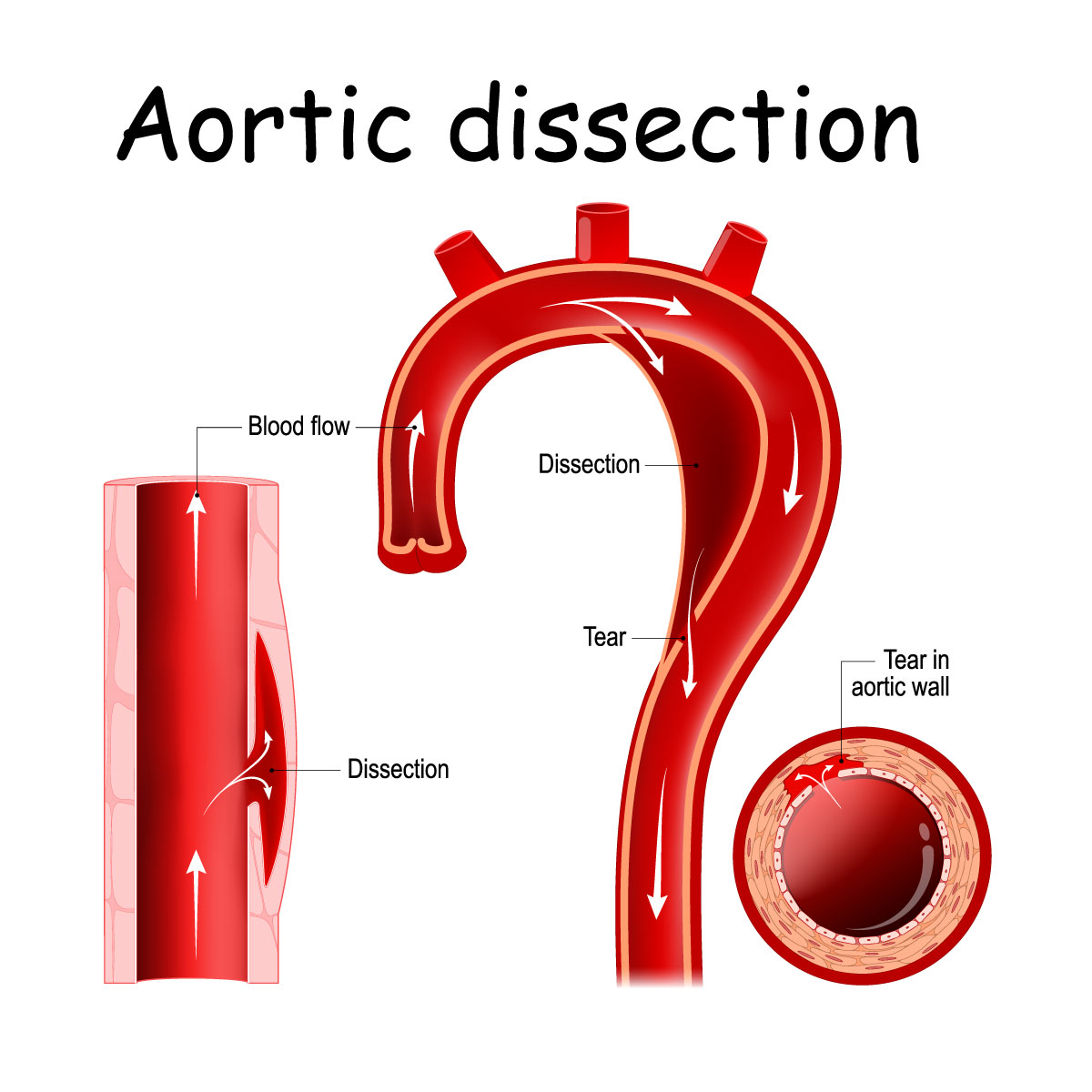
Overview
An aortic dissection occurs when the inner and/or middle layer of the aorta is torn or split with blood flowing through. Although this disease is rare, it can be fatal especially in case of a leaky aorta with blood flowing outside the main artery. The fatality rate of this heart disorder can be lowered with early detection and proper treatment, detecting the disease at its early stage is difficult as the symptoms are similar to other conditions. An aortic dissection tends to be found in males aged 60–70 years old. Treatment option usually are medication and surgery.
Symptoms
An aortic dissection tends to cause symptoms which could be similar to those of a heart attack. Aortic dissection may indicate the following signs and symptoms:
- Sudden severe pain in the chest or upper back and spreads to the neck or the back, together with the feeling of tearing or ripping.
- Sudden severe abdominal pain
- Blacking out
- Panting
- Stroke-like conditions, such as eyes suddenly getting blurry, speech impairment, and one side of the body becoming weak or unable to move
- Different pulse levels in each arm or thigh
- Pain in the legs
- Unsteady walking
When to Seek Emergency Care
If you have any of these symptoms, seek emergency medical care immediately:
- Sudden or severe chest pain
- Shortness of breath
- Loss of consciousness
- Rapid heartbeat
- Weakness
Causes
When the aorta’s wall becomes weakened, an aortic dissection can occur. There are two types of aortic dissections, depending on the affected area of the aorta:
| Type | Description |
| Type A aortic dissection | A life-threatening condition. It affects the part of the aorta that exits the heart. The disease can also happen in the ascending aorta, which is located in the upper part of the artery and can extend into the abdominal area. |
| Type B aortic dissection | Less common than Type A, where the affected area is in the descending aorta, which is the lower aorta. The injury can also extend into the abdomen. |
Risk Factors
If you have any of these factors, you might be at risk of developing aortic dissection:
- Hypertension: which is the state of having high blood pressure for a long period.
- Atherosclerosis: which occurs due to an artery getting narrowed.
- Aortic aneurysm: which results from swollen and weakened artery walls.
- Bicuspid aortic valve: which occurs when there is an abnormality in an aortic valve.
- Aortic coarctation: which is a congenital heart disease where the aorta gets narrowed.
Genetic Conditions
If you have any of these genetic conditions, you also have a risk of developing aortic dissection:
- Turner syndrome: This genetic disorder can cause hypertension and other heart diseases.
- Marfan syndrome: This disorder is induced by weakening connective tissues, and often occurs in people with a family history of aortic aneurysms or aortic dissections.
- Other connective tissue disorders: such as Ehlers-Danlos syndrome whose symptoms include loose joints and blood vessels becoming weak, as well as Loeys-Dietz syndrome, caused by distortion of an artery in the neck or any other areas.
An aortic dissection can also be induced by a giant cell arteritis, which is an inflammatory disease affecting the large blood vessel.
Other Contributing Factors
The development of an aortic dissection also depends on many other factors as the following:
- Sex: The aortic dissection condition can be found more often in males than females.
- Age: Those that are older than 60 have a higher risk of aortic dissection.
- Drug Use: Cocaine use, as it causes temporary hypertension.
- Pregnancy: Despite being a rare occurrence, being pregnant can cause a woman with no illness to develop an aortic dissection.
- High-intensity weightlifting: An aortic dissection can be caused by this kind of activity as it temporarily causes hypertension while you are doing it.
Diagnosis
Due to its symptoms which are like those of other health problems, it might be hard to detect an aortic dissection. However, these following symptoms are potential indicators of the disease.
- Pain in the chest which rises suddenly with a tearing or ripping feeling
- The right and left arms have different blood pressure levels
- A widened aorta found during a chest X-ray
Diagnostic Approaches
Aortic dissection can be diagnosed by many approaches, including:
|
Test |
Description |
| Transesophageal echocardiogram (TEE) | This echocardiogram uses a transducer which is an ultrasound probe sent to the esophagus and then to the heart to create clear and detailed pictures of the aorta while it is moving, using sound waves. |
| Computerized tomography (CT) | In this procedure, the chest is scanned with an X-ray to let your doctor see cross-sectional images of the body and diagnose aortic dissection. |
| Magnetic resonance angiogram (MRA) | This test shows images of blood vessels using a magnetic field and radio waves. |
Treatment
Aortic dissection is a life-threatening condition, immediate treatment is required. Aortic dissection can be treated surgically or medically. The best option will be selected by your medical team based on which part of the aorta is affected.
Type A Aortic Dissection
Type A aortic dissection can be treated in the following ways:
- Surgery: the purpose is to remove the affected part of the aorta as much as possible and to fix the blood leaking in the aortic wall with a graft. The graft can also be used to replace the impaired aortic valve with a new valve during surgery.
- Medications: the doctor might prescribe medications to make the blood pressure stable before receiving surgery or slow down the progress of the aortic dissection as the medications help lower the heart rate and prevent hypertension.
Type B Aortic Dissection
Type B aortic dissection can be treated in the following ways:
- Surgery: The surgery procedure to treat type A and B dissections are similar. However, for type B, the doctor might also use wire mesh tubes to fix the impaired aorta with complicated dissection conditions.
- Medications: Both type A and B aortic dissections might be treated with the same medications. In type B, however, surgery might not be necessary.
- Monitoring: In both types of aortic dissection, the doctor may require you to control the blood pressure as well as receive CT scans or MRI scans from time to time to monitor your conditions.