Cardiac Arrhythmia can be treated with Radiofrequency Ablation
Health Articles
Select Topic
What Is Cardiac Arrhythmia?
Cardiac arrhythmia is an irregular heartbeat that is either too slow or too fast to the extent where it reduces the efficiency of blood flow to feed the organs throughout the body. This disease can also pose a fatal risk of heart failure or stroke.
Cardiac Arrhythmia are classified into following types:
Supraventricular Tachycardia: Abnormally rapid heartbeat in the upper chambers of the heart.
Atrial Fibrillation: Irregular and fast heart rhythm in the upper chambers, which is commonly found in the elderly, people with habits of heavy alcohol consumption and heart disease patients. This can lead to ischemic stroke.
Ventricular Tachycardia: Abnormally rapid heartbeat in the lower chambers of the heart that can potentially lead to fainting and sudden death if no immediate treatment has been performed.
Ventricular Fibrillation: Irregular heart rhythm in the lower chambers that leads to fainting and sudden death if no immediate treatment has been received.
Heart Block: Abnormally slow heartbeat, which happens when the upper and lower chambers of the heart beat out of sync. This is also one the causes of death.
Bradycardia: Abnormally slow heartbeat.
Causes of Cardiac Arrhythmia
Cardiac arrhythmia can happen to anyone on any day. The causes vary as follows:
Congenital heart diseases, such as electrical short circuits in the heart, thickened heart muscles, heart valve regurgitation or leaky heart valves. People with any of these diseases tend to have symptoms of cardiac arrhythmia shown when they reach adulthood or middle-aged years.
Physical abnormalities that affect heart function, such as diabetes, hypertension and hyperlipidemia.
Other abnormalities that affect the function of the heart, including thyroid diseases and electrolyte disorders
Consumption of certain food and drinks that affect the heart function, such as caffeine and alcohol
Use of certain drugs, such as those containing amphetamine and medications for asthma
Stress and anxiety
Danger of Cardiac Arrhythmia
The danger of cardiac arrhythmia depends on its type and its severity, as well as comorbidity and other relevant factors that pose a risk of sudden death, heart failure, dizziness, fainting or ischemic stroke.
Symptoms of Cardiac Arrhythmia
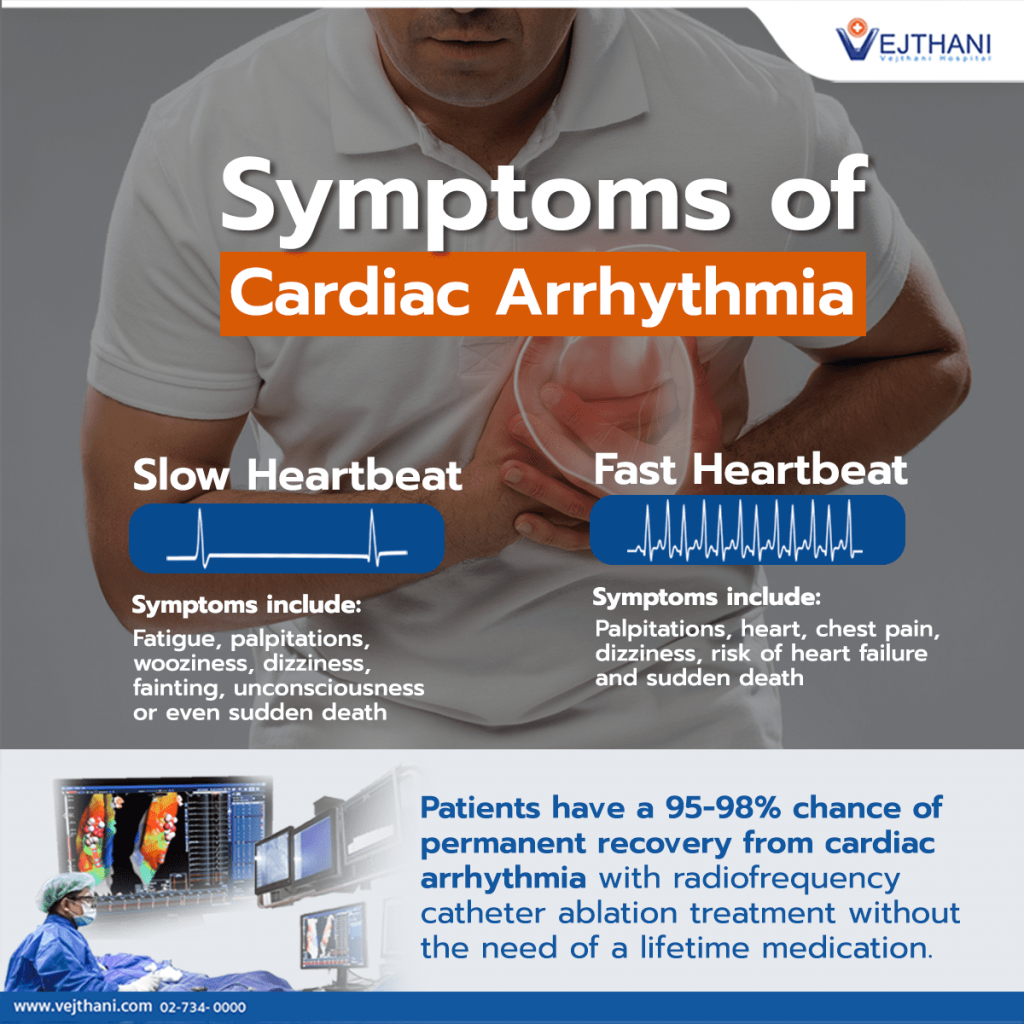
Normally, the heart rate ranges from 50 to 100 beats per minute. If a heart beats slower or quicker than this range, it can be considered as cardiac arrhythmia.
Slow irregular heartbeat: This causes fatigue, palpitations, syncope, dizziness, fainting, unconsciousness or even sudden death.
Fast irregular heartbeat: This causes palpitations, strong heartbeats, chest pain and dizziness, which poses a risk of heart failure and sudden death.
If any of the abovementioned symptoms are happen frequently, the patient is advised to see a doctor immediately for diagnosis and proper treatment.
Cardiac Arrhythmia Treatment
There are many ways to diagnose and treat cardiac arrhythmia, depending on the type of irregularity and severity. The most effective treatment is performing a radiofrequency catheter ablation at the problematic area. This treatment gives a permanent recovery rate of 95–98% without requiring the patient to take lifetime medications.
There are 2 types of radiofrequency catheter ablation technologies at Vejthani Hospital:
Electrophysiology Study: This is an evaluation of the heart’s electrical system that shows the results in 2-dimensional graphs to assess the electrical impulse of the heart and electrical pathway, to find the cause and the origin of the disease. After that, radiofrequency catheter ablation will be performed as a continuous treatment following an electrophysiology study.
3D System: This technology seeks the original spot of the abnormal electrical heart signal and shows the results in real-time 3-dimensional images. A needle is inserted to pinpoint the problematic areas with high radiofrequency waves. This technology is used to treat irregularities in the electrical heart’s signal that arise from a broad and complicated location.
Treatment with a radiofrequency catheter ablation technology yields a high permanent recovery rate of 95–98% for patient with cardiac arrhythmia. This means they do not need to take medications for the rest of their lives and can live and perform everyday tasks without worrying about cardiac arrhythmia.
For more information, please contact
Cardiac Center, 5th floor, Vejthani Hospital 02-734-0000 Ext. 5300 Or call our English Hotline +66 (0) 85-223-8888
We use cookies to manage your personal information in order to provide you with the best personalized user experience on our website. If you continue using the website, we assume that you accept all cookies on the website. Find out more.