Tennis Elbow Symptoms and Causes
 Make an Appointment
 Talk to Doctor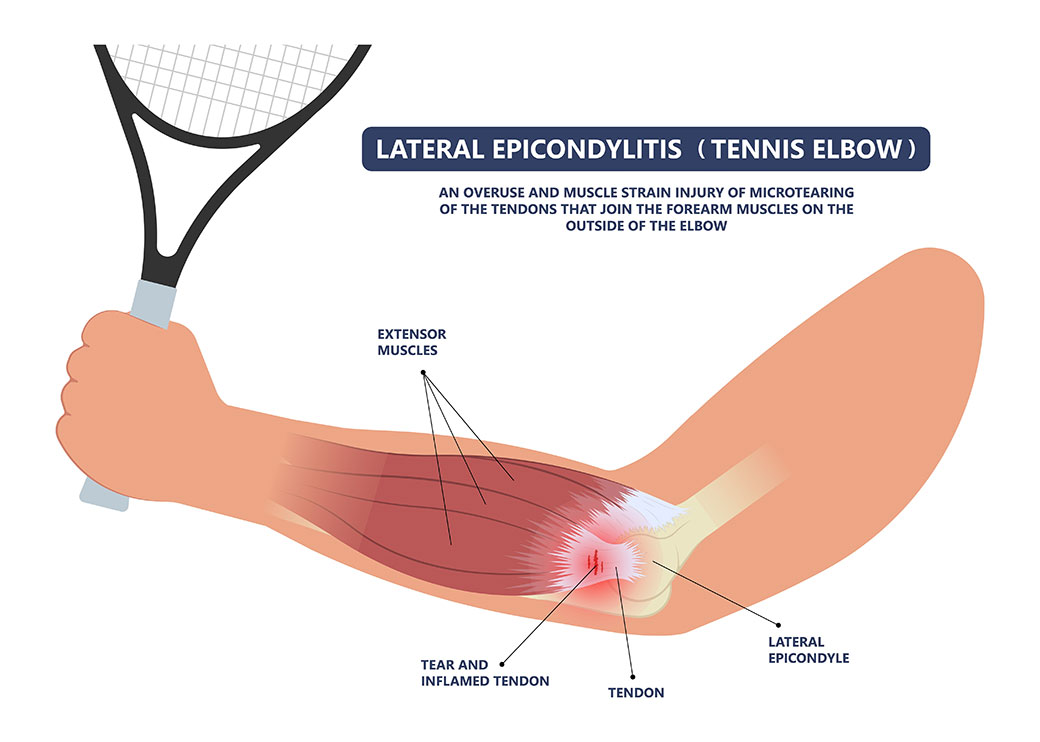
Overview
Tennis elbow, also known as Lateral epicondylitis or Lateral elbow tendinopathy, occurs when the tendon that connects your forearm muscle to the bone at the outer elbow has an injury due to repetitive movements of the elbow and wrist. This condition causes painful elbow which sometimes extends to the forearm and wrist, and does not only affect athletes but also workers who regularly use their elbow, forearm or wrist.
What Is a Tennis Elbow?
Tennis elbow (lateral epicondylitis) is a painful condition that affects the tendons on the outside of your elbow. This injury occurs when the forearm muscles and tendons—specifically the extensor carpi radialis brevis (ECRB) tendon—are damaged from repetitive, strenuous use. This overuse can cause small tears and degeneration in the tendon, leading to pain and tenderness. While athletes are at risk, many people develop this condition from daily activities or jobs that involve repeated motions of the wrist and forearm, such as painting, plumbing, or using tools.
Symptoms
The following are the symptoms of tennis elbow. You may experience pain or weakness during:
- Doing housework
- Holding or gripping anything
- Twisting the doorknob
- Holding a glass or cup
- Handshaking
If you have already tried taking over-the-counter medicine for pain relief, cold compression and have taken enough rest but the pain does not subside, it is recommended to see the doctor.
Causes
- Overuse and Repetitive Motions: The most common cause is the repeated tensing of the forearm muscles used to straighten the wrist and fingers. This can lead to microscopic tears in the tendon that attaches to the bony bump on the outside of the elbow.
- Specific Activities: Certain activities put you at a higher risk. These include playing racket sports, painting, plumbing, carpentry, and even butchering. Any activity that requires frequent, forceful use of the forearm muscles or repetitive wrist extension can lead to this condition.
- Improper Technique or Equipment: In sports like tennis, using improper stroke technique or equipment that doesn’t fit correctly (like a racquet that’s too stiff or has strings that are too tight) can increase the stress on your forearm.
- Sudden Injury: While less common, a direct injury or blow to the elbow can also cause tennis elbow.
Risk Factors
- Occupation: Jobs that require repetitive arm and wrist motions, such as those of painters, plumbers, carpenters, and cooks, increase the risk.
- Sports: Racket sports like tennis and racquetball, especially with poor form, are a well-known risk factor. Playing for more than two hours a day can also increase your risk.
- Age: While it can affect anyone, tennis elbow is most common in adults between the ages of 30 and 50.
- Lifestyle: Other factors like obesity and smoking may also increase your chances of developing tennis elbow.
Diagnosis
Physical examination will be done by the doctor to assess your elbow, wrist, and fingers for any pain, swelling and stiffness. Medical history and physical assessment can sometimes provide enough detail in order to diagnose but if there is something else that the doctor would like to confirm, the following tests may be requested:
- X-ray: Checks for arthritis or bone fracture
- Other diagnostic imaging tests such as Ultrasound, Magnetic Resonance Imaging (MRI) or Computed tomography (CT) Scan: Checks for any damage to the muscles or tendons
- Electromyography (EMG): Measures the nerve cells electrical transmission and muscle function to check for any nerve compression
Treatment
Sometimes, a tennis elbow will heal on its own by taking a rest, using the right arm mechanics, cold compression on the affected area and taking over-the-counter medicine for pain relief. But if your symptoms still persist, the doctor may recommend physical rehabilitation or surgery in the worst case.
Physical Therapy
There will be guidance on which exercises to do in order to regain muscle strength and reduce the impact on your affected area. If an injury is due to sports activity such as playing tennis, your doctor may suggest you to check with your trainer or tennis expert in order to know which movement you need to adjust or change for better body mechanics when playing.
Other Treatment Procedures and Surgery
- Injection: Injectable treatment such as Platelet-Rich Plasma (PRP) into the tendon that has pain may be recommended by the doctor.
- Dry needling: A small needle is inserted into the injured tendon in various parts of the affected area, which may also help.
- Extracorporeal shockwave therapy (ESWT), Laser therapy
- Braces: The doctor may advise you to wear a counterforce brace which is a removable support brace that reduces the tension on the muscles and tendons.
- Surgery: After 6 to 12 months that your symptoms still persist with all the other non-surgical treatments done, surgery may be the last resort to take out the injured tissue. The surgery can be done by cutting a huge incision or a lot of tiny incisions on an affected area. After the surgery, you must undergo physical therapy which is important for your recovery.
When to See a Doctor
If you’ve been experiencing elbow pain that doesn’t improve with rest, over-the-counter pain medication, or cold compression, it’s time to consult a medical professional. Ongoing pain, especially if it interferes with your daily activities like holding objects or shaking hands, could indicate a more serious condition. A doctor can provide a proper diagnosis and recommend the most effective treatment plan, which may include physical therapy, a brace, or other interventions.
Contact Vejthani Hospital today to schedule an appointment with a specialist.