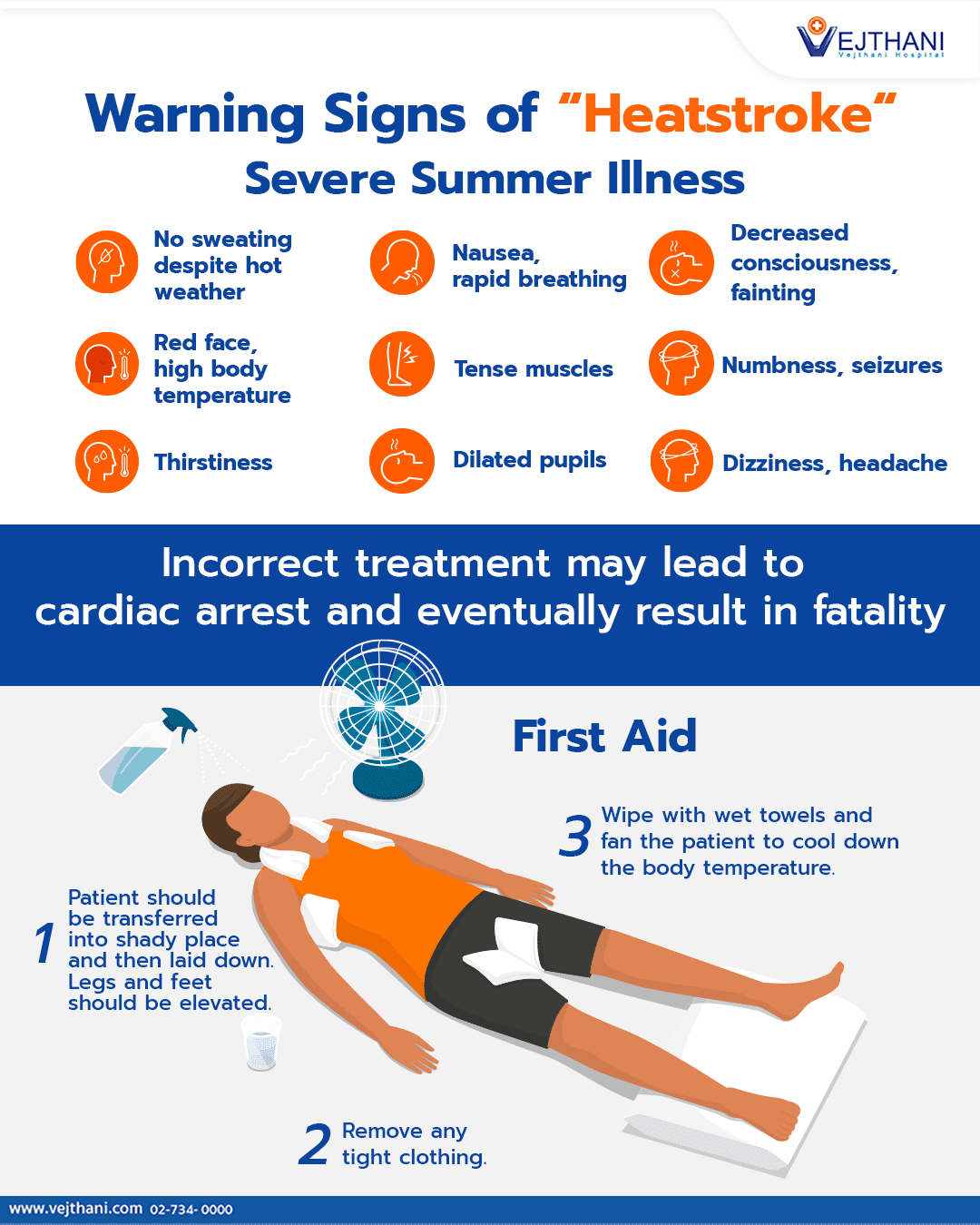
Warning Signs of Heatstroke – Severe Summer Illness
Health Articles
The scorching weather these days is causing many people to sweat. The temperature this summer is expected to jump to 43 °C. The sunlight and the melting weather in the daytime are putting people who stay outdoors for a long time at a fatal risk of “heatstroke” due to the body’s inability to regulate its temperature effectively.
Dr. Naris Smitasin, a neurologist at Vejthani Hospital, revealed heatstroke occurs in sweltering weather where the body is unable to adjust itself. When the body temperature rises above 40 °C, the part of the brain that controls the body temperature becomes dysfunctional, affecting the circulatory and nervous systems. The followings are the groups of people who are at risk of heatstroke:
Those who spend countless hours a day working or exercising in the sun
People with chronic diseases, such as heart disease, hypertension, and diabetes
Kids and older adults, as their bodies cannot release heat as effectively as young people
Overweight individuals
People who struggle with sleep deprivation
Those who work in an air-conditioned environment and are suddenly exposed to extremely high temperatures, as their body may not be able to adapt quickly to the heat
Consumption of alcoholic drinks could also be a risk factor as the body loses more fluid and minerals than usual.
“The vital warning signs of heatstroke that are noticeable include no sweating despite the hot weather, red face, high body temperature, thirstiness, dizziness, headache, nausea, rapid breathing, tense muscles, numbness, seizures, dilated pupils, and fainting which may lead to a cardiac arrest and eventually result in fatality. The patient should be transferred into a shady place and then laid down. The legs and the feet should be elevated. Then remove any tight clothing. Wipe with wet towels and fan the patient to cool down the body temperature immediately and transfer the patient to the hospital without delay,” explained Dr. Naris.
Dr. Naris said that those at risk of the illness should avoid working in the sun for long hours to prevent heatstroke. Exercising should not be done under the sun but in the morning or evening instead. Avoid staying in a scorching area. Kids or older adults should not be left in a parked vehicle under the sun for long. In the summertime, use sun-protecting tools such as hats or umbrellas. Clothing should not be thick and light-colored as it is suitable for heat ventilation. Drink at least 6-8 cups of water daily and sip water throughout the day despite not being thirsty to increase hydration and reduce body temperature. Importantly, high-sugar, alcoholic, or caffeinated drinks, such as tea and coffee, should be avoided. If any symptoms arise, see a doctor immediately to reduce the risk of fatality.
We use cookies to manage your personal information in order to provide you with the best personalized user experience on our website. If you continue using the website, we assume that you accept all cookies on the website. Find out more.