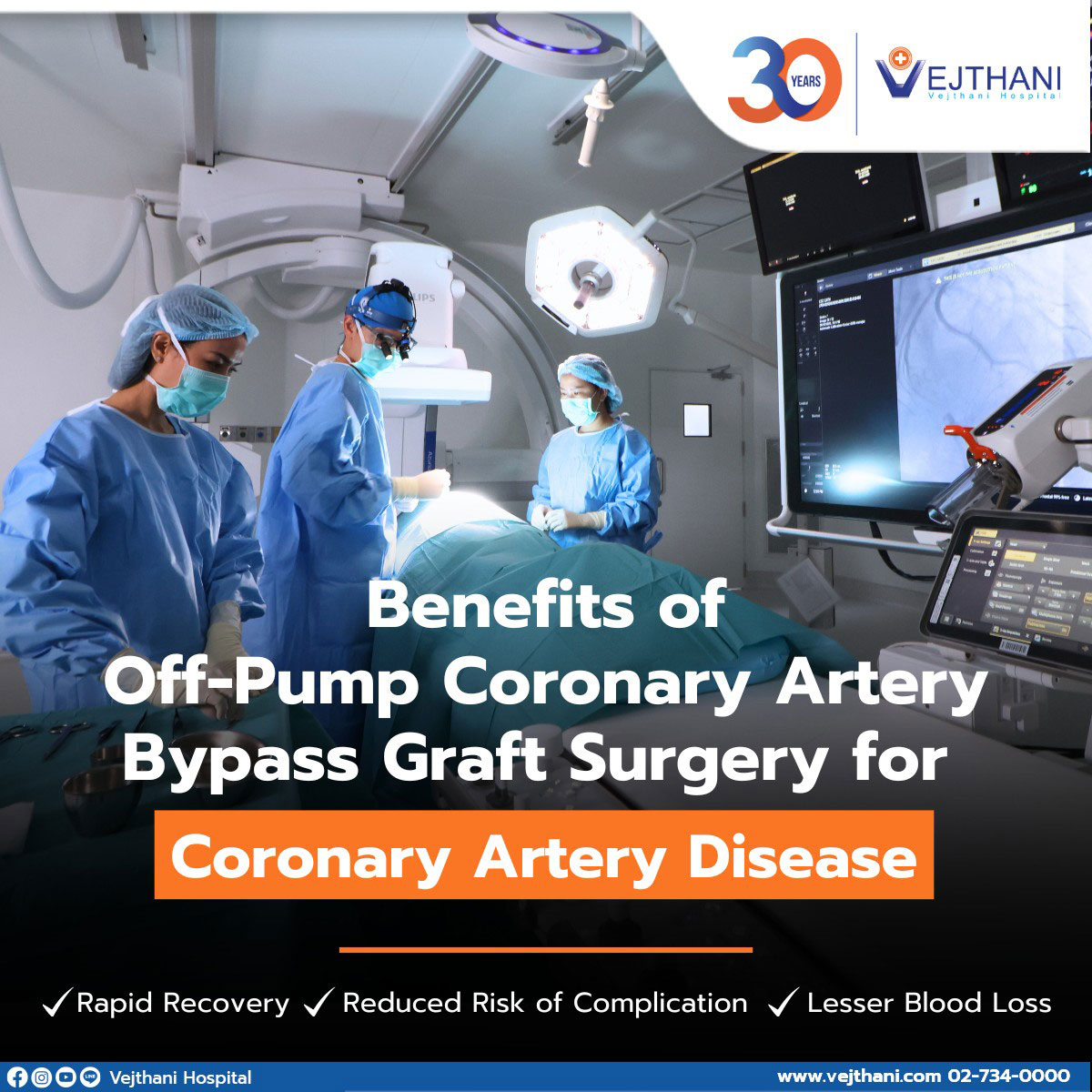
Treating Severe CAD: Exploring the Benefits of Off-Pump CABG
Health Articles
Coronary artery disease, or coronary artery stenosis, occurs when the coronary arteries narrow or become blocked, resulting in inadequate blood supply to nourish the heart muscles. If there are multiple narrowing or blockages in the coronary arteries, the doctor may consider coronary artery bypass surgery. A technique known as Off-Pump Coronary Artery Bypass Grafting Surgery (Off-Pump CABG) is widely popular today. The procedure reduces complications associated with the heart-lung machine. It lowers the risk of excessive blood loss, accelerates patient recovery, and patients can swiftly get back to their lifestyle.
Dr. Chawakorn Leampriboon, cardiothoracic surgeon at Vejthani Hospital, explains that coronary artery disease occurs when the coronary arteries are constricted or blocked, hindering the blood flow. This reduction in blood supply diminishes the heart muscle to function properly. The narrowing or blockage often results from the accumulation or buildup of fats or calcification within the arteries. The risk factors include having high cholesterol, high blood pressure, diabetes, and living certain lifestyles, such as smoking.
When the blood supply to the heart muscles is insufficient, symptoms like chest tightness and shortness of breath could occur, and that could develop into acute heart failure. If these symptoms significantly impact your everyday life, it’s essential to seek prompt medical advice to ensure a proper diagnosis and get the best course of treatment.
There are various methods of treating coronary artery disease. From medication management to minimally invasive balloon angioplasty to widen narrowed arteries. For more complex cases with multiple or significant blockages, the doctor recommends coronary artery bypass grafting surgery (CABG). The procedure involves creating a new pathway around the blocked arteries with new vessels to effectively restore healthy blood flow to the heart.
The On-Pump Coronary Artery Bypass Grafting (On-Pump CABG) technique has been performed for a long time and remains a standard procedure. The surgery involves using a heart-lung machine and an artificial heart to stop the patient’s heartbeat during the procedure, making it more convenient for the surgeon. However, studies have found that the heart-lung machine may trigger inflammation in the body, causing a reduction in heart recovery and its function. It also affects platelets and blood clotting, resulting in abnormal bleeding after surgery.
A surgical technique known as Off-Pump Coronary Artery Bypass Grafting (Off-Pump CABG) offers the best approach to treating heart disease. The technique allows surgeons to perform bypass surgery on a beating heart, eliminating the need for a heart-lung machine. The surgeon stabilizes the heart using special tools; surgeons can bypass blocked arteries while the heart continues to beat. Compared to traditional methods.
Off-Pump CABG offers potential benefits:
Reduced complications associated with the heart-lung machine.
Minimized blood loss.
Decreased the need for blood transfusions.
Reduced the duration of surgery and anesthesia.
Speed up patient recovery and shorten hospital stays.
Enabling patients to return to the lives they were once accustomed to.
It’s crucial to note that Off-Pump CABG should be performed by experienced surgeons who are experts in this technique to ensure swift surgery, maximize benefits, and ensure patient safety for an enhanced quality of life after treatment.
For more information, please contact
Cardiac Center, 5th floor, Vejthani Hospital 02-734-0000 Ext. 5300 Or call our English Hotline +66 (0) 85-223-8888
We use cookies to manage your personal information in order to provide you with the best personalized user experience on our website. If you continue using the website, we assume that you accept all cookies on the website. Find out more.