Osteoporosis is a disease that affects bone tissue, causing bones to become weak and brittle. This serious disease can lead to fractures or broken bones, and it is often referred to as a silent disease since most patients are unaware that their bones are weakening. This is why it’s important that those at risk get regular osteoporosis screenings to catch this disease early.
Who Is At Risk?
Osteoporosis can affect people of any age or background, but some factors can put people at a higher risk.
Age – Those over 50 are at a higher risk of developing osteoporosis. After 30 years old, human bone density naturally begins to decrease, especially if you don’t get enough vitamin D and calcium to keep bones strong.
Gender – The most likely people to develop osteoporosis are women over 50. Since women typically have lighter, thinner bones and live longer than men, they are four times more likely to develop osteoporosis.
Bone structure and body weight – People with smaller bone structures have less bone mass to start with and are more likely to develop osteoporosis.
History of broken bones – If your bones have been broken or fractured in the past, they may not be as strong, making you more susceptible to osteoporosis.
History of certain diseases – Certain diseases, like diabetes CDM, hyperthyroidism, hypothyroidism, rheumatoid arthritis, Celiac disease, and cancer can increase the likelihood of osteoporosis.
Taking certain medications – Some prescription medications, including some steroids, proton-pump inhibitors and cancer medications, can increase the likelihood of osteoporosis.
Smoking and drinking – Smoking and heavy drinking can weaken bones and increase the risk of osteoporosis.
While many of these risk factors are genetic, there are ways that you can strengthen your bones and reduce your risk. Limiting how much you smoke and drink can reduce your risk of osteoporosis and many other health issues.
You can also boost your bone health by ensuring that your diet includes enough proteins, vitamin D and calcium, which support strong bone tissue. Weight training and other weight-bearing exercises can also help you maintain strong bones as you age.
Osteoporosis Symptoms
Most of the time, there are no symptoms in the early stages of osteoporosis. However, people may experience the following symptoms after bones have been weakened by osteoporosis.
Stooped posture or loss of height over time
Back pain from broken or fractured vertebrae
Broken bones, often ones which break very easily
Because there are so few initial symptoms of osteoporosis, it is frequently referred to as a silent killer. The loss of bone mass often goes completely undetected until after a patient has suffered a severe fracture or broken bone. These kinds of injuries take longer to heal for older individuals who are more at risk of osteoporosis.
When To Get Screened
It’s important for at-risk individuals to get screened for osteoporosis regularly to catch any issues early and take preventative measures. Any women over the age of 65 and men over the age of 70 should get regular screenings. Those with additional risk factors can consider getting screened starting from age 50 to ensure they are not experiencing early bone loss.
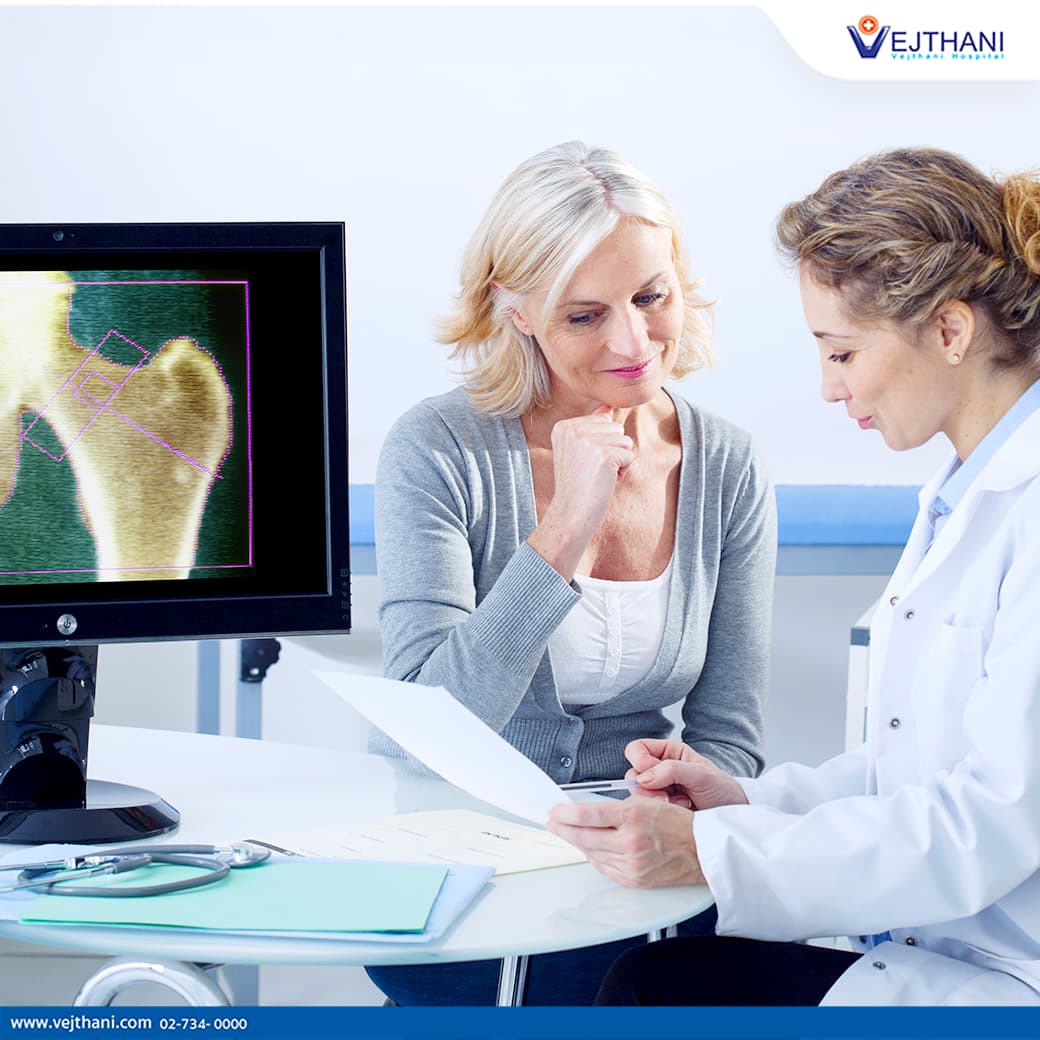
Screenings typically involve a bone density test, which measures the strength of your bones. These tests can be expensive and involve some health risks from the small amount of radiation the patient is exposed to. This is why it’s important to consult your doctor about your risk factors and situation to determine if getting a test is best for you.
Book A Screening
Vejthani Hospital is known for its King of Bones building, featuring our Orthopedics Center, Spine Center, and Hip & Knee Center. Our team comprises a variety of orthopedic specialists who have a wealth of experience in assisting patients with bone issues like osteoporosis.
Our modern facilities are equipped with state-of-the-art medical technology to offer our patients the best care available. Vejthani’s dedicated team works to provide high-quality services to all our patients and ensure they are comfortable during their treatment. Visit our website to schedule an osteoporosis screening today.
For more information, please contact
Orthopedics Center, 2nd Floor, King of Bones Building, Vejthani Hospital Call +66 (0) 2734-0000 ext. 2298,2299 +66(0)85-223-8888 (English Hotline)
We use cookies to manage your personal information in order to provide you with the best personalized user experience on our website. If you continue using the website, we assume that you accept all cookies on the website. Find out more.