Muscle Pain from Long Hours at the Computer Could Be a Sign of Office Syndrome.
Office Syndrome is commonly caused by poor work habits—such as improper posture or prolonged use of a mouse and keyboard without sufficient breaks.
Select Topic
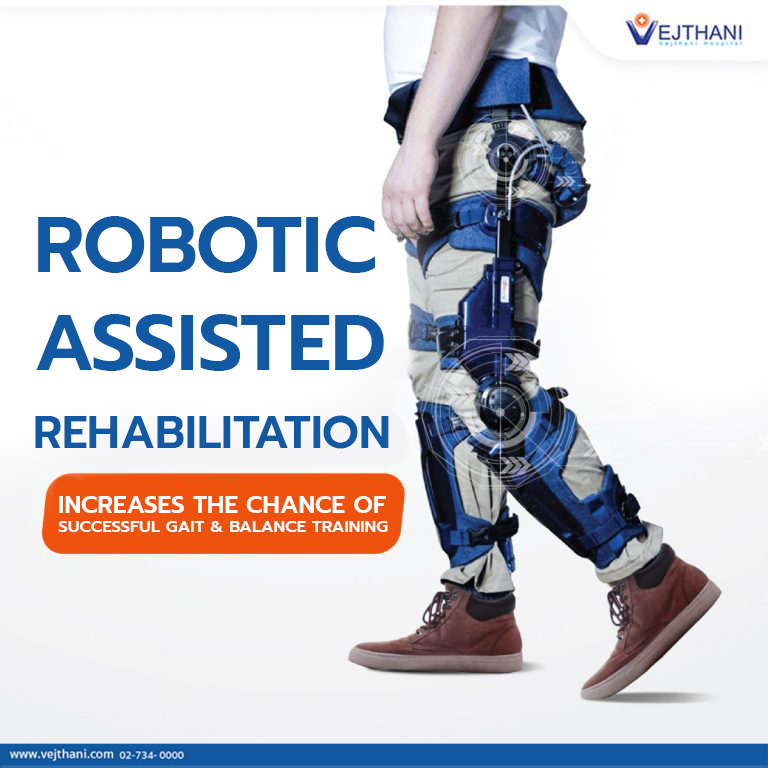
Rehabilitation plays a critical role in restoring functional mobility, improving balance, and enhancing quality of life for patients recovering from neurological and musculoskeletal conditions. Advances in medical technology have introduced robotic-assisted systems designed to support structured, repetitive, and measurable gait and balance training under specialist supervision.
At Vejthani Advanced Rehabilitation Center, technology-supported therapy is integrated into comprehensive, patient-centered care plans developed by board-certified specialists in Physical Medicine and Rehabilitation.
Impaired gait and balance are common in older adults and after the following conditions:
Loss of walking ability or balance stability increases fall risk, reduces independence, and may significantly affect physical and psychological well-being.
Early and structured rehabilitation is associated with improved functional outcomes, particularly when guided by experienced rehabilitation physicians and multidisciplinary teams.
Robotic-assisted systems are medical devices designed to facilitate controlled, repetitive walking movements. These systems may include:
The goal is not to replace conventional therapy but to enhance therapeutic intensity and consistency. Robotic technology enables precise adjustment of speed, step length, and support level, allowing therapy to be tailored to individual patient needs.
Research suggests that robotic-assisted therapy may contribute to:
However, outcomes vary depending on diagnosis, severity of impairment, overall health status, and adherence to rehabilitation protocols.
Robotic systems are typically incorporated as part of a broader multidisciplinary rehabilitation plan, which may include physical therapy, occupational therapy, speech therapy (when indicated), and medical treatment.
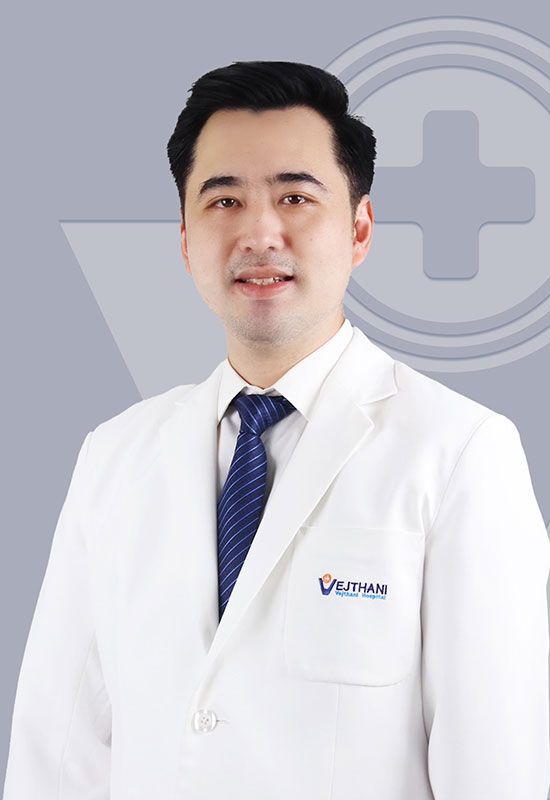
Dr. Tanawat Petrutchatachart, a Rehabilitation Medicine Specialist at the Advanced Rehabilitation Center at Vejthani International Hospital, specializes in comprehensive rehabilitation care for patients with neurological and complex mobility impairments. His clinical approach emphasizes:
Robotic-assisted rehabilitation is considered for selected patients who may benefit from high-repetition, task-specific training. Dr. Tanawat highlights that rehabilitation outcomes are influenced by multiple factors, including injury severity, time since onset, patient motivation, and interdisciplinary collaboration. Technology is used as a supportive tool within a structured medical program, not as a standalone solution.
Eligibility depends on a comprehensive evaluation by a rehabilitation doctor. Candidates may include patients with:
Contraindications or limitations are assessed carefully to ensure patient safety.
Robotic-assisted systems are operated under the supervision of trained professionals. During sessions:
Potential risks may include muscle soreness, fatigue, or discomfort. Serious complications are uncommon when therapy is delivered within established clinical guidelines.
It is a technology-supported therapy method that helps guide repetitive walking and balance exercises under medical supervision.
Not all patients are candidates. A rehabilitation doctor determines eligibility after medical and functional evaluation.
No. It complements conventional therapy as part of a comprehensive rehabilitation program.
When supervised by trained medical professionals and appropriately indicated, it is generally considered safe. Individual risks are assessed before initiation.
Duration varies depending on diagnosis, severity, and patient response. Treatment plans are individualized.
Advanced Rehabilitation Center, Vejthani Hospital
Call 02-7340000 or Ext. 2332
English Hotline: (+66)8-522 38888
Physical Medicine and Rehabilitation
Rehabilitation Medicine