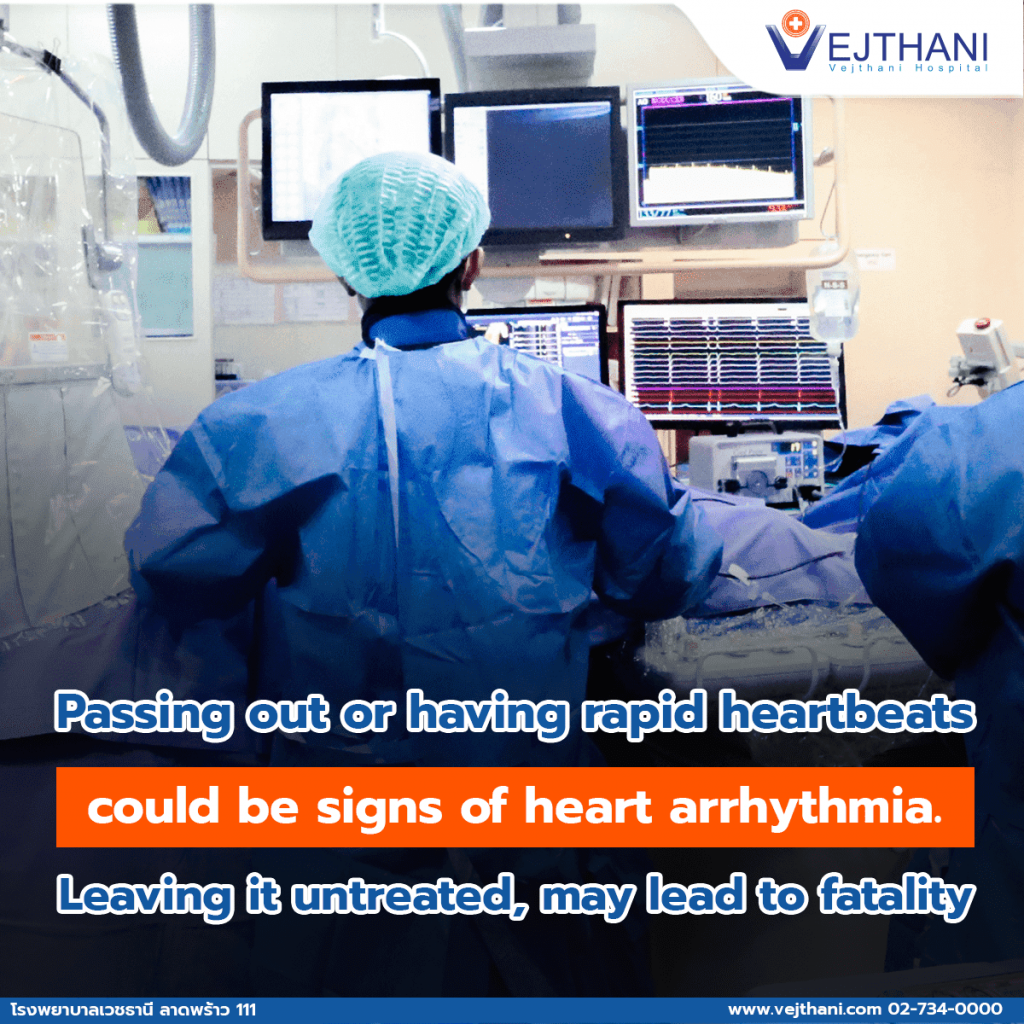
Passing out or having rapid heartbeats could be signs of heart arrhythmia. Leaving it untreated, may lead to fatality
Health Articles
Cardiac arrhythmia is an irregular heartbeat that is either too slow or too fast to the extent where it reduces the efficiency of blood flow to feed the organs throughout the body. This disease can also pose a fatal risk of heart failure or stroke.
Normally, the heart rate ranges from 50 to 100 beats per minute. If a heart beats slower or quicker than this range, it can be considered as cardiac arrhythmia.
Slow irregular heartbeat: This causes fatigue, palpitations, syncope, dizziness, fainting, unconsciousness or even sudden death.
Fast irregular heartbeat: This causes palpitations, strong heartbeats, chest pain and dizziness, which poses a risk of heart failure and sudden death.
If any of the abovementioned symptoms are happen frequently, the patient is advised to see a doctor immediately for diagnosis and proper treatment.
There are many ways to diagnose and treat cardiac arrhythmia, depending on the type of irregularity and severity. The most effective treatment is performing a radiofrequency catheter ablation at the problematic area. This treatment gives a permanent recovery rate of 95–98% without requiring the patient to take lifetime medications.
For more information, please contact
Cardiac Center, 5th floor, Vejthani Hospital 02-734-0000 Ext. 5300 Or call our English Hotline +66 (0) 85-223-8888
We use cookies to manage your personal information in order to provide you with the best personalized user experience on our website. If you continue using the website, we assume that you accept all cookies on the website. Find out more.