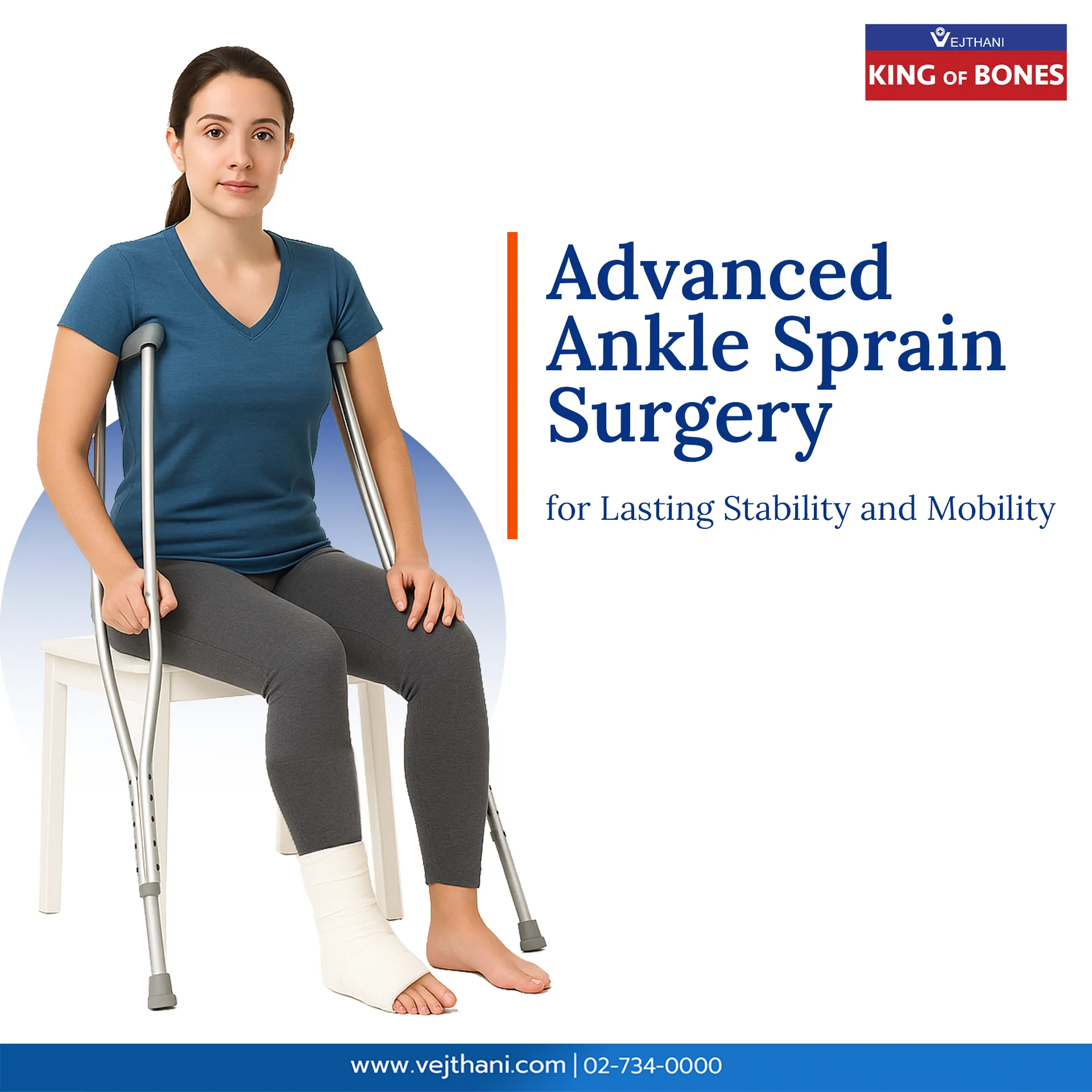
Ankle sprains rarely require surgery. However, some conditions can cause recurring ankle sprains. The ankle instability may develop after repeated ankle sprains if the ligaments don’t fully heal or remain weak. Surgery can strengthen the ligaments, helping to reduce the risk of recurring sprains and improve ankle stability.
What Happens When an Ankle Is Sprained?
An ankle sprain is different from an ankle strain. An ankle sprain is a stretched or torn ligament, while an ankle strain is a stretched or torn muscle. The ligaments are typically on the sides of your ankle and may involve the:
Posterior talofibular ligament
Anterior talofibular ligament
Calcaneofibular ligament
These are short ligaments on the outside of your ankles connecting the foot and leg bones.
When they or other ankle ligaments become stretched to the point of causing a sprain, they lose the ability to support the foot correctly and can re-sprain themselves through the simple movements of walking.
Persistent Instability and Weakness
Often, the patient has difficulty maintaining balance or completing physical activities without worrying about reinjury of the ankle. Chronic lateral ankle instability results from rupture of the lateral collateral ligaments. Inadequate healing of these ligaments, combined with weakness or injury of the surrounding dynamic stabilizers, compromises joint support and leads to persistent mechanical and functional instability.
Ankle Sprain Diagnosis
A severe ankle sprain requires a clinical diagnosis to rule out a fracture. This is commonly done with an X-ray, which provides a clear image of the ankle bones and is used to check for any breaks.
Standard Treatment of Ankle Sprains
Following the diagnosis of an ankle sprain, the standard treatment is rest, ice, compression, and elevation (RICE). These can help reduce the initial swelling and should be started immediately after the sprain.
Once the swelling has gone down, ankle bracing and taping can provide enough support for the patient to move about without much pain. However, surgical intervention may be necessary if ankle sprains continue to occur.
Ligament Repair Surgery
While most ankle sprains respond well to conservative treatments like RICE, bracing, and taping, some patients continue to experience persistent instability or repeated sprains. In such cases, ligament repair surgery may be required to repair or reinforce the damaged ligaments on the outer side of the ankle, restoring long-term stability and function.
Ankle ligament repair (Broström repair) surgery tightens the outside (lateral) ligaments. Two main ligaments on the outer side are the anterior talofibular ligament and the calcaneofibular ligament.
The surgeon must examine these ligaments to see if they can be used in the repair procedure by detaching them and reattaching them in a tighter position. However, Sometimes the ligaments are too weak or damaged to be repaired. This can happen after many years of instability, previous failed surgery, or in people with very loose joints by nature. In these cases, the surgeon can reinforce the repair with an artificial ligament (or a strong suture tape such as an InternalBrace™). Modern reinforcement whether “InternalBrace or an artificial ligament” provide stronger and more reliable stability right after surgery and Faster early recovery, patients may start gentle motion sooner than with a standard repair.
Today, our specialists offer a modern arthroscopic ligament repair with artificial-ligament reinforcement—a next-generation procedure that improves comfort and recovery compared to the old open technique.
Less pain and swelling – the small incisions and gentle tissue handling mean less trauma.
Shorter hospital stay – many patients go home the same day.
Faster recovery – gentle ankle motion can often begin within a couple of weeks, helping you walk and return to sport sooner.
Stronger early stability – the artificial ligament shares the load while the natural ligament heals, lowering the chance of another sprain
The operation usually takes about 1–2 hours, and the patient will be under general anesthesia and a regional block.
The regional block is a procedure in which an anesthesiologist injects an anesthetic into a nerve in the back of the knee. The anesthetic relieves pain for the first 12-24 hours after surgery.
Recovering from arthroscopic ligament repair
After surgery, the patient is typically placed in a non-weight-bearing plaster cast and given crutches. Keeping the leg elevated above the heart for the first 72 hours after surgery is recommended.
The doctors will remove the cast 10 to 14 days after surgery, and if the wound has healed, the sutures will be removed. The patient will gradually increase the weight with removable walking cast for 3 to 4 weeks. Patients need to stay off the leg during this period.
After 4 to 6 weeks, they can start putting about 100% of their weight on the leg beginning physical therapy. They may also start using a stationary bike to help build up the muscles that have atrophied since the surgery.
The exercise and physical therapy can continue until the patient is completely healed.
Visit Vejthani International Hospital for Ankle Sprain Surgery
If you have chronic ligament instability from a sprained ankle, consider having ligament reconstruction surgery at Vejthani International Hospital. Book a consultation with us to determine if ankle ligament reconstruction surgery will solve your recurring sprained ankles.
We use cookies to manage your personal information in order to provide you with the best personalized user experience on our website. If you continue using the website, we assume that you accept all cookies on the website. Find out more.