
Treatment for HER2-Positive Breast Cancer
Learn about the latest HER2-positive breast cancer treatments, including targeted therapies, monoclonal antibodies, and innovative drug options.
Pain in the breast, also known as mastalgia, is a very common condition that affects many women at some point in their lives. While it can be alarming, it’s important to remember that breast pain is rarely a sign of breast cancer. The pain can vary in intensity and may be described as a dull ache, a throbbing sensation, or a sharp, stabbing feeling.
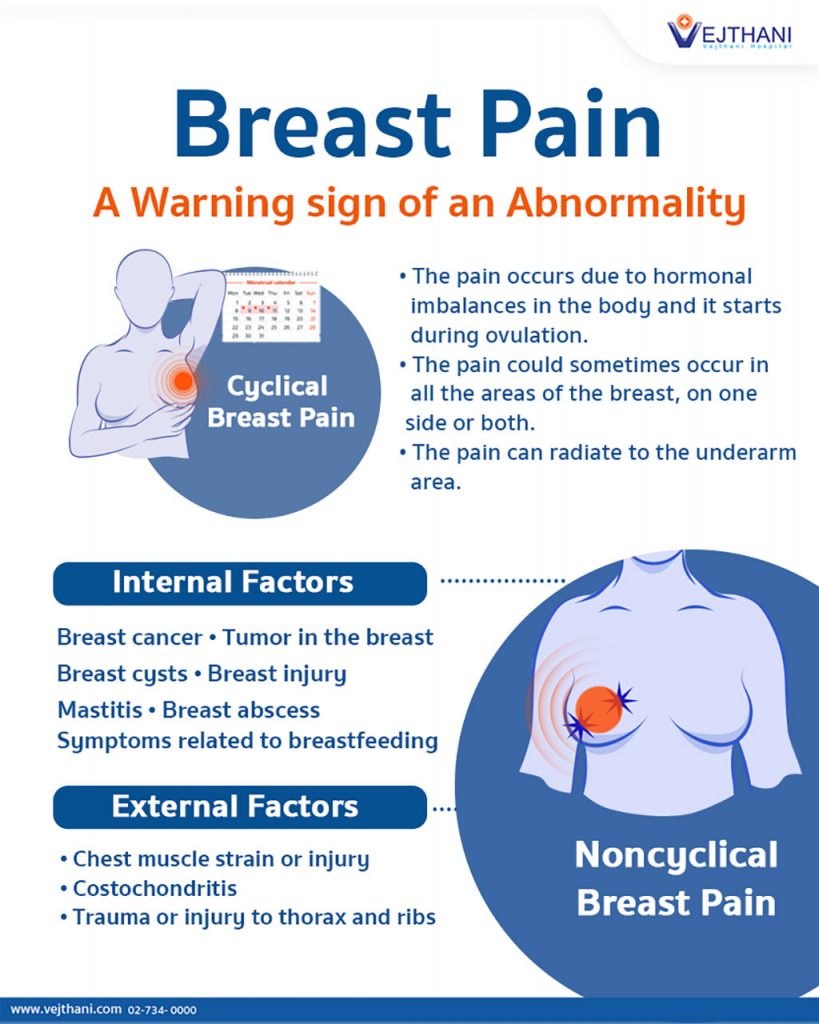
Breast pain in women can be one of the warning signs of breast cancer. When symptoms arise, patients must seek immediate medical attention to rule out the cause of pain. Breast pain can be divided into two types as follows:
Cyclical breast pain is associated with menstrual cycle. This is the type of breast pain that is most commonly found in women. The pain occurs due to hormonal imbalances in the body and it starts during ovulation and lasts until the menstruation begins. The pain could sometimes occur in all the areas of the breast, on one side or both and can radiate to the underarm area.
Noncyclical breast pain is unrelated to your menstrual cycle. The pain is constant most of the time or more severe in certain areas which caused by:
Many of the reasons for breast pain are benign and related to natural body changes or external factors. Here are 10 of the most common reasons you may be experiencing breast pain.
The ebb and flow of hormones, particularly estrogen and progesterone, are a primary cause of cyclical breast pain. This type of discomfort often occurs a few days before your period starts and subsides once it begins. The breasts may feel swollen, tender, or lumpy. This is also a common symptom in the first trimester of pregnancy as hormone levels increase.
Some medications can have breast pain as a side effect, leading to noncyclical breast pain. Some drugs known to cause this include certain antidepressants, diuretics (water pills), and hormone therapies like birth control pills. If you’ve noticed breast pain since starting a new medication, discuss it with your doctor to explore alternative options.
A painful, tender lump that appears suddenly in the breast could be a cyst. These fluid-filled sacs are not cancerous and are a frequent cause of noncyclical breast pain. While they often resolve on their own, any new lump should be examined by a doctor to ensure a proper diagnosis.
Trauma to the breast, such as a blow during sports or a car accident, can result in noncyclical breast pain. The pain might be sharp at the time of injury, followed by lingering tenderness that can last for several weeks. Look out for severe swelling, a lump that doesn’t go away, or warmth and redness, which could indicate an infection.
Pain that feels like it’s in your breast may actually be originating from your chest wall. This is a form of noncyclical breast pain and can be caused by a strained muscle, inflammation of the cartilage around your ribs (costochondritis), or a bone fracture. Since your breasts lie over these structures, the pain can be misleading.
For nursing mothers, breast pain can be a common issue. This includes cracked or sore nipples from an improper latch, a tingling sensation during “letdown” (when milk begins to flow), or a breast infection (mastitis). If you’re struggling with pain while breastfeeding, a lactation consultant can provide guidance and support.
Mastitis is an infection of the breast tissue, most commonly affecting breastfeeding women, though it can occur in others as well. This type of noncyclical breast pain is often accompanied by other symptoms, including redness, swelling, fever, and a feeling of warmth in the affected breast. It’s important to seek medical care immediately, as it usually requires a course of antibiotics.
An unsupportive or ill-fitting bra can cause discomfort by straining the ligaments that connect your breasts to your chest wall. This can lead to an achy, sore sensation by the end of the day, particularly during physical activity. Ensuring you wear a properly fitted and supportive bra, especially a sports bra for exercise, can help alleviate this type of pain.
Women with breast implants may experience pain due to complications, such as a rupture or capsular contracture, where scar tissue tightens around the implant. This is a form of noncyclical breast pain. If you have implants and are experiencing new or persistent pain, it’s important to speak with your doctor to determine if it’s related to the implants.
While uncommon, some forms of breast cancer can cause pain. Inflammatory breast cancer is a rare and aggressive type that can cause sudden pain, swelling, and redness. The skin on the breast may also thicken or dimple, resembling an orange peel. If you have these symptoms, it’s critical to see a doctor immediately.
Breast self-examination should be done once a month, seven days after your menstrual cycle. Examining the physical appearance of your breasts in the mirror for dimpling or bulging of the skin is vital. Observe if there are any visible distortions in the shape, size, texture or colour, or if there is an unusual discharge such as blood or puss-like fluid or even milk from the nipple. If such abnormality is found during the examination or experience unusual breast pain, consult your doctor immediately for a proper diagnosis. Currently, we have a 3D digital mammogram technology in conjunction with additional examinations such as ultrasound, which will increase the accuracy of the diagnosis.
While many cases of pain in the breast are benign, it’s always best to be cautious. If your pain is persistent, worsens over time, or is localized to a single spot, you should seek medical attention.
If you are concerned about persistent pain in your breast, Vejthani Hospital offers expert medical professionals and advanced diagnostic tools to help you find the cause of your discomfort. Contact us today to schedule an appointment with one of our specialists.
Breast Center, Vejthani Hospital.
Call: (+66)2-734-0000 Ext. 2715
English Hotline: (+66)85-223-8888
service@vejthani.com

Diagnostic Imaging Radiology
Advanced Diagnostic Breast Imaging and Intervention